Berlin didn’t begin in Berlin.
It began in Munich, before sunrise, in a quiet hotel lobby where a small tragedy was unfolding.
Months earlier, I had booked our train to Berlin without knowing that complimentary buffet breakfasts would later be included with our Munich Hotel. By the time we discovered this happy surprise, the train tickets were already booked and the departure time wasn’t changing.
We woke while it was still pitch-black, packed our bags, and went downstairs to see whether breakfast had opened early. We were fifteen minutes too soon.
At the time, this felt like an extreme catastrophe.
Not a real catastrophe, obviously. But a travel catastrophe. The kind that only makes sense when you’re on holiday and have spent the previous night thinking about bacon, eggs, pastries, and unlimited coffee.
With our buffet dreams shattered, we collected our bags and headed towards Munich Hauptbahnhof.
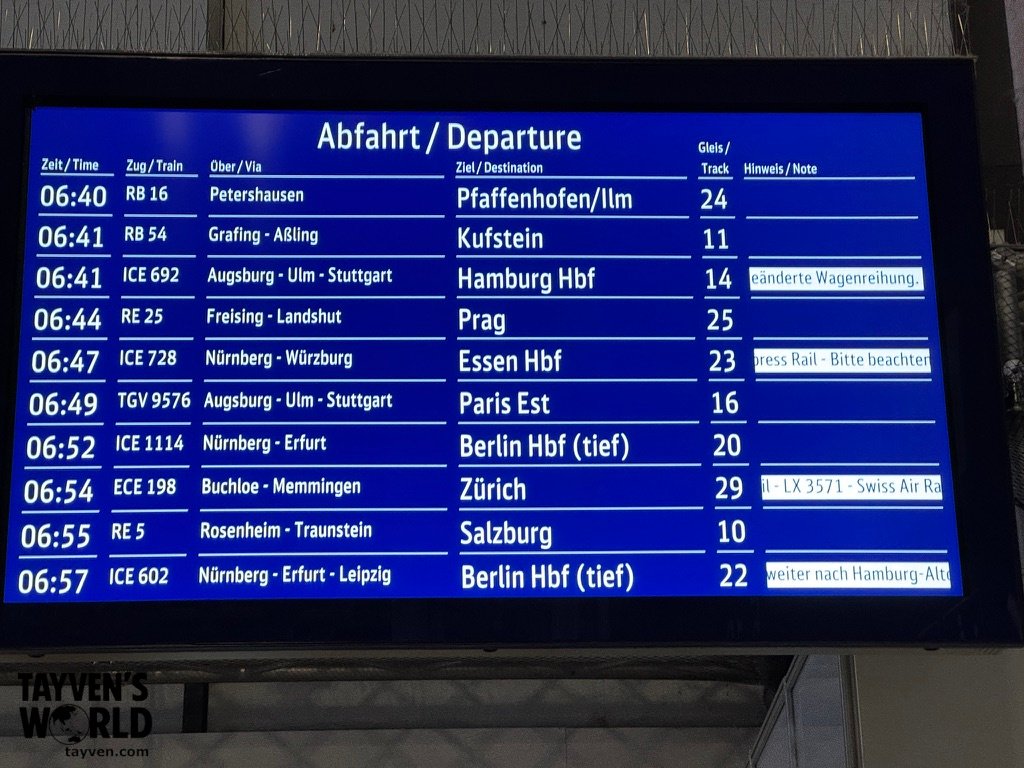
Leaving Munich Before Sunrise
Munich was still asleep.
The streets were almost empty, and the roadworks that had frustrated us when we arrived were now quiet and strangely peaceful. Every so often, we spotted another traveller dragging a suitcase through the darkness, all of us making our way towards the station before the city properly woke up.
There was something oddly comforting about it. Just us, a handful of other travellers, and the sound of suitcase wheels rolling over the footpaths. The early hour worked in our favour. We made good time and reached the station without any trouble. Once inside, we set about repairing the buffet catastrophe. We found a takeaway café and loaded up on coffee, croissants, and enough snacks to make it look like we were preparing for a small expedition rather than a train journey.
With breakfast saved, we headed to the platform. Our train was already waiting, and we climbed aboard as the sun began to rise over Munich.
Seeing Germany by Train
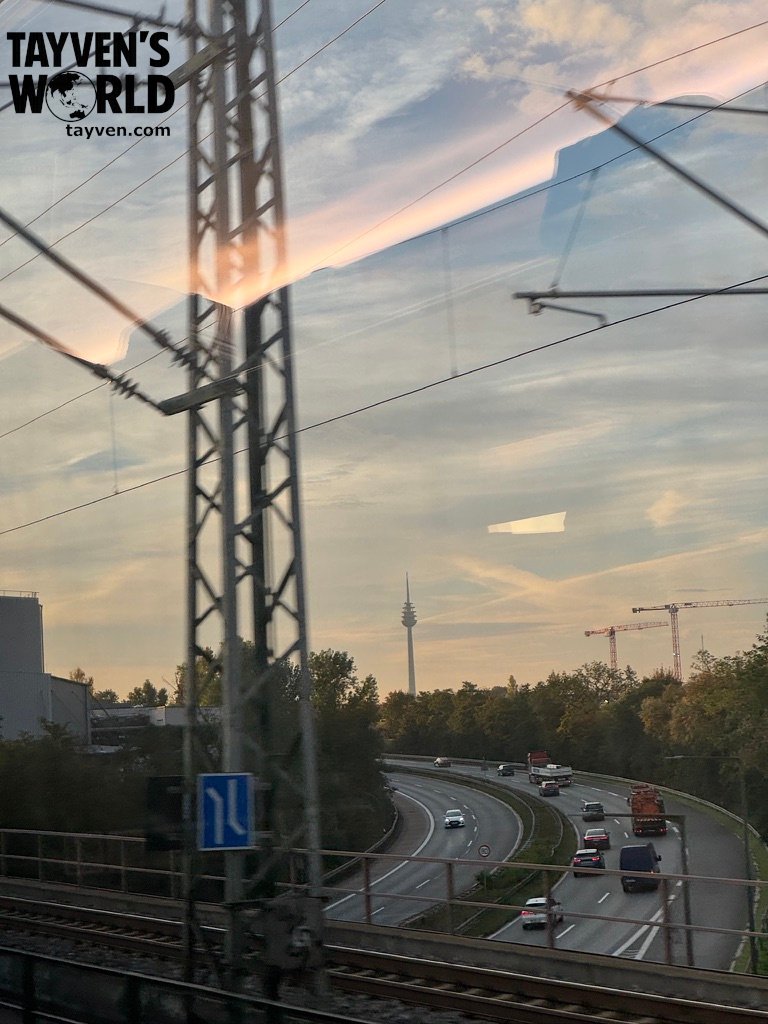
Once we settled into our first-class seats, the disappointment of missing breakfast began to fade. Seeing Germany by train was fascinating. Rolling green hills passed outside the window alongside small towns, factories, highways, and unusual city towers whose purpose I couldn’t quite work out. They reminded me of Sydney’s Centrepoint Tower standing on its own in the landscape, without the city around it. Germany seems to have a fondness for these towers because I spotted several throughout the journey. Every time one appeared on the horizon, I found myself trying to guess what role it played in the city below.
The landscape constantly shifted between rural and industrial Germany, providing a view of the country that you would never get from an airport. At one point, I needed to retrieve our luggage from behind a wall of other suitcases. A nearby passenger offered to help pull the bags free.
Dressed in a suit, the passenger looked like someone heading to an important business meeting. He reminded me of a manager I once had back home, the same broad shoulders, the same commanding presence, the sort of person who could fill a meeting room without even trying. After helping pull the bags free, he asked whether we had visited Berlin before. It was only a small act of kindness between travellers, but it stayed with me.
Nearby, another passenger from England spent much of the journey on a Teams call with four colleagues, working through a marketing campaign for their product. The meeting went on for ages. To be honest, they probably could have achieved the same result in half the time, but what struck me wasn’t the length of the call. It was the fact that it could happen at all.
The train was quiet enough to work from, the ride smooth enough to concentrate, and the connection reliable enough to hold an uninterrupted video call while travelling across Germany. As I listened to the conversation drift in and out while the countryside rolled past outside the window, I found myself thinking differently about public transport.
Back home in Australia, cars often feel like the default option because the alternatives can be limited. Here, the train didn’t feel like a compromise. It felt like a place where people could genuinely live part of their day. Some passengers were reading, others were working, and some simply sat back and watched Germany pass by outside the window.
The more time I spent travelling through Germany and Switzerland, the more I appreciated what their rail networks offered. Clean, comfortable, reliable transport that people actually wanted to use. First class didn’t necessarily feel luxurious. It simply felt practical: a little more room, a quieter carriage, and a comfortable place to spend a few hours.
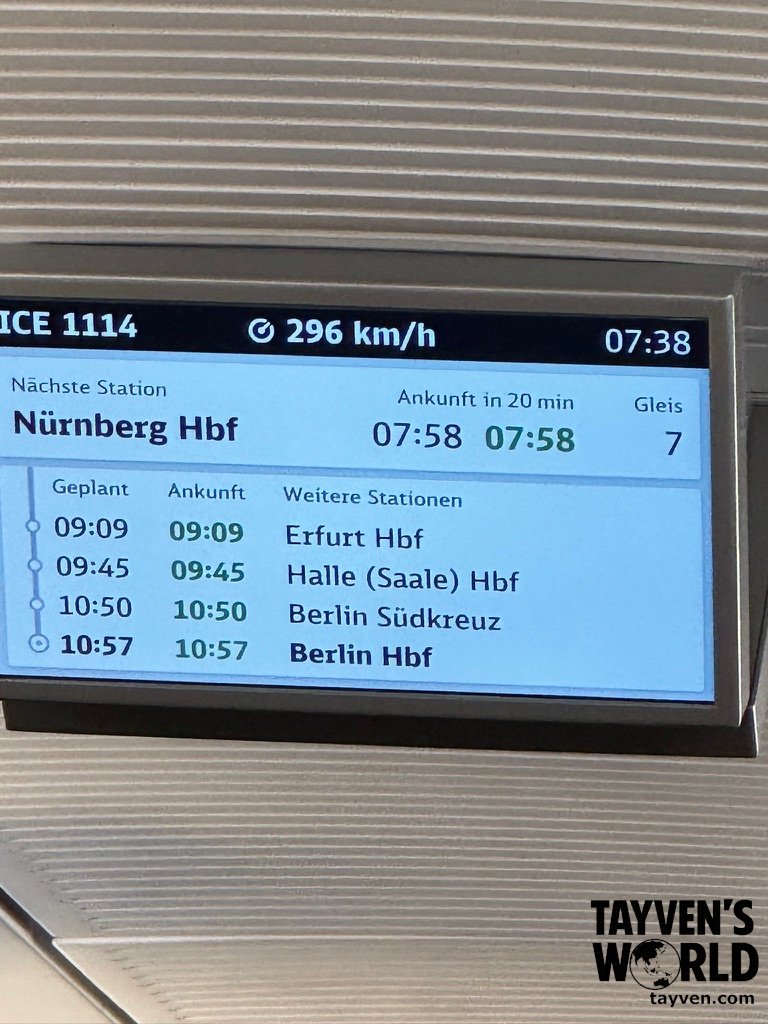
Looking out at the changing landscape, I realised the train itself had become part of the experience rather than just the way to reach the next destination. We had left Munich at around 7am, and by midday we were eating burgers in Berlin.
Not a bad run at all.
Arriving at Berlin Hauptbahnhof
Berlin Hauptbahnhof is enormous. You don’t simply arrive at Berlin’s central station, you emerge into it. Glass stretches high above the platforms while trains arrive and depart on multiple levels. Escalators and lifts move people in every direction, creating a constant flow of movement that somehow feels both chaotic and perfectly organised at the same time.
When we stepped off the train, I found myself pausing for a moment just to take it all in. The scale of the station was impressive, but it was the energy that stood out most. People were everywhere, rushing for connections, arriving from other cities, or disappearing into Berlin itself.
It felt completely different to Munich. Munich had felt like a more traditional German city. Berlin, on the other hand, felt like it was already in motion before we had even arrived. Within a few minutes of stepping into the station, I had the feeling that this was a city that wasn’t going to sit still for anyone.
A Friendly Welcome to Berlin
We stepped outside, looked at the distance to our hotel, looked at our luggage, and immediately abandoned any idea of walking. A taxi pulled up, and the driver loaded our bags. Within minutes, we were talking about Australia. The driver had visited Sydney and loved it, so what could have been a routine trip across Berlin became a conversation about home on the other side of the world. It was a small moment, but it made an impression. Before we had even checked into the hotel, Berlin already felt welcoming.
The Hotel and Why Berlin Mattered
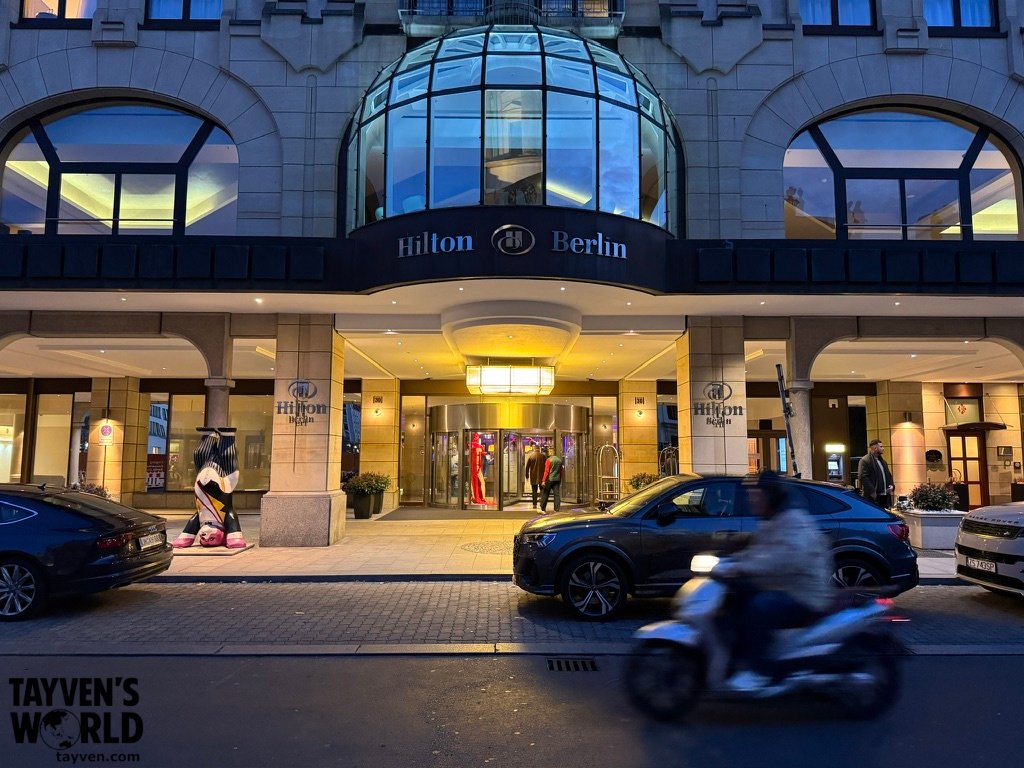
As soon as we arrived at the Hilton Berlin, I knew we’d chosen well.
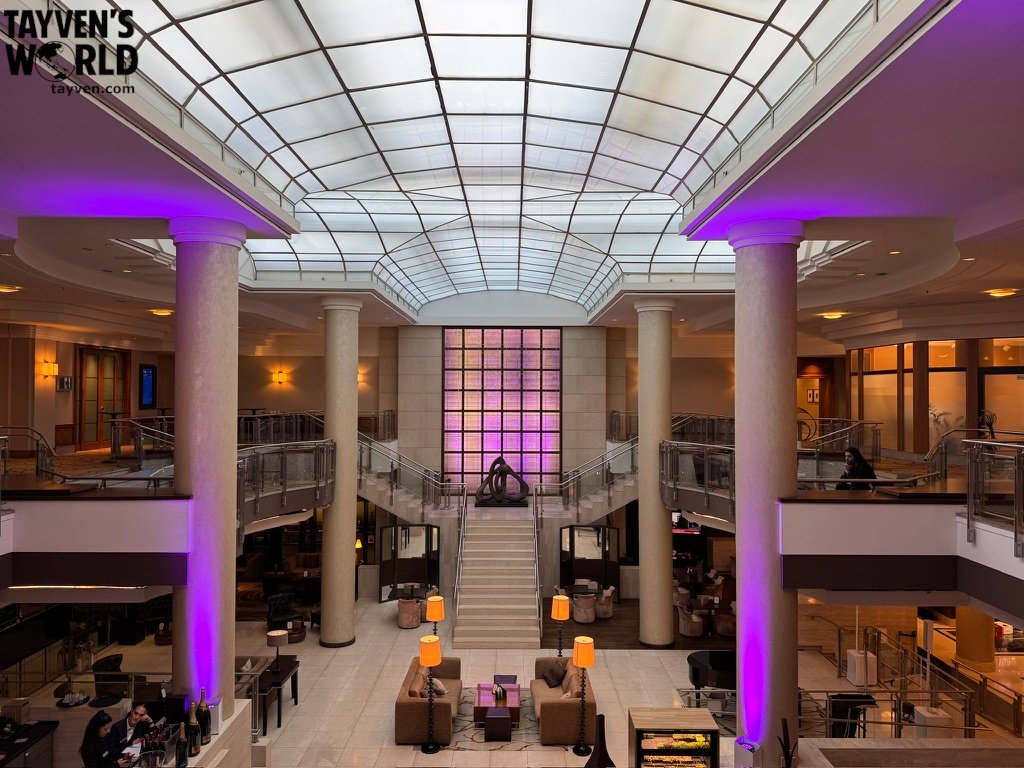
The building itself felt impressive. The hallways seemed enormous, the lobby was grand, and there was a sense of space that feels increasingly rare in modern hotels. The staff were friendly, happy to store our luggage while we headed out to explore, and everything about the place made a great first impression.
What fascinated me most, though, was the hotel’s history. The building was originally developed during the final years of East Germany and opened shortly before German reunification. Not long afterwards it became a Hilton. In a city filled with stories about division, change, and reunification, even our hotel seemed connected to Berlin’s larger story.
Later that afternoon, we finally checked into our room and discovered it was one of the best accommodations of the entire trip. The room was far larger than we expected, with a comfortable lounge area and plenty of space for the three of us to spread out and relax. Considering the rate we paid, it felt like exceptional value. Whether that was good timing, travelling in October, or simply a bit of luck, I’m still not entirely sure.
More importantly, though, this was Berlin.
And Berlin was probably the destination I had most wanted to visit on our entire European adventure. I loved every city we visited. London was incredible. Paris was unforgettable. Switzerland was stunning. But Berlin was different. I’ve always been interested in history, particularly the events that shaped Germany throughout the nineteenth and twentieth centuries. Empires, world wars, division, reunification, and the Cold War. For years I’d read books, watched documentaries, and learned about the people and events that left their mark on this city.
So in my mind, Berlin wasn’t simply another great European destination. It was the backdrop to countless historical stories I’d spent years learning about. To finally arrive there felt a little surreal.
It’s probably fair to say I was more than a little excited.
Burgermeister: Our First Taste of Berlin
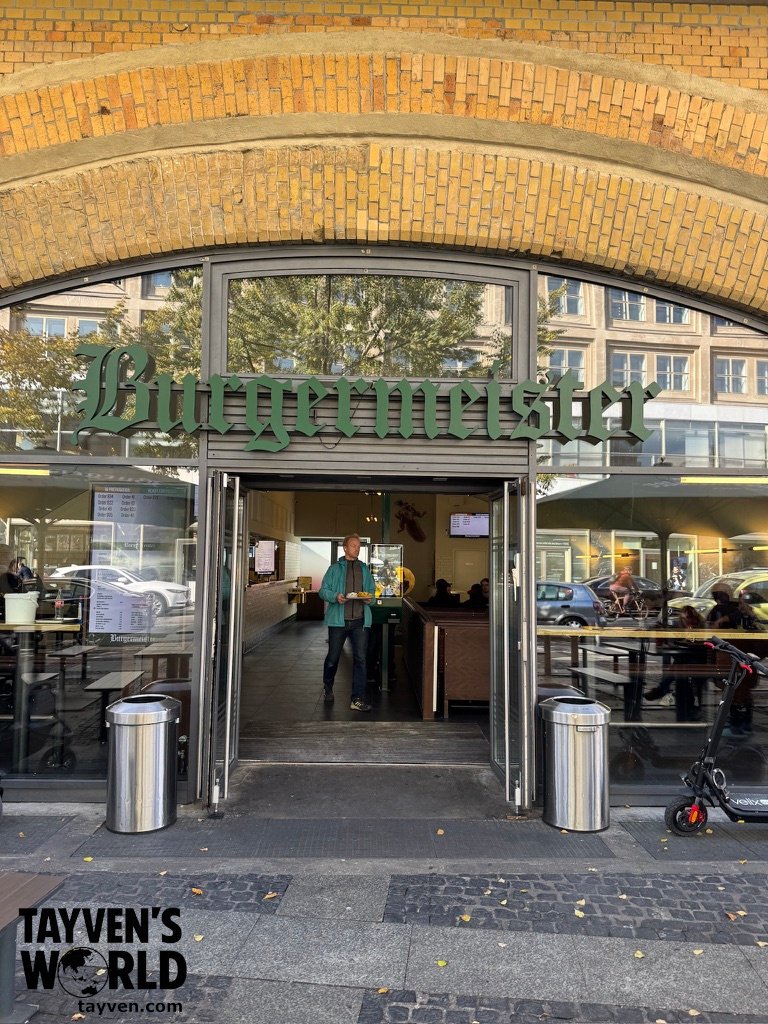
Naturally, the first thing we did was go and get burgers. Everyone on YouTube seemed to recommend Burgermeister, so we decided to see what all the fuss was about. The location alone was memorable. Built beneath a railway bridge, Burgermeister feels unmistakably Berlin. Circular wooden seating areas sit beneath the structure, looking almost like oversized bus-stop benches. Trains rumble overhead while people eat and chat below. The burger itself was excellent.
Fresh beef patty, tomato, a great sauce, crispy chips, and none of the mass-produced feel that often comes with fast food. It reminded me more of the sort of homemade burger you’d get from a good fish-and-chip shop back home.
If you’re near Alexanderplatz and feeling hungry, I’d happily recommend it.
Alexanderplatz
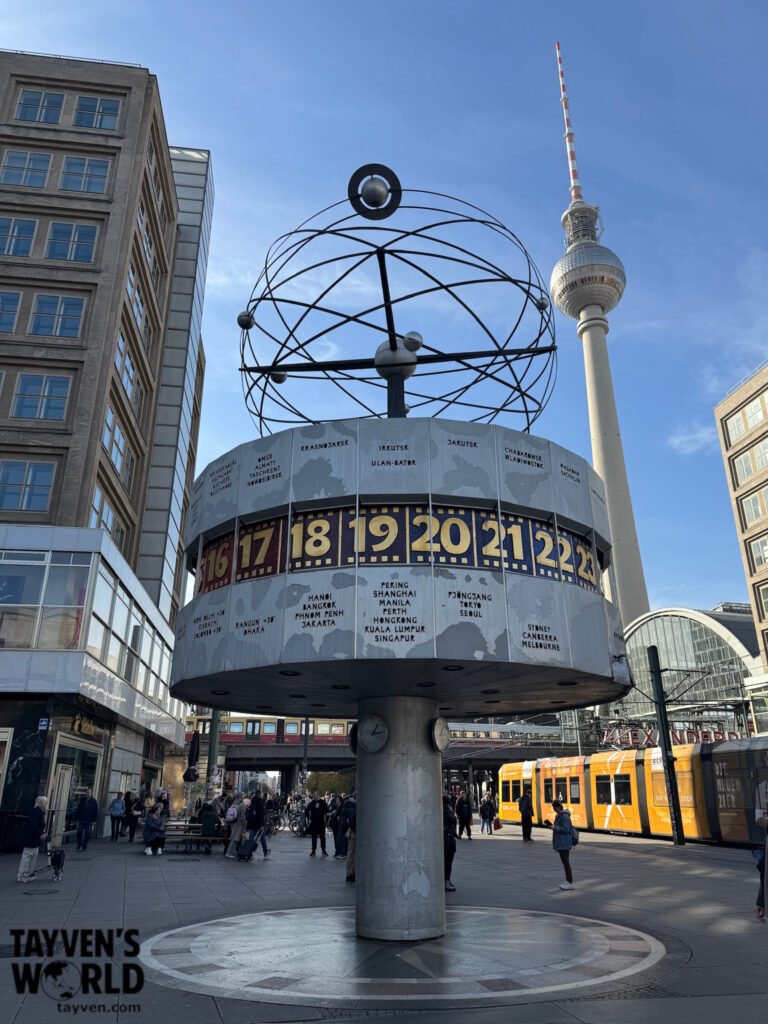
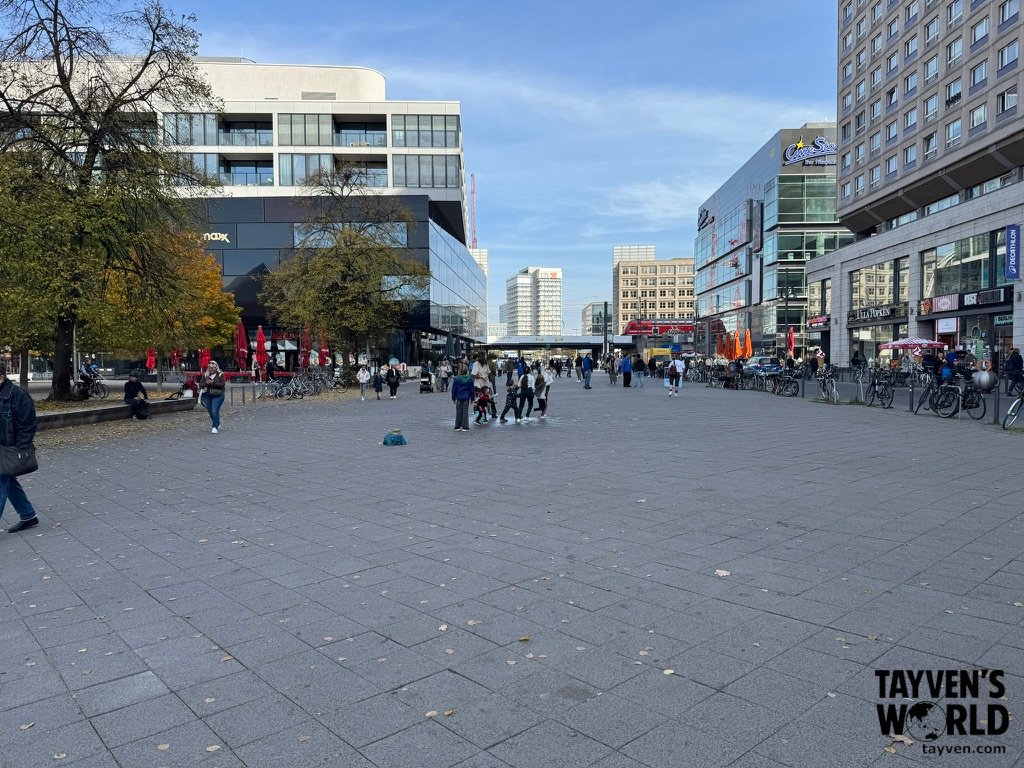
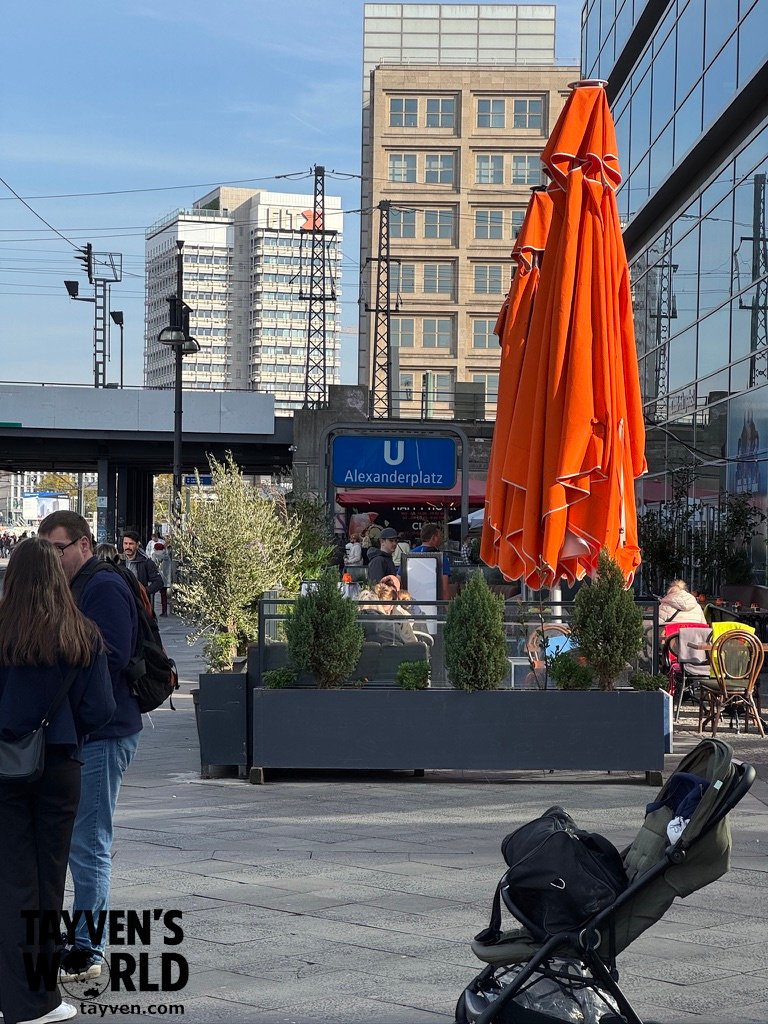
After lunch we wandered through Alexanderplatz. The World Clock immediately caught my attention. Maybe it’s the technology enthusiast in me, but I’ve always thought it was cool. The giant rotating display shows the time across the world and somehow manages to feel futuristic and retro at the same time. I managed to capture one of my favourite photographs of the day. It showed the Sydney timezone, the World Clock itself, an S-Bahn train passing by, and the Berlin TV Tower rising above it all. One of those travel photos that ends up meaning more to you than it probably should.
Alexanderplatz itself is an interesting place. It’s one of those locations you’ll almost certainly visit because so many major landmarks are clustered around it. The TV Tower, the World Clock, the transport connections, and the shopping centres. But after seeing the main sights, I found there wasn’t a huge amount keeping me there. The large concrete spaces felt a little harsh, and there was quite a bit of broken glass scattered around in places. We took our photos, enjoyed the landmarks, and kept moving.
The Berlin TV Tower and an Unexpected Pharmacy Mission
The TV Tower was one of the attractions I’d been looking forward to most. So we bought our tickets. And then we promptly had a headache emergency. Fortunately, Google Maps came to the rescue and informed us that there were three pharmacies practically around the corner.
A quick detour later, we found ourselves attempting to navigate unfamiliar German painkiller brands while communicating through a mixture of English, pointing, and hopeful optimism. Eventually we emerged victorious.
Adventure resumed.
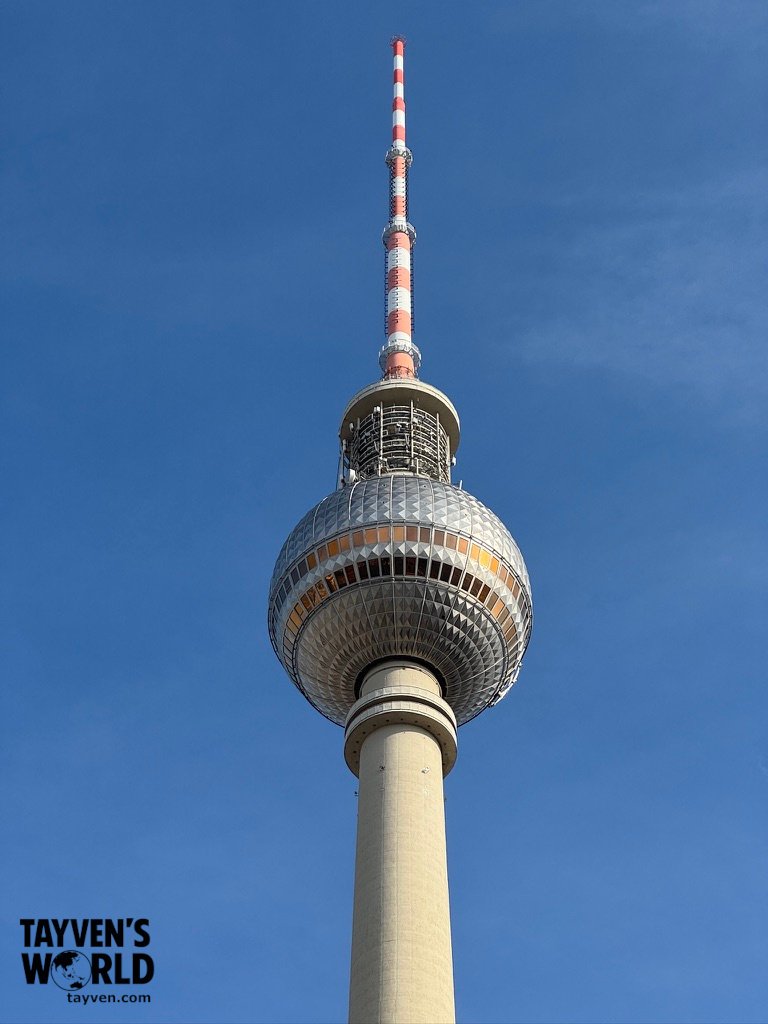
Stepping Into Another Era
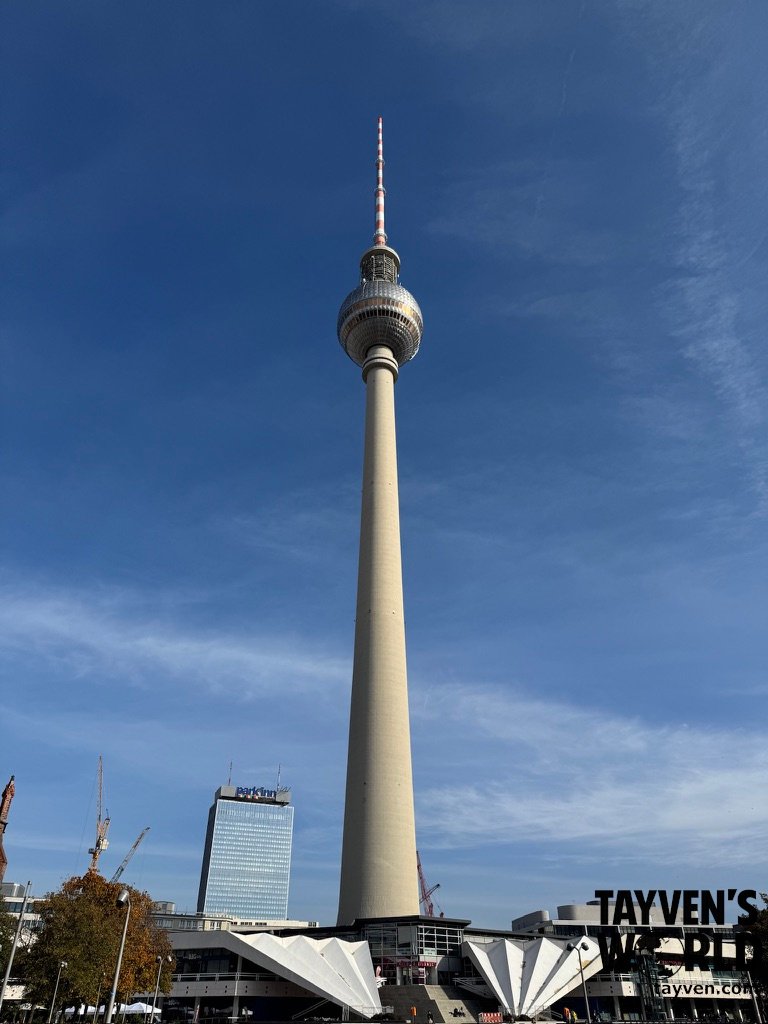
The Berlin TV Tower is fascinating from the outside, but stepping inside is something else entirely. Built by the East German government, it was intended to showcase the technological and engineering capabilities of the GDR. Even today, stepping inside feels like entering a different era.
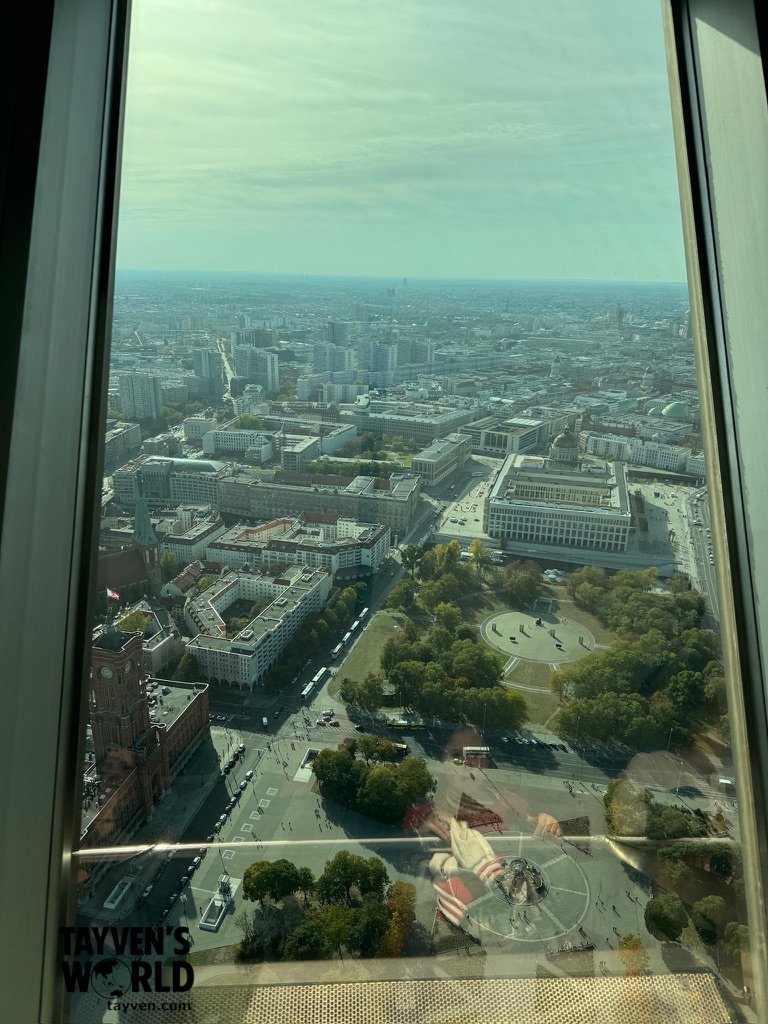
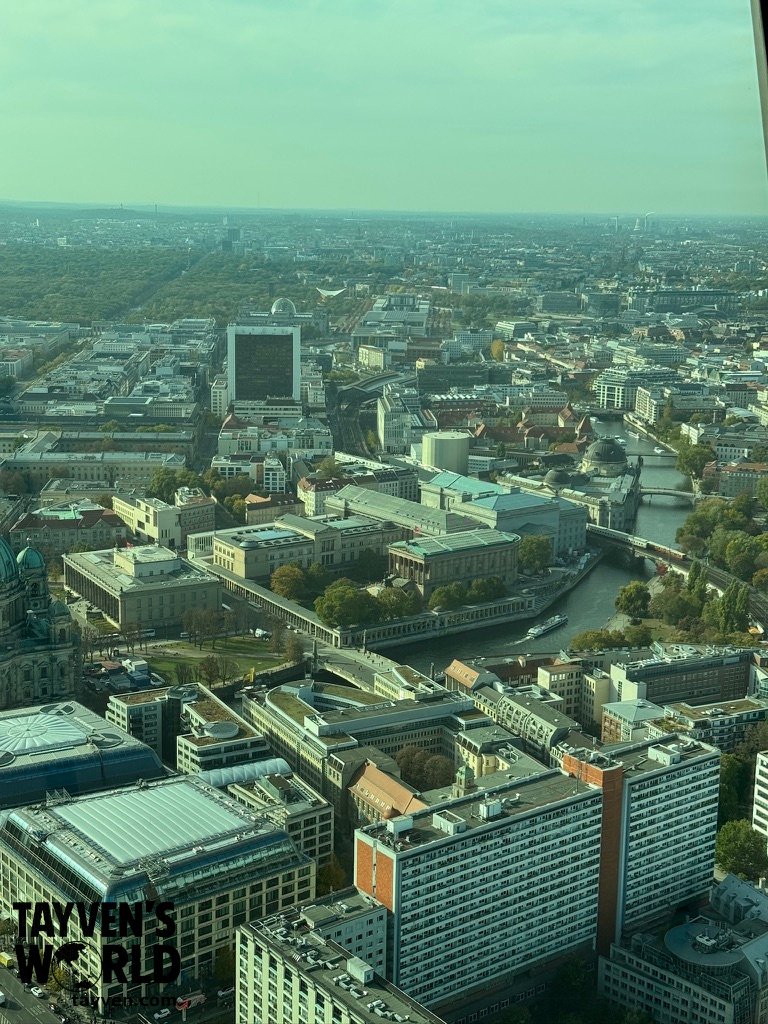
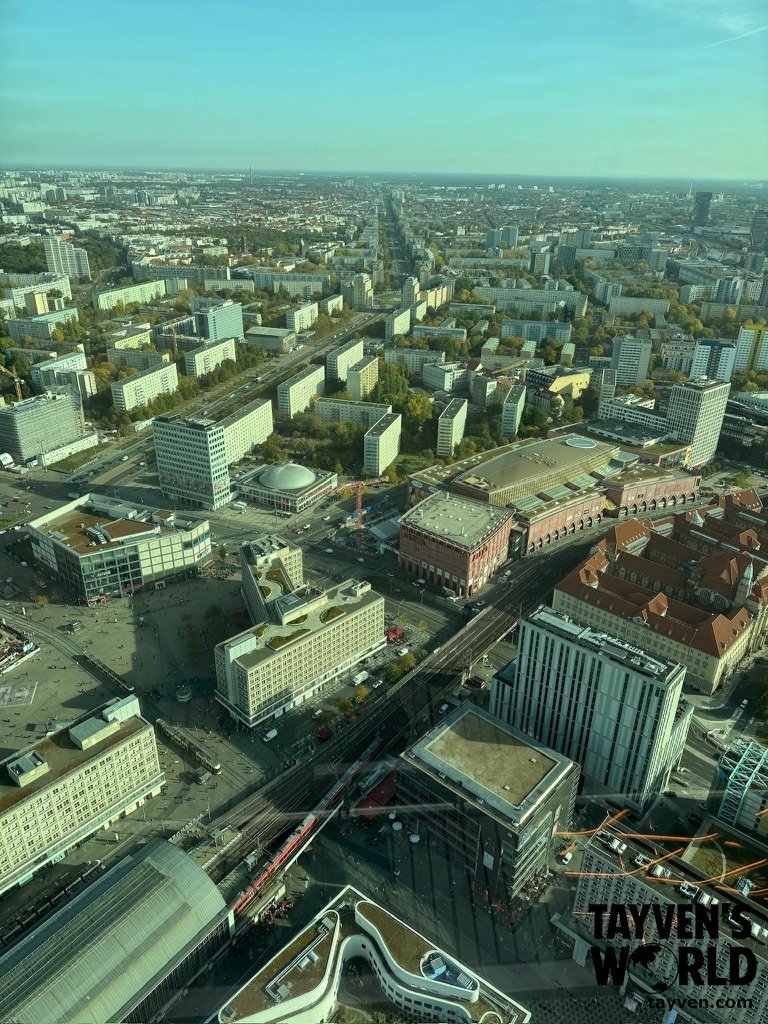
Wood-panelled walls. Retro lighting. Decorative elements that feel distinctly East German. Rather than feeling outdated, it feels preserved. The lift ride was one of my favourite parts. A retro illuminated display tracked the journey upward, glowing red as we rapidly climbed towards the observation deck. It was a small detail, but somehow it added to the experience. At the top, Berlin spread out in every direction. The Cathedral, Museum Island, Karl-Marx-Allee, Tiergarten.
The city I’d spent years reading about was suddenly beneath my feet. We had originally hoped to book dinner at the revolving restaurant, but unfortunately it was unavailable during our visit. Instead, we explored the observation deck and enjoyed the view.
One practical tip: it gets surprisingly warm up there, and queues for the lifts can form quickly.
Bring water.
Walking Berlin at Sunset
Once we returned to ground level, we spent more time exploring Alexanderplatz. The Neptune Fountain was one of those landmarks that became more interesting the longer we looked at it. Its statues, details, and dramatic shapes seemed different from every angle. We also found the nearby statues of Karl Marx and Friedrich Engels. Considering how deeply the ideas associated with them shaped East Germany, finding them sitting in the middle of modern Berlin felt entirely appropriate.
We also passed a restaurant called Foreign Affairs featuring large images of John F. Kennedy across the windows. Most people probably walked straight past it. As someone interested in Cold War history, seeing JFK staring out across Berlin immediately caught my attention. If I’d been travelling on my own, I probably would have gone inside. They clearly knew their target audience.
Little reminders like that were everywhere. Berlin never lets you forget its past.
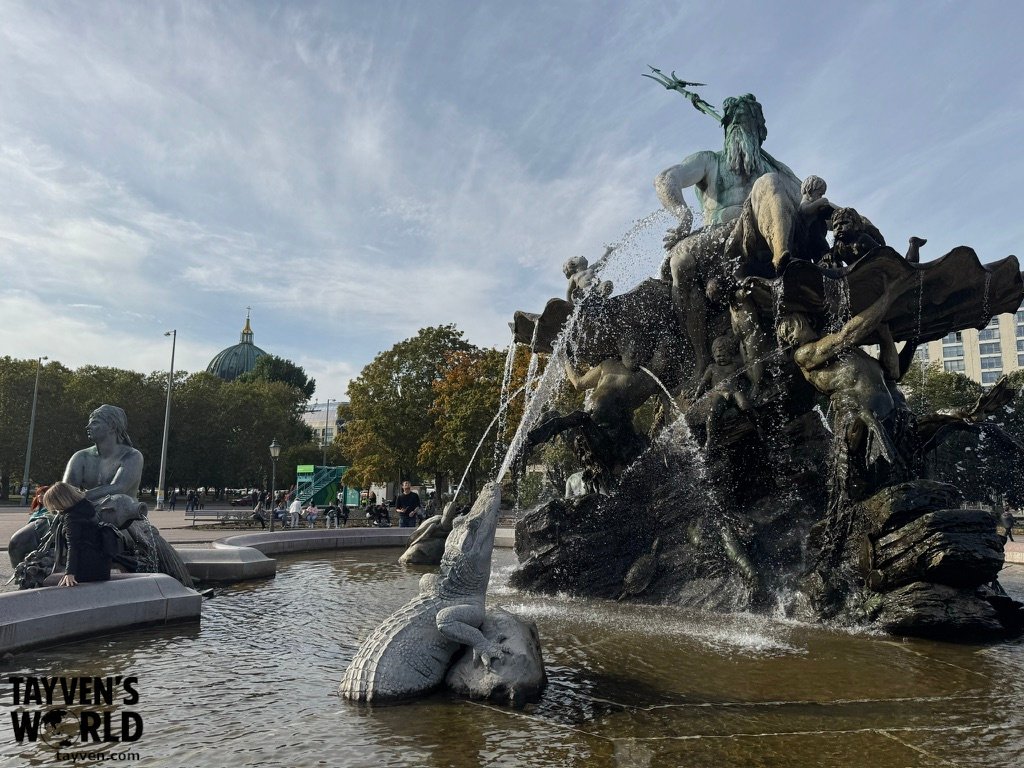
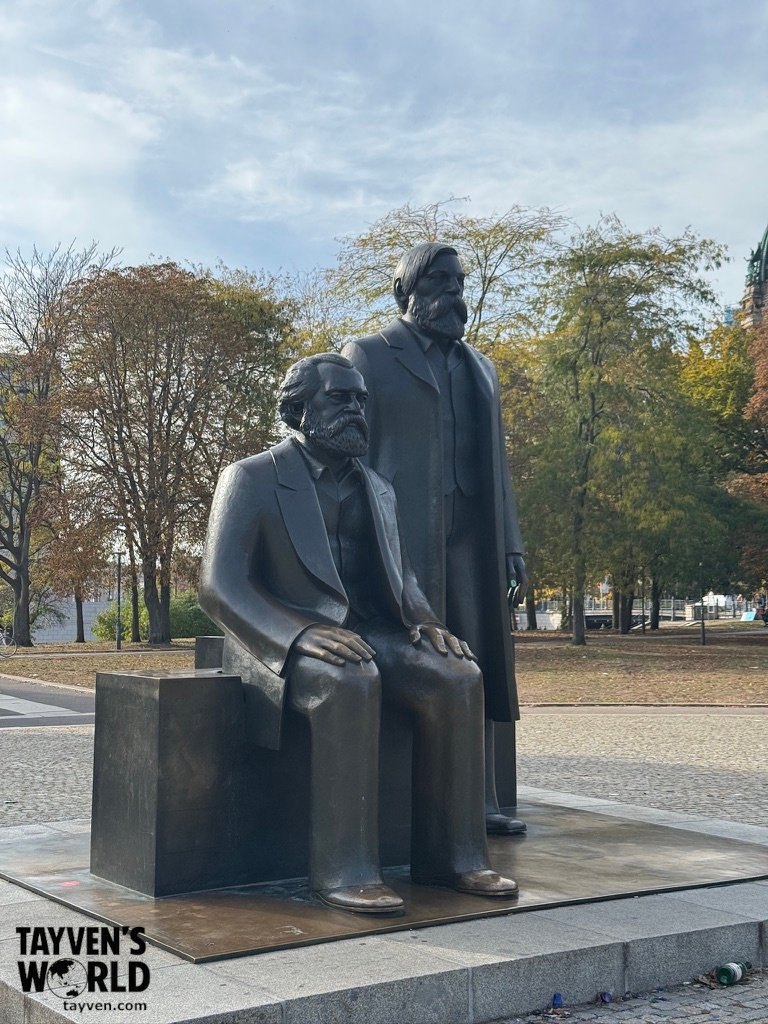
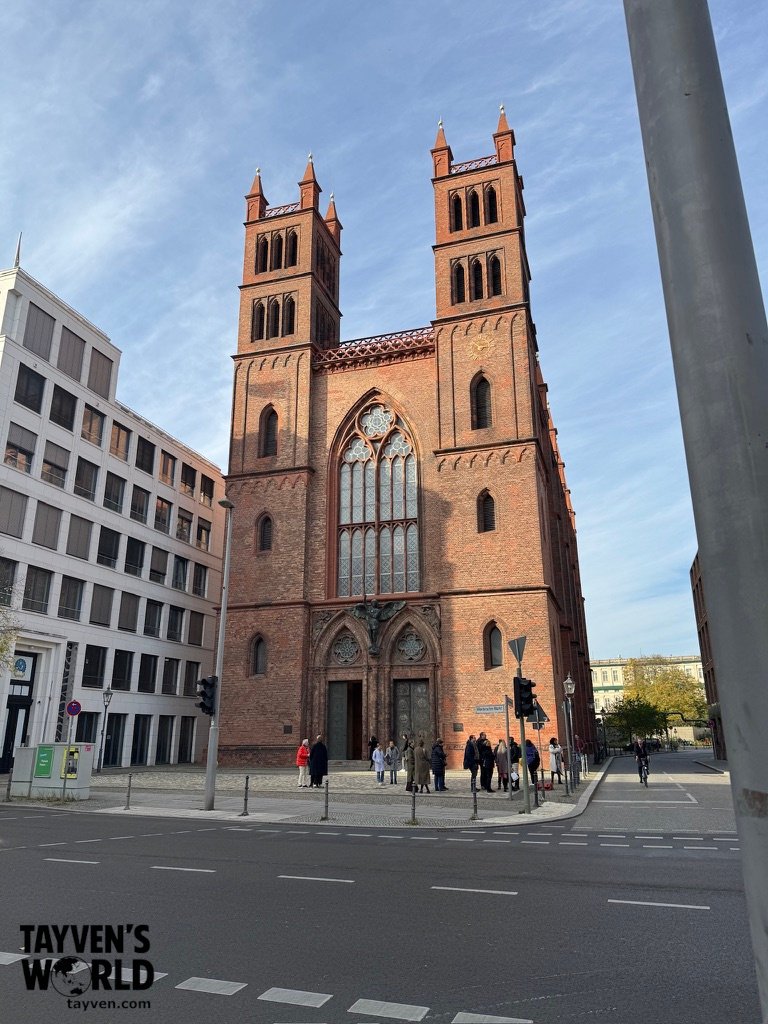
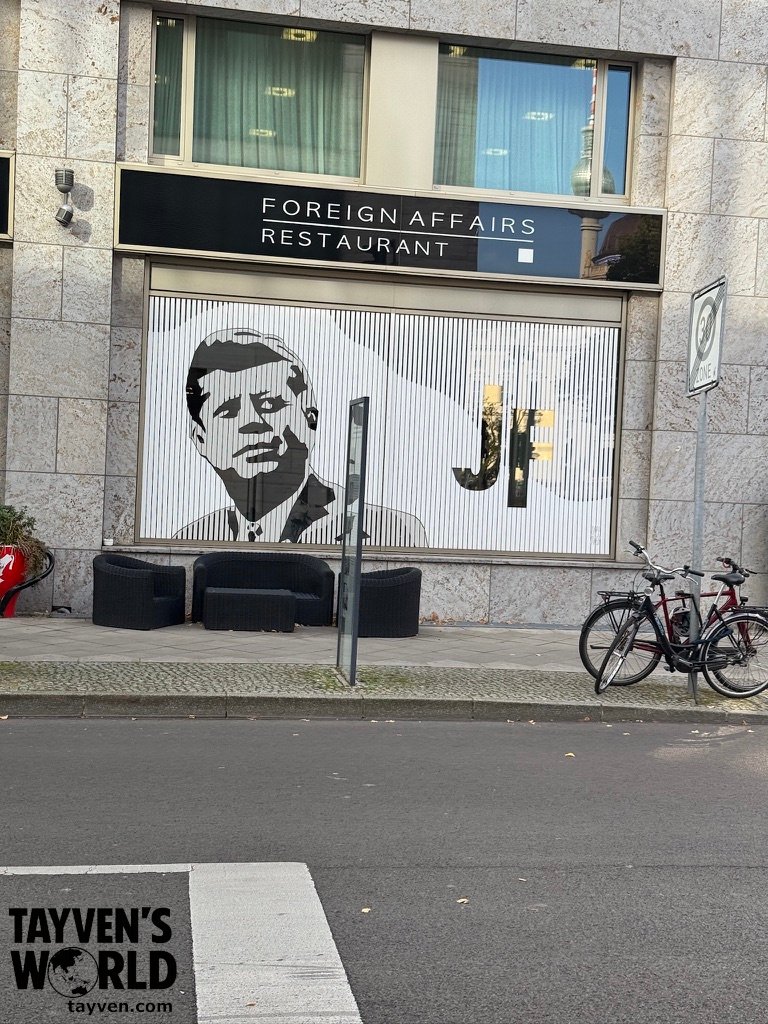
Our First Night in Berlin
By that point, the travel day was finally catching up with us. We had started before sunrise in Munich, crossed Germany by train, explored Berlin, and made it to the top of the TV Tower. Exhausted, we returned to the Hilton and called it an early night. The Berlin I had spent years reading about was finally outside our window.
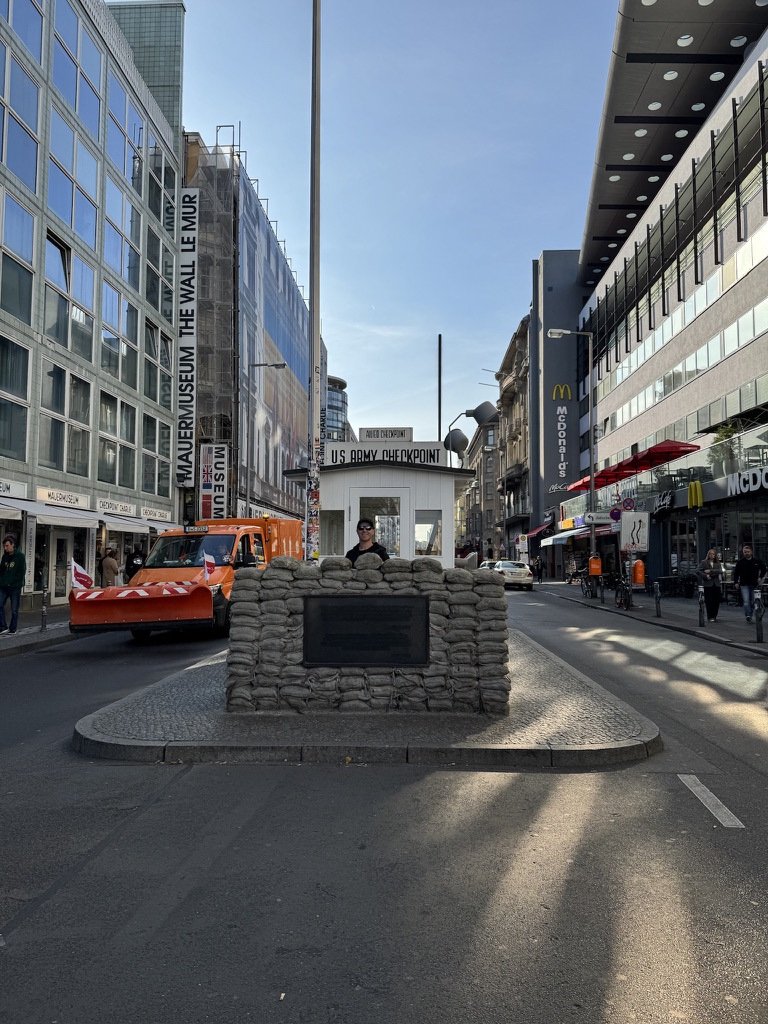
The Wall. Checkpoint Charlie. Brandenburg Gate. Museum Island. Karl-Marx-Allee.
They were all still waiting, and this was only the first day.
What to Know About Travelling from Munich to Berlin
How long does the train from Munich to Berlin take?
Our journey took around five hours. We left Munich at about 7am and were eating burgers in Berlin by midday.
Is first class worth it on German trains?
For us, it was. The carriage was quiet and comfortable, with more room to relax or work. Watching another passenger conduct an uninterrupted Teams meeting also showed us how practical German trains can be for business travel.
What is Berlin Hauptbahnhof like?
Berlin’s central station is enormous, with trains operating across multiple levels. It can feel overwhelming at first, but the signs, lifts, and escalators make it relatively easy to navigate.
Is Alexanderplatz worth visiting?
Yes, particularly for the World Clock and Berlin TV Tower. However, once we had seen the main sights and taken our photos, we didn’t feel the need to spend much longer in the square.
Is the Berlin TV Tower worth visiting?
Yes. The observation deck offers sweeping views across Berlin, while the tower’s design and East German history add another layer to the experience. It can become warm and crowded at the top, so bring water and allow time for the lift queue.
Should I book Berlin TV Tower tickets in advance?
We bought tickets after arriving and had no trouble, but advance tickets could be helpful if you’re travelling during a busy period or have a tightly planned day.
Where is a good place to eat near Alexanderplatz?
We enjoyed Burgermeister. The burger tasted fresh and homemade rather than mass-produced, and the unusual seating beneath the railway bridge gave the place plenty of Berlin character.
More Travel. Australia, Paris, London & Europe Travel Articles
Germany
- Munich Germany: Beer Halls, Old Town Streets, and a Birthday Across Borders
- Berlin: Checkpoint Charlie, Brandenburg Gate, and the Tiergarten
- Berlin to Amsterdam: The Day Everything Went Wrong (and Somehow Still Worked Out)
Australia
Blue Mountains Series:
- Blue Mountains 4‑Day Guide: Echo Point, Scenic World, Leura & Wentworth Falls
- Blue Mountains: A Winter Trip Through Memory, Mountains, and Family
Melbourne series:
Switzerland Series:
- Bern Switzerland: A Small City Built for Big Moments
- Paris to Bern: A First‑Class Train Ride and a Complete Eurail Guide
- Lucerne Switzerland: A Day Trip That Felt Like a Postcard Come to Life
Paris Series:
- London to Paris on the Eurostar: A First‑Timer’s Story & Complete Guide
- A Rainy Start, a Seine River Cruise, and Paris Finally Opening Up
- Versailles, Paris Streets & The Unexpected Magic of a Laundromat
- From the Louvre to the Eiffel Tower: A Storm‑Soaked Day in Paris
- The Best 4 Day Paris Itinerary (Built From Real Experience, Not Brochure Fantasy)
London Series:
- Our Real 5‑Day London Itinerary: What We Planned vs What Actually Happened
- St Paul’s Cathedral London: History, Blitz Survival, Tickets, Tube Guide & Our First-Day Experience
- Westminster Abbey: A First‑Timer’s Guide (Tickets, Tips & What to Expect)
- British Museum First‑Time Guide: A Morning in Bloomsbury
- London Eye: A First‑Time Visitor’s Experience Above the Thames
- Battersea Power Station: From Industrial Giant to London’s Newest Urban Playground
- A Perfect Day in South Kensington: Museums, Parks & Retro Gaming Nostalgia
- River Cruise Along the Thames: From Buckingham Palace Mornings to Bloomsbury Nights
- Our Final Day in London: Royal Dawn, Parliament Secrets, West End Magic, and the Feeling of Not Wanting to Leave
Europe Series: