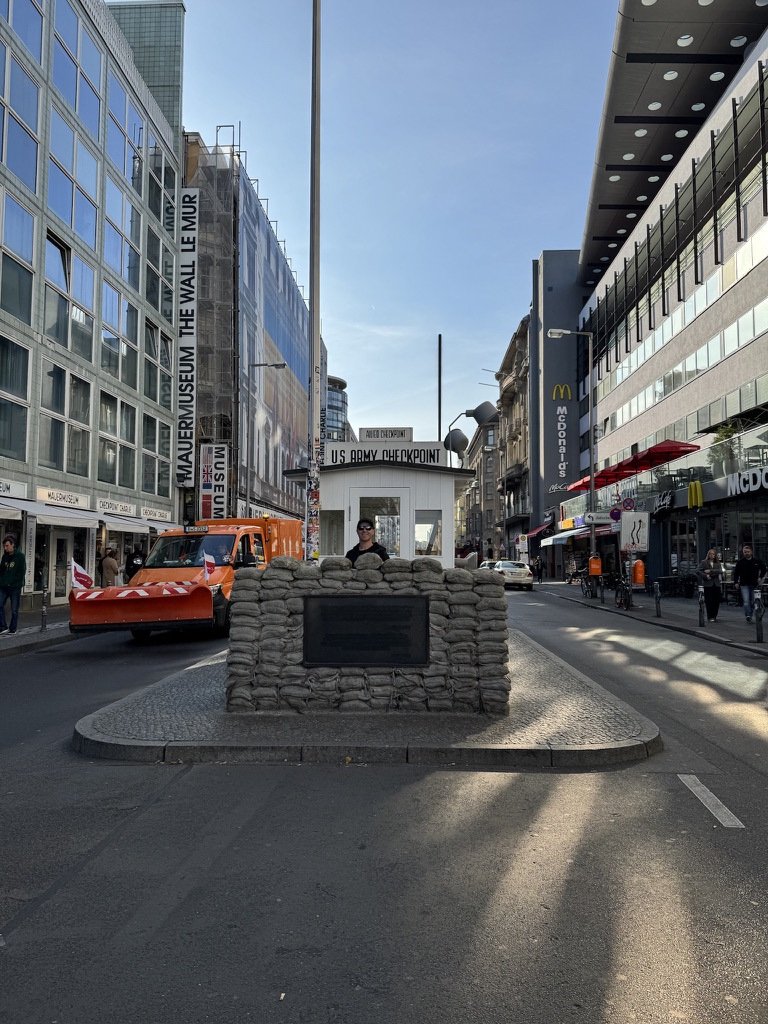
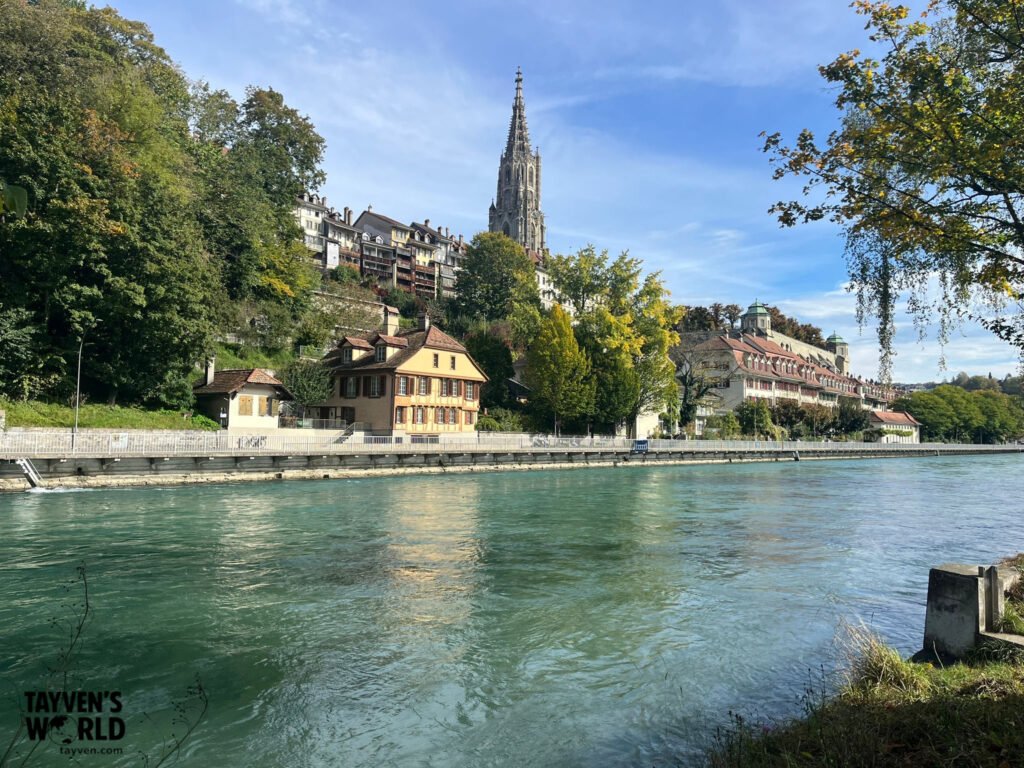
Leaving Paris Behind & Arriving in Bern
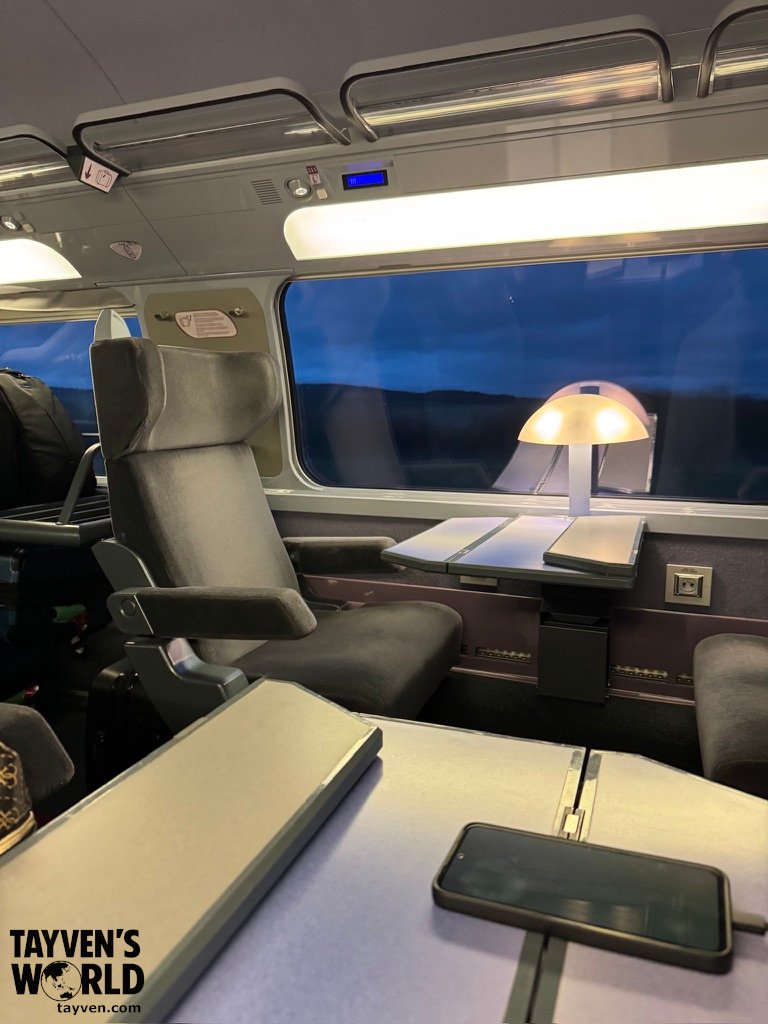
We sank into our first‑class seats just as the TGV doors slid shut behind us. Outside, Paris was still pitch‑black. That deep, heavy pre‑dawn darkness where even the city seems to hold its breath, but inside the carriage it felt almost decadent. Soft lighting, wide plush seats, quiet passengers, and that gentle hum of a train built for speed. It was the closest thing I’ve ever felt to a modern Orient Express.
We’d come prepared too. Our stash from Franprix, supermarket pastries, protein shakes, Costa Rican bananas became an impromptu breakfast feast. My son tore into his pain au chocolat like he hadn’t eaten in days. My wife sipped her shake and finally exhaled, the stress of the Paris hotel fading with every kilometre we put between us and the city.
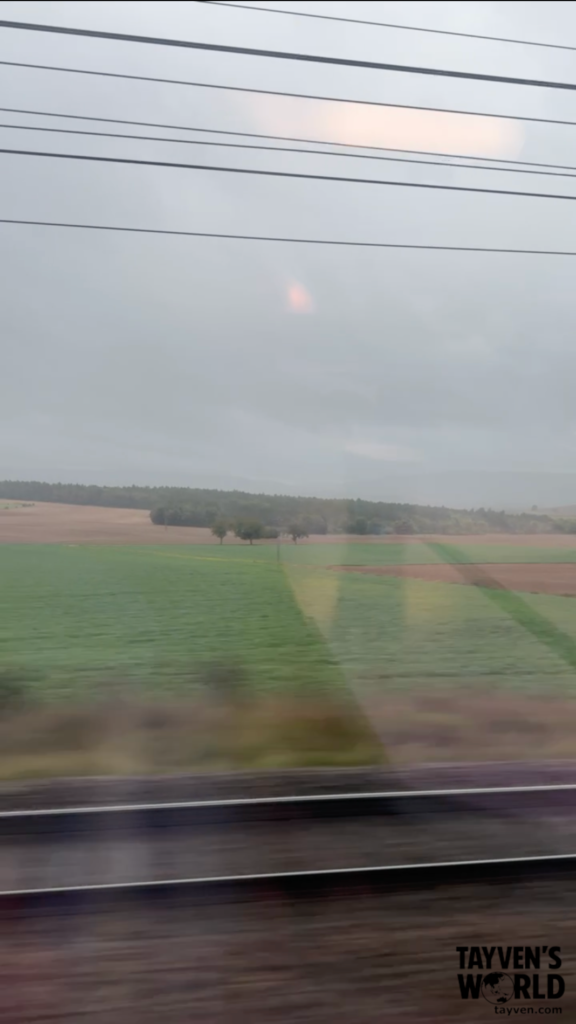
As the train slipped out of the suburbs, the morning light began to creep across the French countryside. It wasn’t dramatic or golden, more like a crisp autumn glow settling over quiet farms and misty fields. Hard to describe, but it felt like the world was slowly coming back online.
It was peaceful. It was calm. It was exactly the reset we needed.
Switching Trains in Basel and Our First “Swiss Rules” Moment
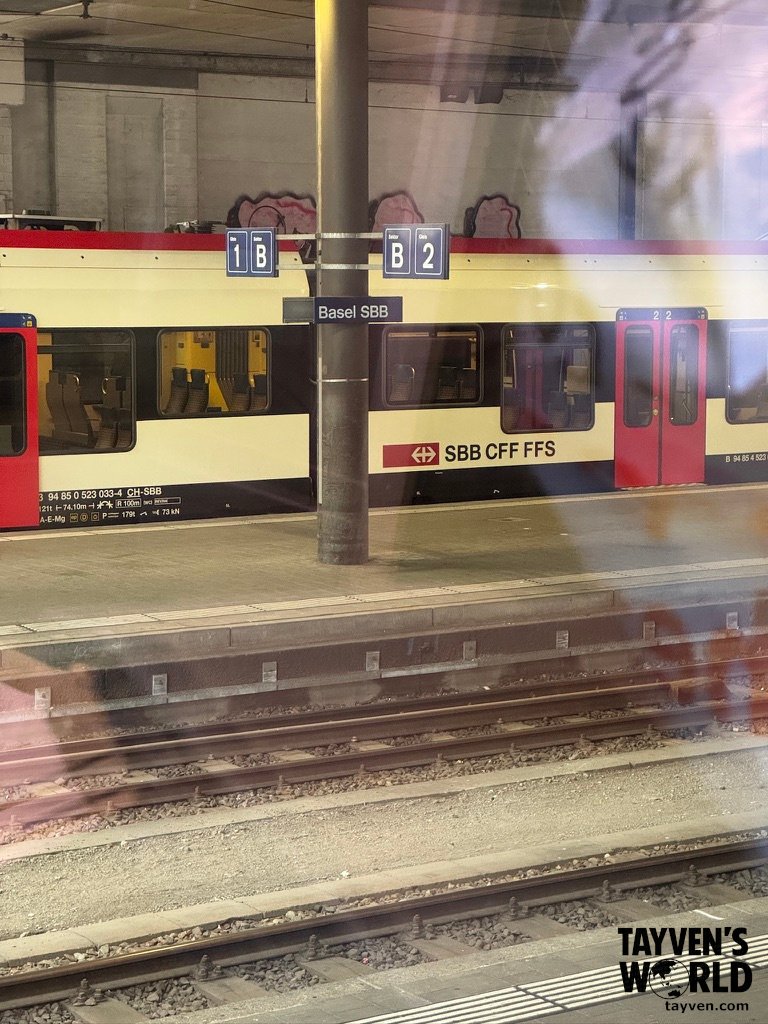
Arriving in Basel was easy. The station was clean, organised, and full of staff who spoke perfect English. I’d deliberately booked a later connection to Bern. No rushing, no stress. It was the best decision.
Swiss trains run constantly, and the platforms are clearly marked. We found ours quickly.
Then came the moment I’ll never forget.
We boarded our first‑class carriage… and someone was already sitting in our seats.
I remembered a YouTube video from Alpens in the Alps that said: If someone is in your reserved seat, politely show your ticket. Swiss people love the rules, they’ll move immediately.
So I did exactly that.
I smiled, said “Bonjour,” showed my reservation… and the entire group stood up instantly and moved elsewhere.
No argument. No hesitation. Just pure Swiss rule‑following.
The train was completely packed, so I was relieved. It was a long ride, and I didn’t want my family standing with bags the whole way.
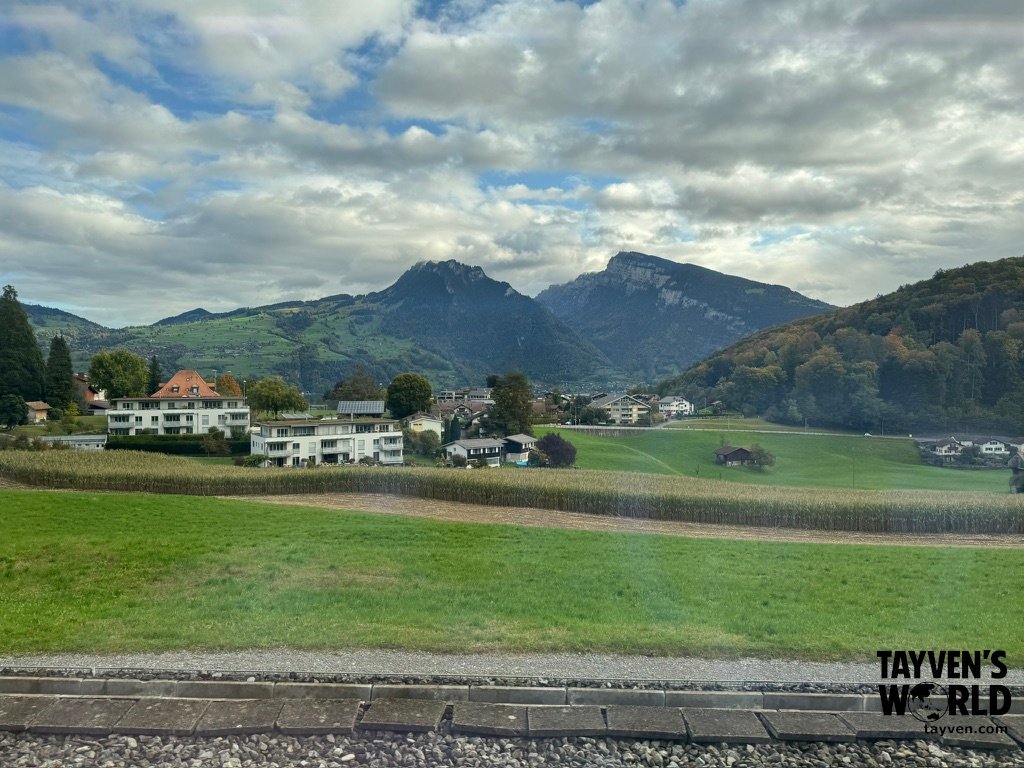
Once we settled in, the ride to Bern was smooth and almost silent. Swiss trains are immaculate, clean, punctual, and engineered to perfection.
Arriving in Bern – Love at First Sight
Stepping off the train in Bern felt like stepping into a different world.
Paris had been beautiful but chaotic. Bern was calm, organised, and instantly welcoming.
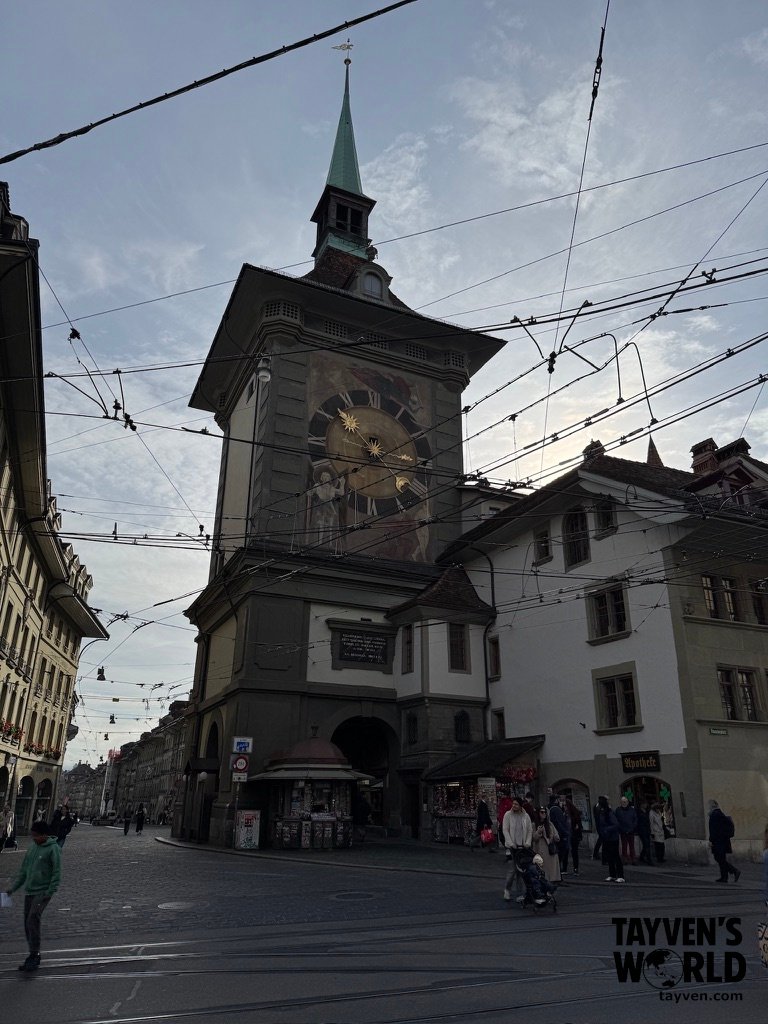
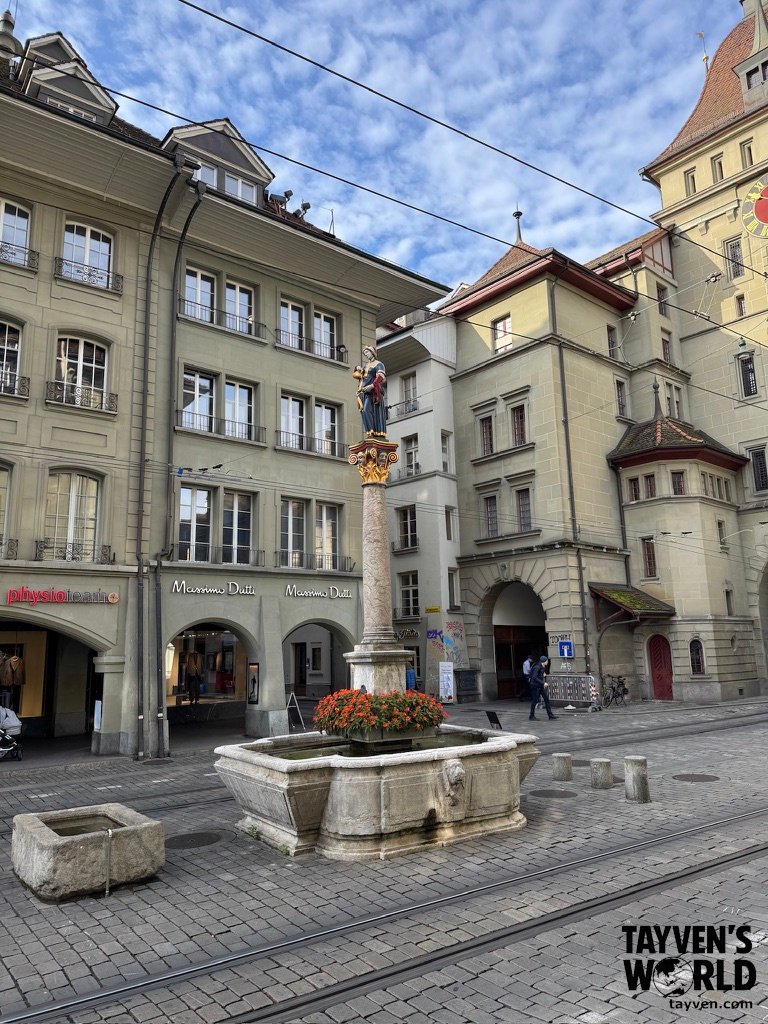
As we walked down the main street toward our hotel, the city came alive around us: trams gliding past with their soft ding… ding…, cyclists weaving effortlessly along the tracks, locals strolling without rush, and the whole place moving with a kind of quiet confidence. No honking. No chaos. No stress. Just a city that worked.
It was the first place on the trip where I thought, “I could live here.”
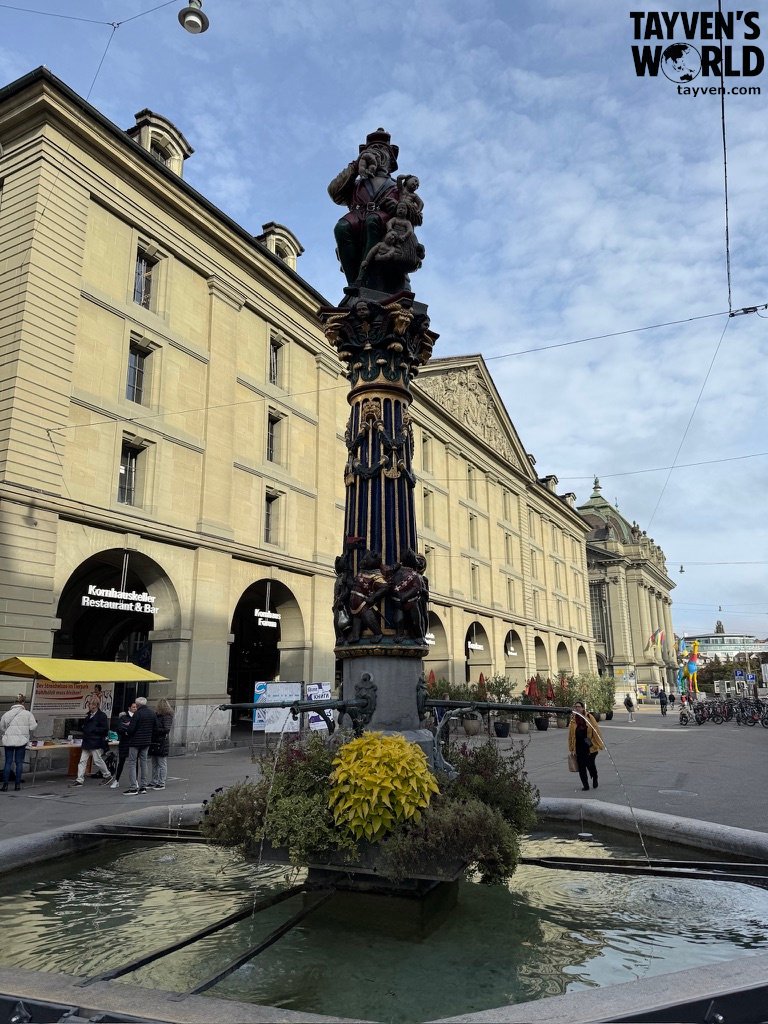
Coop, Pretzels, and The Goldener Schlüssel
We ducked into a Coop supermarket on the way to the hotel, and my son immediately spotted a giant German pretzel. He held it up next to his head, and it was literally the same size. He posed with it like he’d just won a medieval food challenge.
Then came the moment of truth: the hotel.
After the Paris hotel disaster, my wife walked into our room at Goldener Schlüssel (Golden Key in English) with the kind of cautious skepticism only a traumatised traveller can have. But the moment she saw the warm lighting, the wooden beams, the cosy beds, and that unmistakable Swiss charm… she melted.
Relief first. Then genuine delight.
Swiss beds are something else. Soft, warm, cloud‑like. After Paris, this felt like luxury.
…and with that sorted, we headed back out to explore Bern properly.
How You Can Do This Too – A Complete Eurail Guide
1. Buy a Eurail Global Pass (5 travel days is perfect)
When you buy a 5‑day Eurail Global Pass, it gives you:
- 5 separate days of unlimited train travel (Eurail offers multiple pass options, so you can choose the number of travel days that fits your trip.)
- to use anytime within a 1‑month window
- not 5 days in a row
This is where people get confused. A “travel day” doesn’t mean a calendar day you must use consecutively. It means that once you switch on a travel day in the app, you can take unlimited trains for 24 hours across the entire Eurail network. The app shows the travel day ending at 23:59, but functionally it’s a full 24‑hour pass.
You choose when to use each day. You space them out however you like. You’re not locked into a rigid schedule.
For example, you could travel on:
- Day 1: Paris → Basel
- Day 2: Basel → Bern
- Day 3: Bern → Interlaken
- Day 4: Zermatt day trip
- Day 5: Bern → Zurich Airport
All spread across a month, with rest days in between.
It’s flexible, cost‑effective, and perfect for multi‑country or multi‑city trips.
2. Install the Eurail App and Add Your Pass
Once purchased:
- download the Eurail/Interrail Rail Planner app
- add your pass using your confirmation code
- verify your passport details
This app becomes your ticket, your timetable, and your travel log.
3. Activate Your Pass Before Your First Train
Inside the app:
- choose your start date
- activate the pass
- activate your first travel day
- the app generates a QR code
This QR code is your ticket for the entire day.
Tip: I activated my pass the night before so I wasn’t fumbling with my phone at 6am. But I activated my first travel day on the day itself.
4. Add Each Train to “My Trip” and “My Pass”
Before boarding:
- search for your train
- tap “Add to My Trip”
- then tap “Add to My Pass”
This links the journey to your QR code.
If a conductor asks, you show:
- your QR code
- the journey list underneath
Tip: Do this ideally before your trip, but worst case on the platform, not once you’re already on the train.
5. Paris → Basel (TGV Lyria) – Reservation REQUIRED
This is the only part of the journey where Eurail alone is not enough.
You must book a seat reservation:
- TGV Lyria requires reservations
- they can sell out
- book early (especially in summer)
- first class is absolutely worth it
You must show both:
- your Eurail QR code
- your seat reservation
6. Basel → Bern (Swiss Rail SBB) – Reservation NOT required
Swiss domestic trains are a Eurail traveller’s dream:
- no reservations needed
- board any train, any time
- first class is open seating
- trains run every 10–20 minutes
Your Eurail Pass alone is enough.
Tip: If you want a window seat, board early. You can book seats on Swiss Rail, we did but most people simply hop on and choose any open spot.
7. If Someone Is in Your Seat – Show Your Reservation
Swiss people love the rules. They will move immediately. No drama. No awkwardness.
8. Don’t Rush Your Connection in Basel
Give yourself:
- 20–30 minutes
- time to find the platform
- time to breathe after the long TGV ride
Swiss trains are punctual to the minute.
9. Keep Your Pass Active Until You Reach Your Hotel
If you take:
- a tram
- a local train
- or a connecting service
Tip: …it still counts as part of your travel day. You don’t need to do anything, the travel day expires automatically after 24 hours.
10. Enjoy Bern’s Trams (and Their Iconic Dings)
Bern’s trams are:
- frequent
- clean
- easy to use
- included in many hotel guest cards
And yes, the soft ding… ding… is real. It’s part of the city’s soundtrack.
11. Only Buy the Swiss Travel Pass for Days Your Eurail Pass Isn’t Active
When I planned this trip, I didn’t fully understand how the passes overlapped. I ended up buying a Swiss Travel Pass for the days we were in Switzerland, even though my Eurail Global Pass already covered every Swiss train. I didn’t need both.
Here’s the simple rule I wish I’d known:
Only buy the Swiss Travel Pass for the days your Eurail Pass won’t be active.
If your Eurail travel day is active, it already covers:
- all SBB trains
- all regional trains
- Basel → Bern → Interlaken → Lucerne → Zurich
- most boats and some mountain routes (with discounts)
The Swiss Travel Pass is great, but it’s only useful on the days you’re not using a Eurail travel day.
How to Plan Your Train Travel (Eurail + Swiss Rail Apps)
If you’re using a Eurail Pass, the easiest way to plan your travel days is through the Eurail Rail Planner App. It shows all the trains covered by your pass, lets you activate travel days, and makes it simple to add each train to your itinerary. Once you switch on a travel day, you can take unlimited trains until 23:59, so the app becomes your central hub for managing your whole day.
But when you’re actually travelling inside Switzerland, the SBB Mobile App is on another level. It’s genuinely one of the best transport apps in Europe. You get real‑time platform changes, live delays, carriage layouts, and even which side of the train the doors will open. It’s fast, accurate, and makes navigating the Swiss network effortless.
My recommendation is simple:
Use Eurail to manage your pass and travel days, and use SBB for everything inside Switzerland. Together, they make train travel incredibly smooth.
A slower one. A calmer one. A welcome one.
By the time we finally checked into Goldener Schlüssel later that afternoon, it felt like the whole trip had shifted gears. Paris had been unforgettable, but intense. Bern was calm, warm, and relaxed. We arrived too early to check in fully, but the staff happily stored our bags and sent us back out into the city.
It was only Day 1 in Switzerland, but something about the trams, the tidy streets, the mountain air, even the pretzel the size of my son’s head, made it feel like Switzerland moved at a different pace. Slower, more human.
And for the first time since London, all three of us felt completely at ease.
More Paris, London & Europe Travel Articles
Paris Series:
- London to Paris on the Eurostar: A First‑Timer’s Story & Complete Guide
- A Rainy Start, a Seine River Cruise, and Paris Finally Opening Up
- Versailles, Paris Streets & The Unexpected Magic of a Laundromat
- From the Louvre to the Eiffel Tower: A Storm‑Soaked Day in Paris
London Series:
- Our Real 5‑Day London Itinerary: What We Planned vs What Actually Happened
- St Paul’s Cathedral London: History, Blitz Survival, Tickets, Tube Guide & Our First-Day Experience
- Westminster Abbey: A First‑Timer’s Guide (Tickets, Tips & What to Expect)
- British Museum First‑Time Guide: A Morning in Bloomsbury
- London Eye: A First‑Time Visitor’s Experience Above the Thames
- Battersea Power Station: From Industrial Giant to London’s Newest Urban Playground
- A Perfect Day in South Kensington: Museums, Parks & Retro Gaming Nostalgia
- River Cruise Along the Thames: From Buckingham Palace Mornings to Bloomsbury Nights
- Our Final Day in London: Royal Dawn, Parliament Secrets, West End Magic, and the Feeling of Not Wanting to Leave
Europe Series: