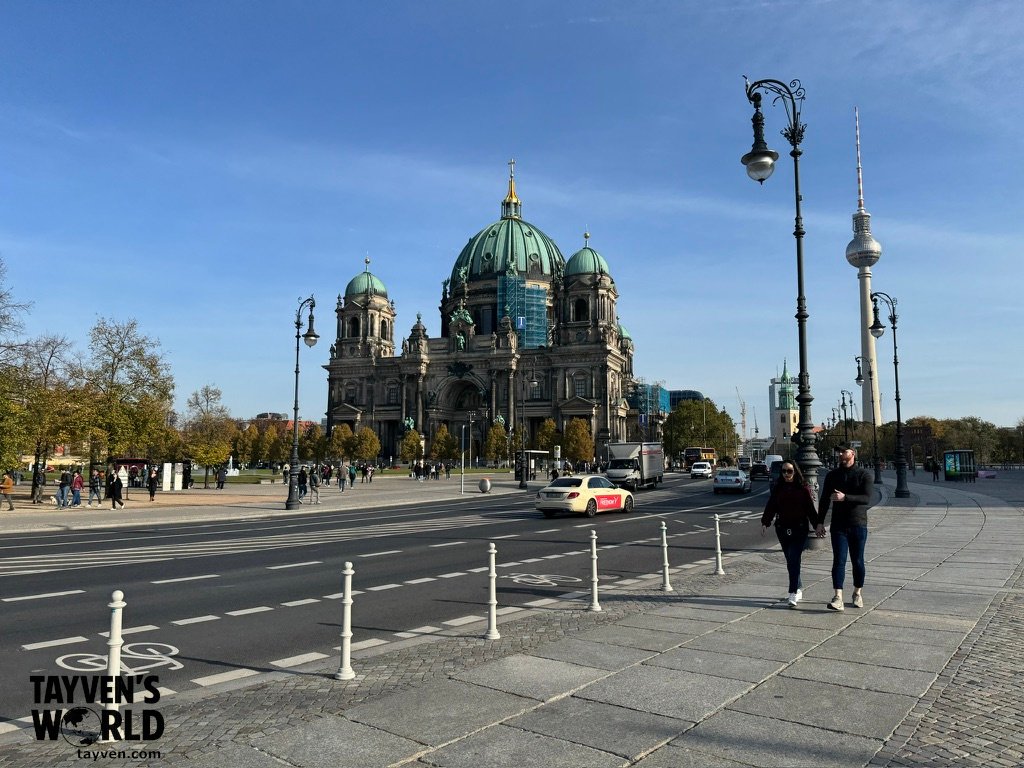
One of our favourite things to do when travelling is visit the main cathedral or church of a city. Some of our best memories from London came from exploring Westminster Abbey and St Paul’s Cathedral, so naturally Berlin Cathedral was high on the list for our second day in the city.
The day began with another outstanding breakfast at the Hilton Berlin. After our breakfast disaster in Munich, this felt like redemption. Bacon, eggs, pastries, coffee, fruit, and enough variety to keep everyone happy. The breakfast restaurant sits above the lobby and looks out onto the streets of Berlin, making it difficult not to linger a little longer than planned.
Eventually, though, Berlin was waiting.
Berlin Cathedral and Museum Island
Our first destination was Museum Island and the Berlin Cathedral.
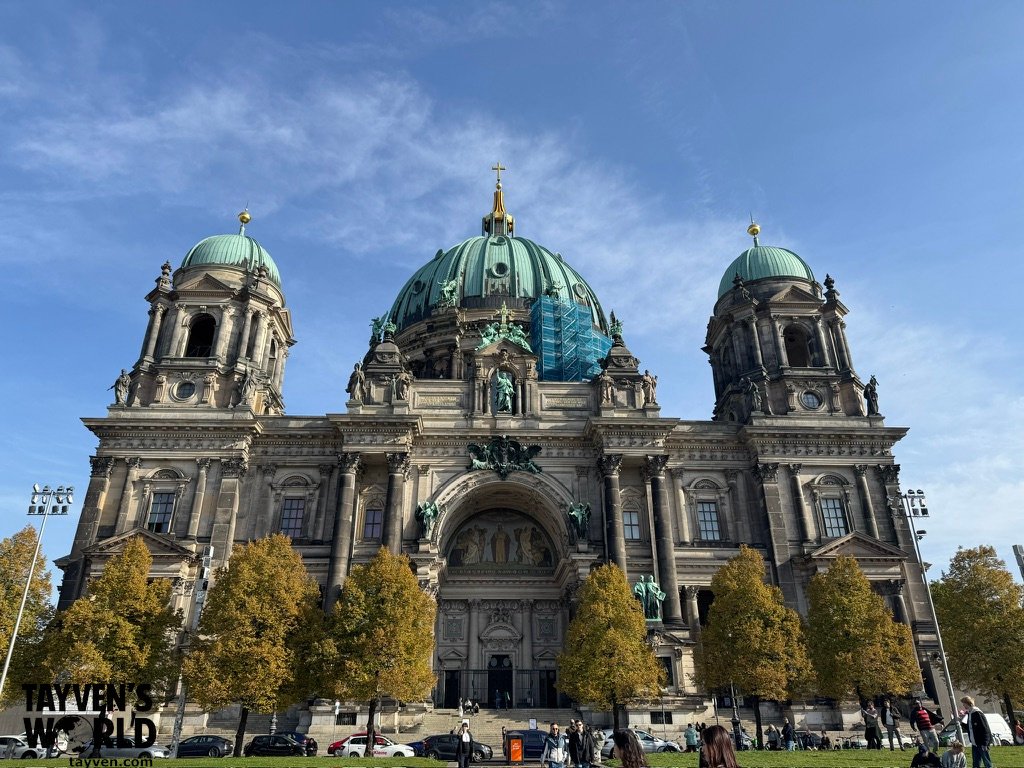
The cathedral had already become a familiar sight from around the city, but seeing it up close was something else entirely. The enormous green dome dominates the skyline, topped with golden ornamentation that catches the light beautifully. Up close, the building feels every bit as impressive as its reputation suggests.
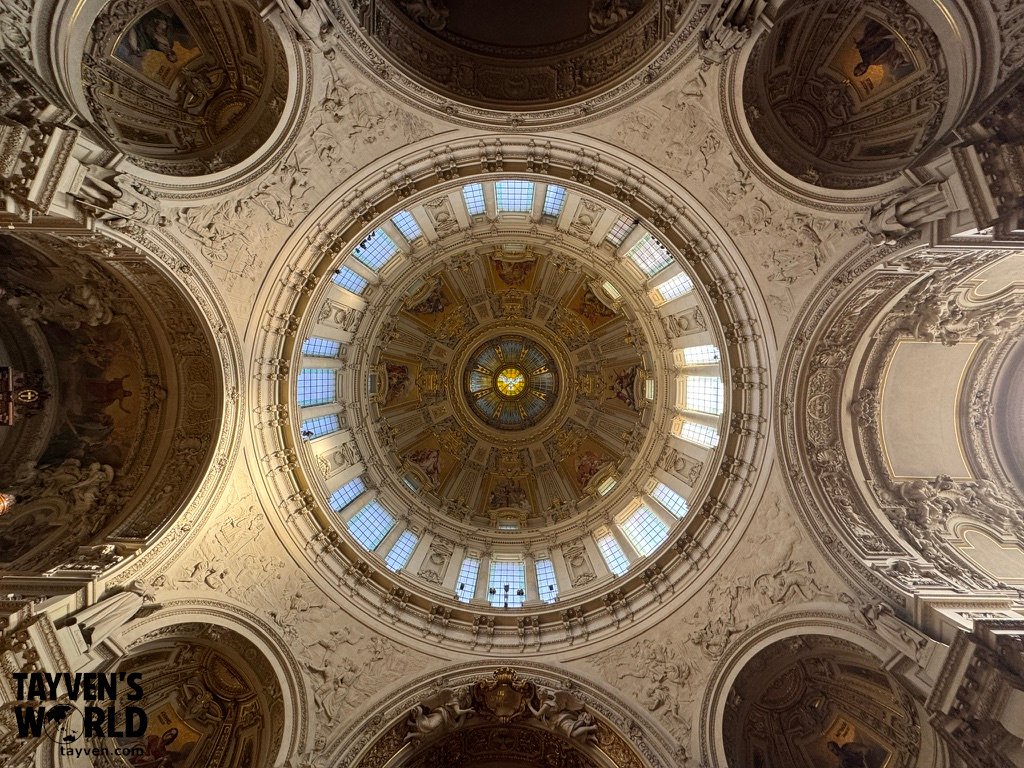
Inside, the cathedral is stunning. Decorative arches stretch overhead, intricate artwork covers the walls, and sculptures and carvings seem to fill every available space. One of the most memorable features was the enormous organ, which looked perfectly at home within such a grand building.
Although it isn’t quite as large as St Paul’s in London, it felt every bit as special.
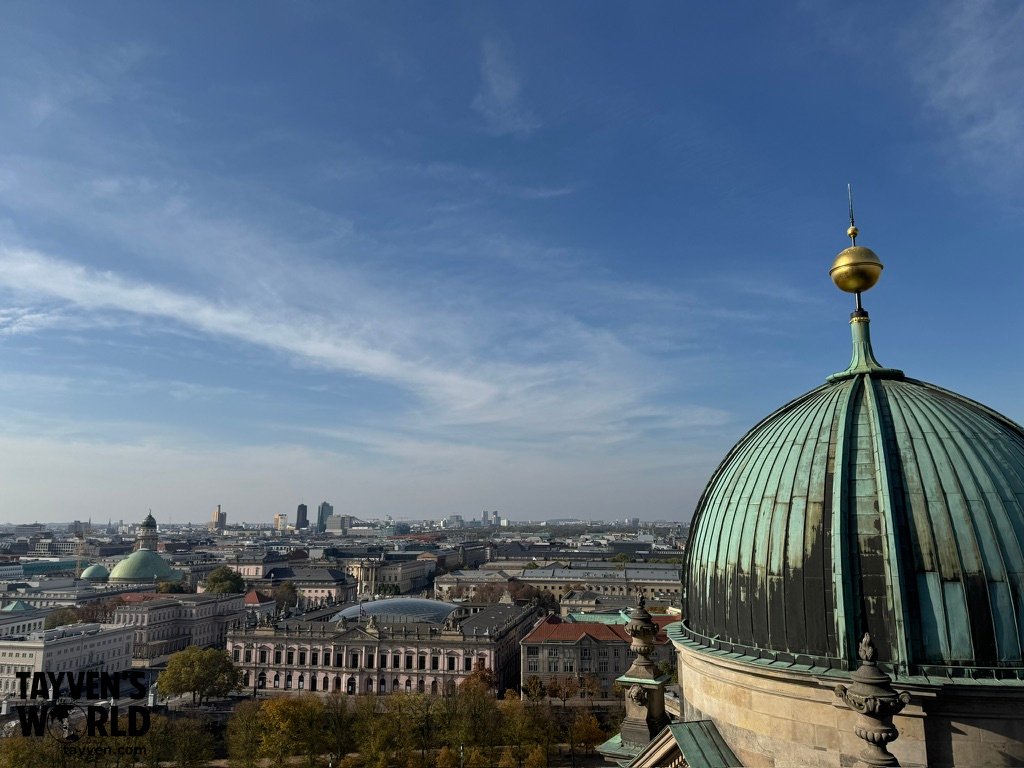
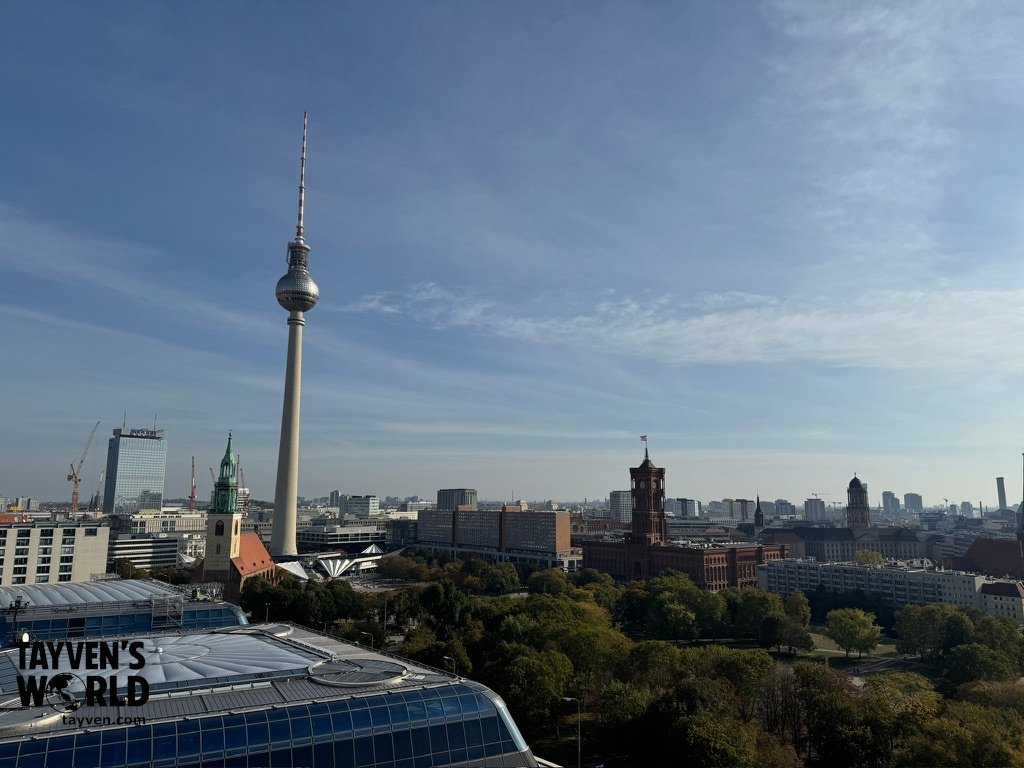
One of the highlights was the climb to the viewing platform. It’s a long climb, and by the time you reach the top you’ve definitely done your leg day, but the reward is worth it. From above, Berlin opens up around you. The view isn’t quite as high as the TV Tower, but in some ways it’s better because you can walk around the dome and enjoy completely different perspectives of the city.
Standing beside the cathedral’s huge green roof and looking out across Museum Island while the TV Tower sparkled in the distance was one of my favourite moments of the day.
Afterwards we wandered around Museum Island and considered visiting the Neues Museum, home to the famous bust of Nefertiti. In the end we decided to save it for a future trip. We had already spent considerable time exploring museums in London and Paris, and with only a limited amount of time in Berlin we chose to enjoy the architecture and atmosphere instead.
It was the right decision.
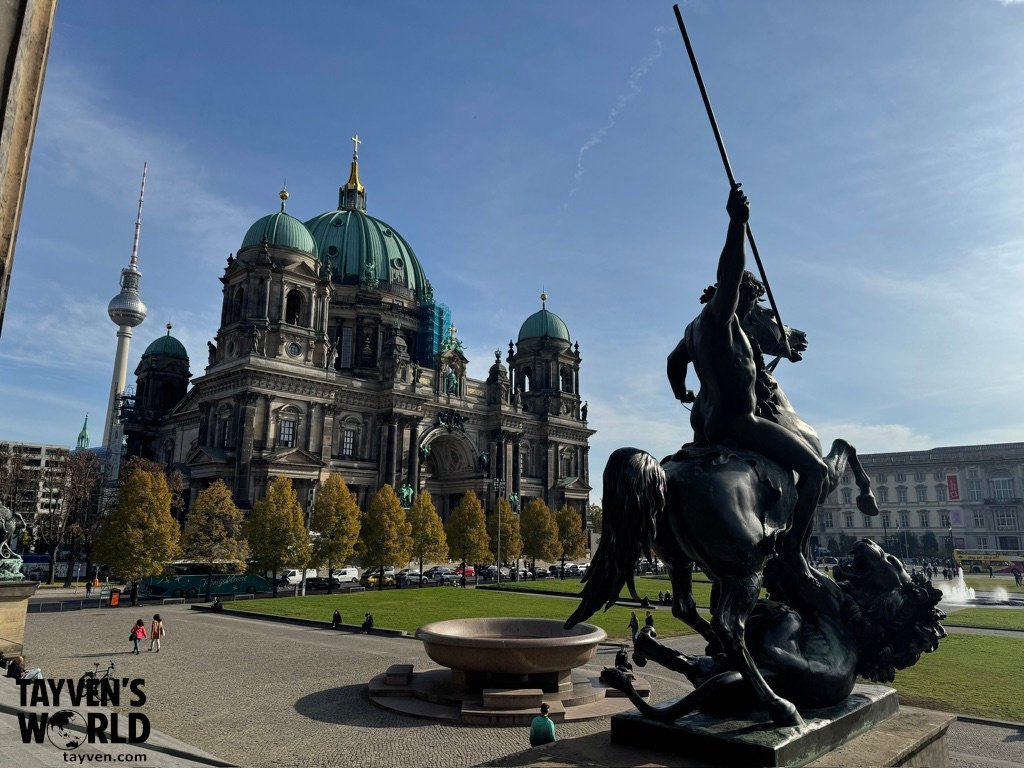
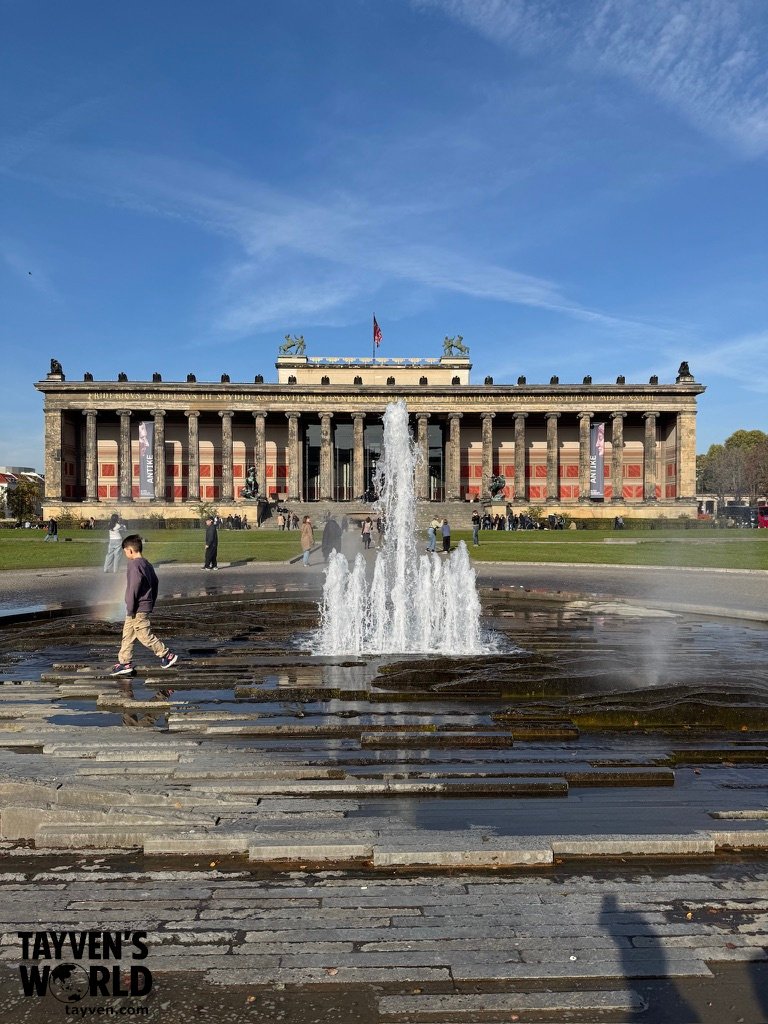
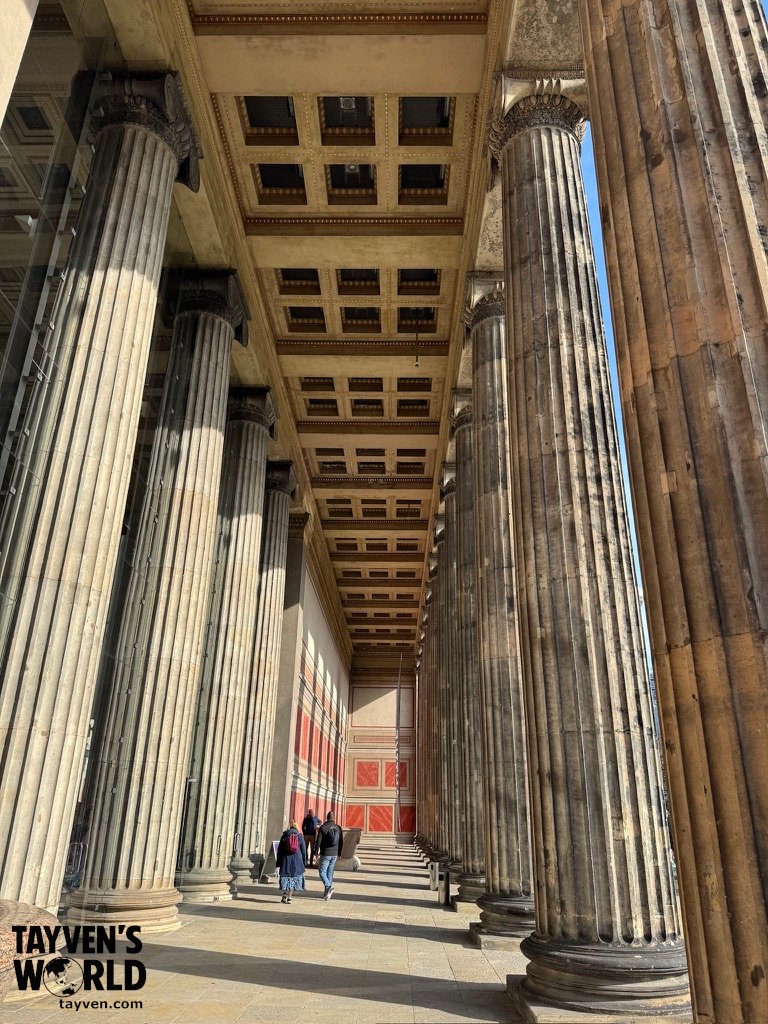
The buildings themselves were fascinating. Signs of wartime damage can still be seen in places, subtle reminders of the battles that shaped Berlin’s history. During restoration work in 2009, some of this damage was intentionally preserved rather than erased. I liked that decision. It allows the buildings to tell their full story rather than pretending those events never happened. Outside the Neues Museum, some spectacular sculptures immediately caught my eye. Massive statues showed riders on horseback battling lions, creating a dramatic entrance that overlooked the surrounding parkland.
Standing there, looking towards the cathedral while the TV Tower remained visible in the distance, felt uniquely Berlin. Different eras of the city’s history seemed to sit comfortably within the same view.
The Bike Lane Incident
From Museum Island we began walking towards the East Side Gallery.
The journey started with a valuable lesson about Berlin’s bike lanes. Australians instinctively gravitate to the left-hand side of pathways and roads. Without really thinking about it, that’s exactly what we did.
Berlin’s cyclists were not impressed.
About halfway down the path, a steady stream of bicycles appeared heading directly towards us at considerable speed. It quickly became obvious that we were standing exactly where we shouldn’t have been. What followed was a rapid relocation over a nearby barrier while trying to avoid becoming part of Berlin’s cycling infrastructure.
Once we realised that pedestrians and cyclists had their own lanes, the problem was solved. Needless to say, we paid much closer attention for the remainder of the trip.
Walking Through Berlin
The walk itself became part of the experience.
One of the things I enjoyed most about Berlin was seeing the city between the major attractions. Apartment blocks, businesses, cafés, parks, trains, trams, and people simply going about their day. We spent much of the walk talking about the trip, discussing what we’d already seen and what we still wanted to do.
Sometimes the best part of travel is not the destination. It’s the walk between destinations. This was one of those days.
The East Side Gallery
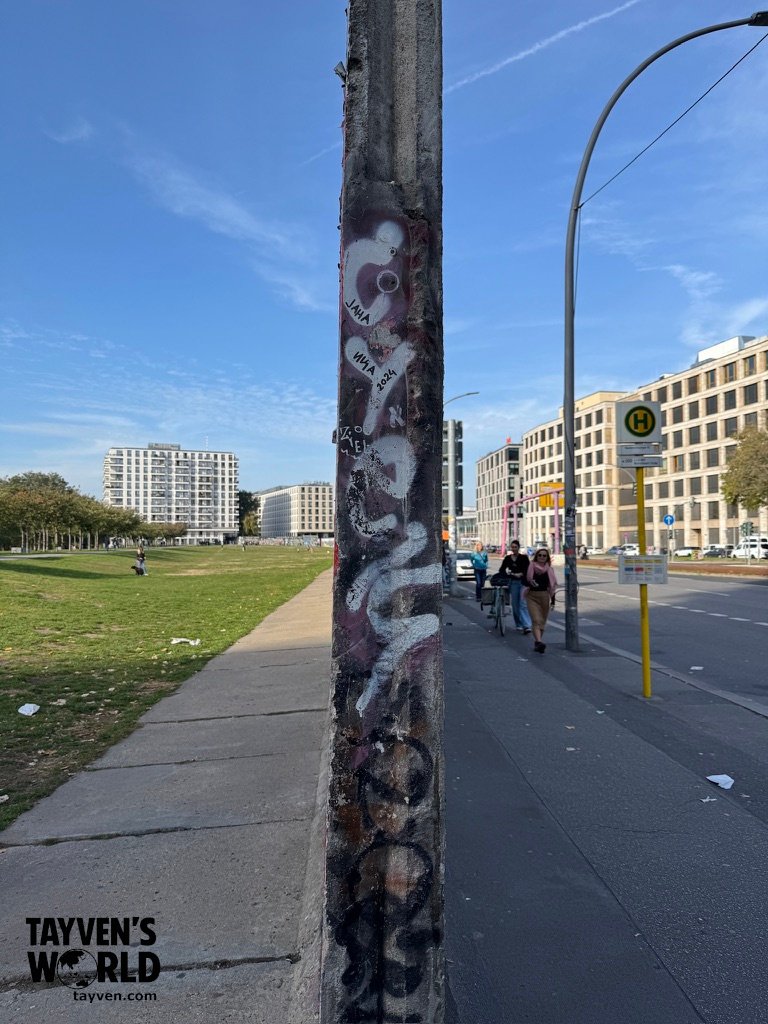
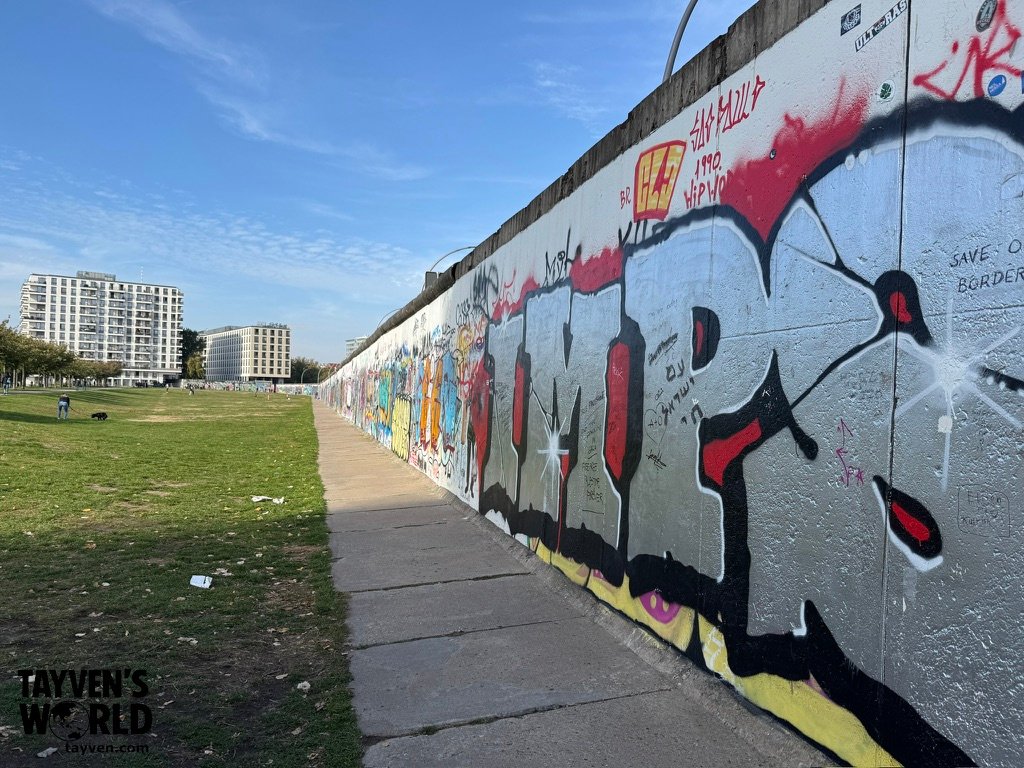
Eventually we reached the East Side Gallery. For someone who had spent years reading about the Cold War and the Berlin Wall, this was one of the places I most wanted to see.
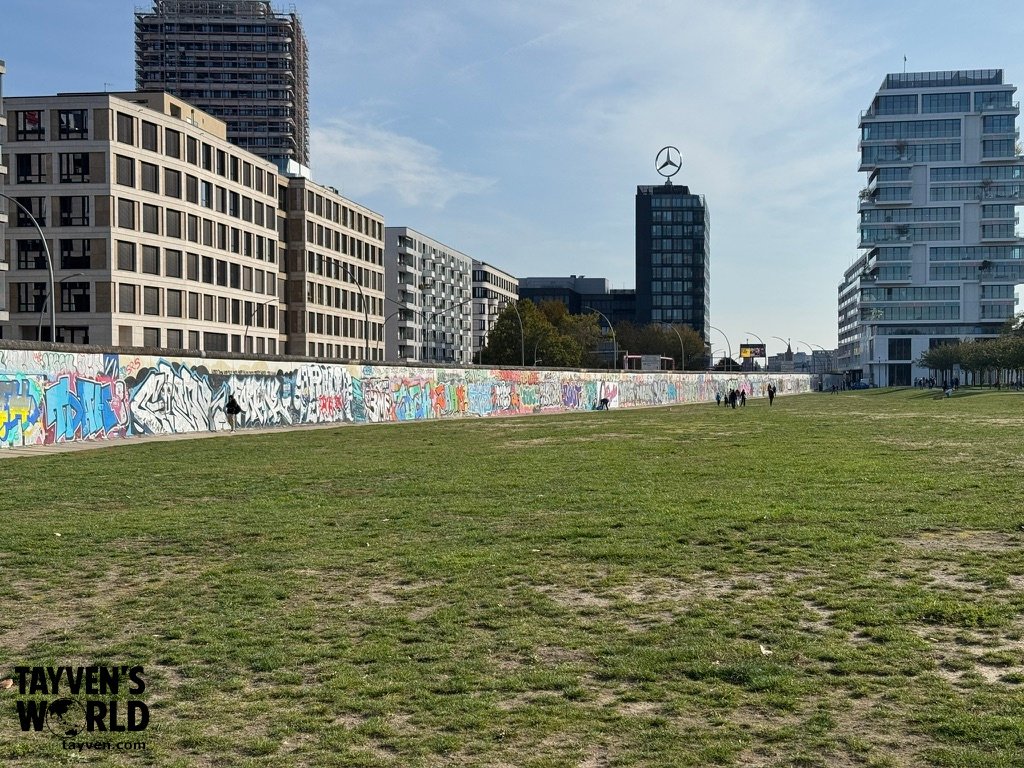
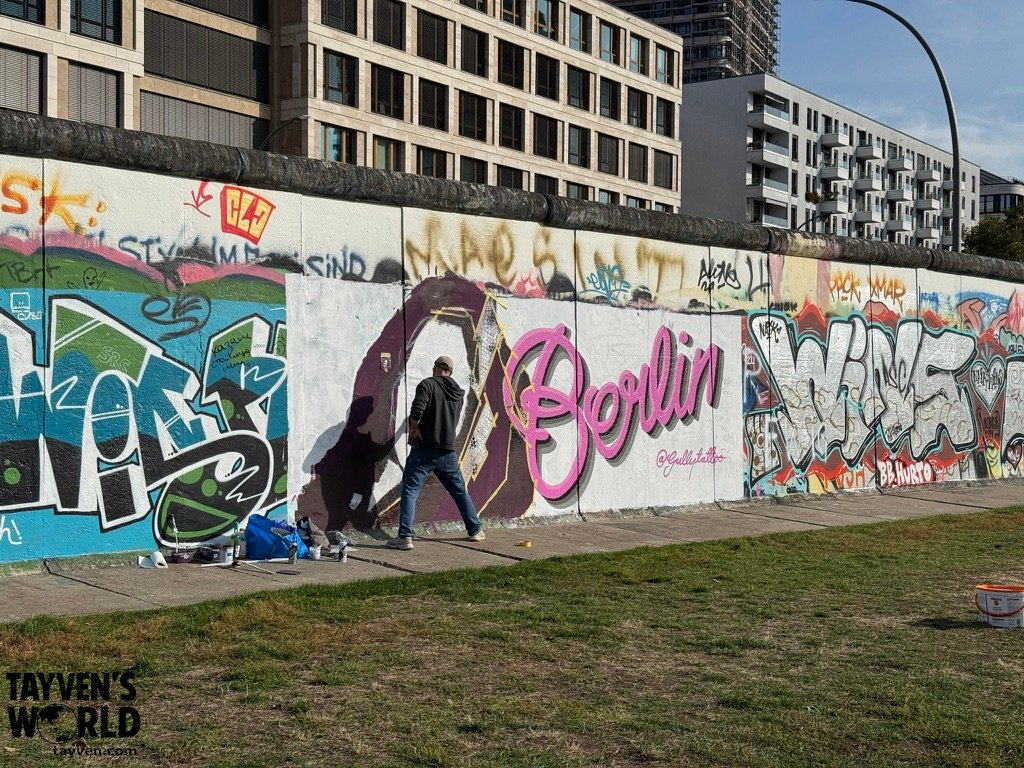
The contrast was striking. Modern office buildings and apartment towers surrounded the area. A giant Mercedes-Benz sign dominated part of the skyline. Yet running alongside it all was a surviving section of the Berlin Wall. What made the experience even more memorable was that an artist was actively painting a new mural while we were there. Watching someone create art on the Wall felt symbolic. Forty years earlier, nobody would have been freely standing there painting whatever they wanted. Now the Wall had become a canvas for creativity rather than a barrier dividing a city.
One of the most interesting moments came when we reached a gap in the Wall. Standing there, I found myself imagining what the area would have looked like when East and West Berlin were divided. For a history enthusiast, it was impossible not to pause for a moment and reflect on what had happened there.
The murals themselves were fascinating. Some were political. Others were hopeful, reflective, or deeply personal. One of my favourites was the so-called Japanese Sector mural. At first it doesn’t make much sense because there was never a Japanese sector in Berlin.
The story behind it, however, is surprisingly moving. The artist had never been able to visit Japan while living in East Germany, so the mural became a way of imagining a place that had always been out of reach. That detail stuck with me. Freedom isn’t always about grand gestures. Sometimes it’s simply about being able to go somewhere you dream of visiting.
Computer Games Museum
After spending hours walking along the Wall, it was time for something completely different.
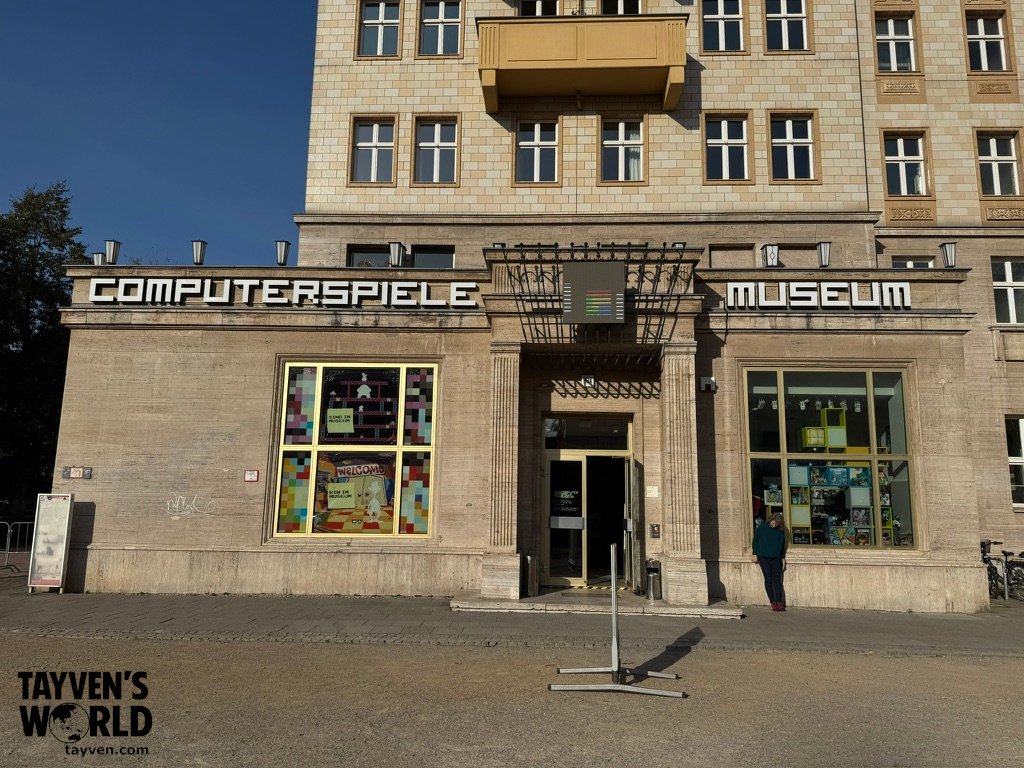
A friend had recommended Berlin’s Computer Games Museum and, knowing both my son and I would enjoy it, I had added it to the itinerary. The journey there involved even more walking through Berlin, a quick McDonald’s stop to recharge, and plenty of opportunities to see neighbourhoods we never would have visited otherwise.
The museum was absolutely worth it.
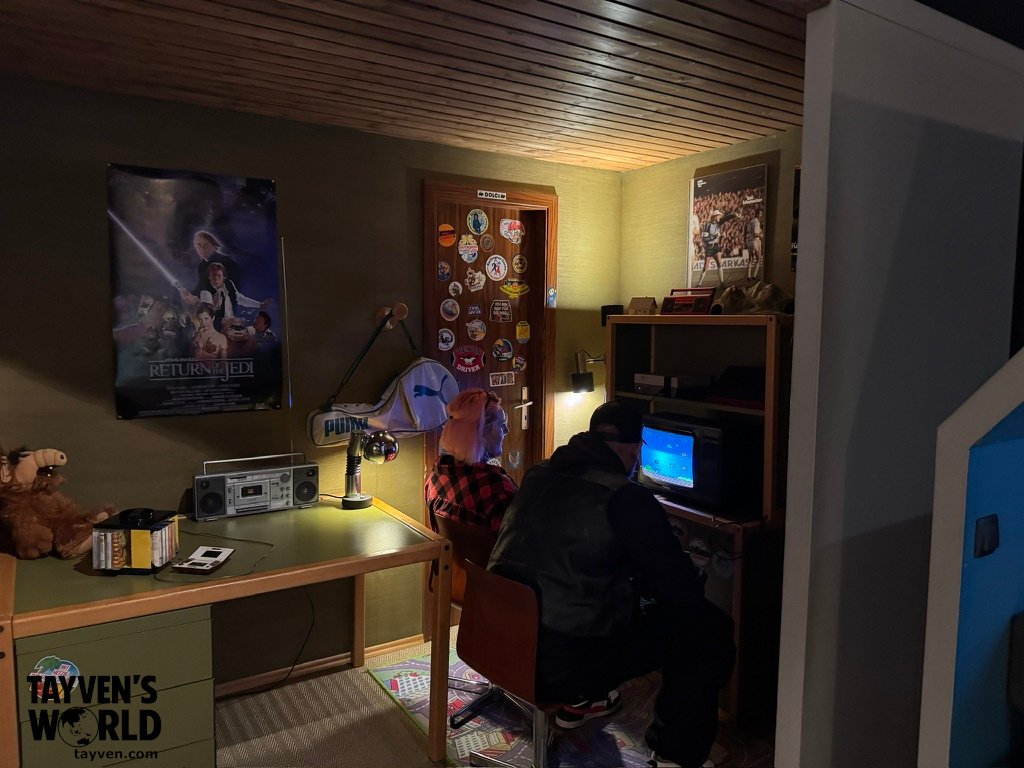
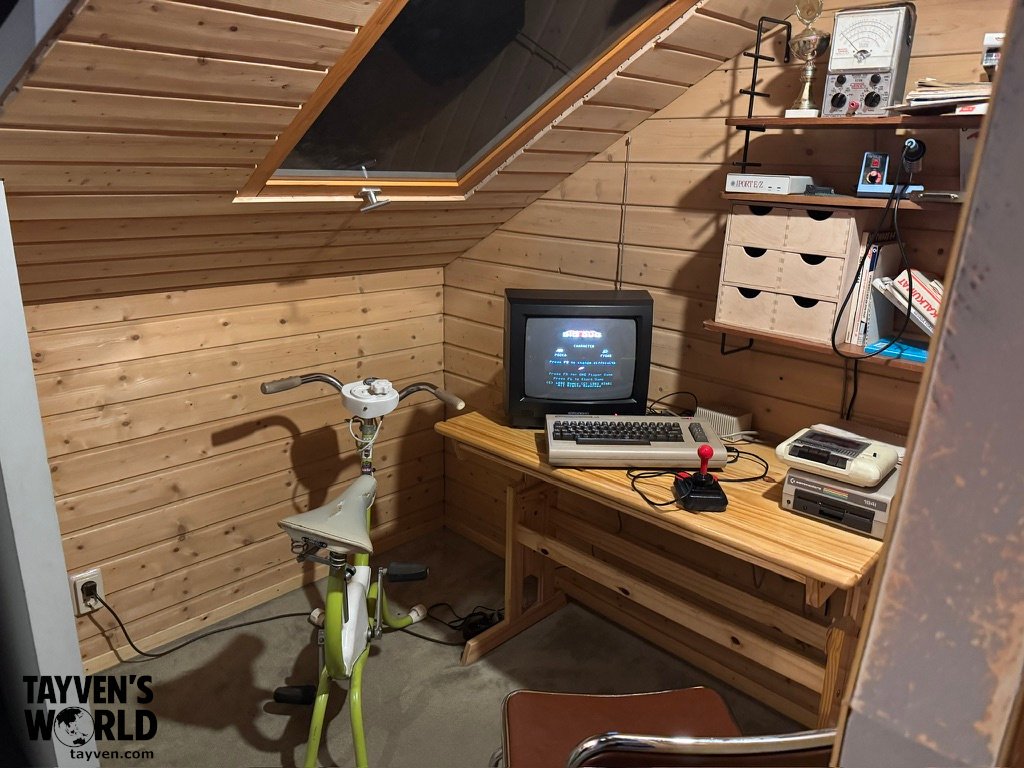
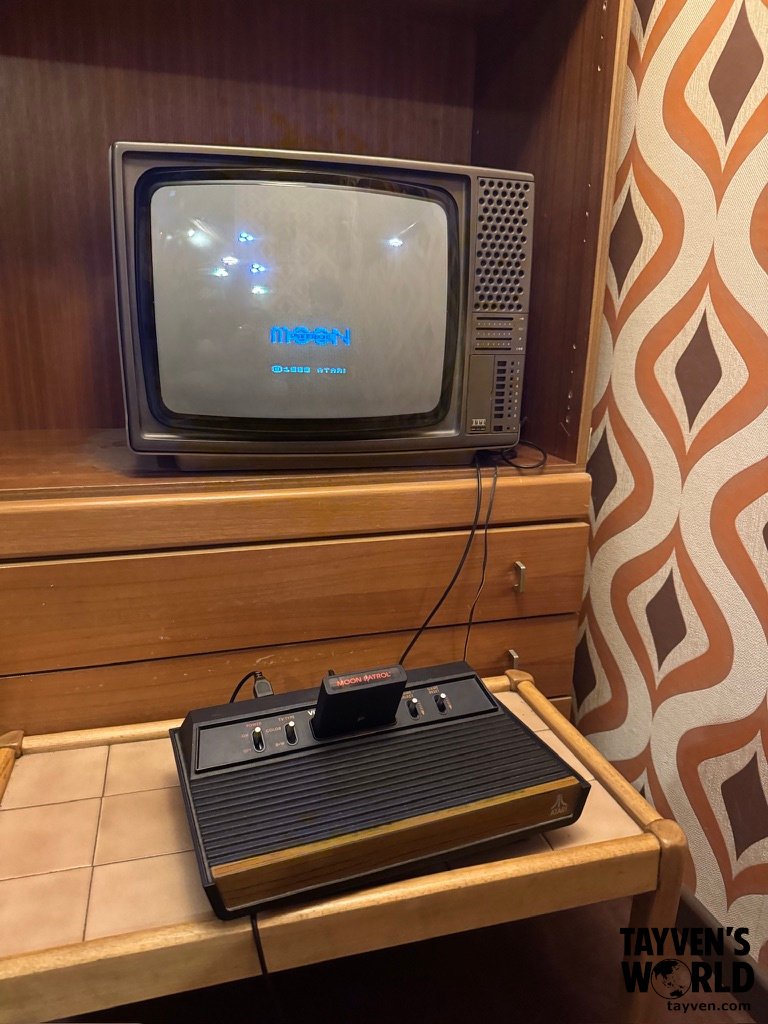
As soon as you walk in, you’re greeted by Gordon Freeman from Half-Life. From there, the museum becomes a journey through the history of gaming and computers. What made it special were the themed rooms. They had recreated period rooms based around systems such as the Atari, Commodore 64, Nintendo Entertainment System, and PlayStation. Instead of simply looking at old hardware in glass cabinets, visitors could sit down and actually play many of the systems.
Naturally, the Nintendo room was popular. We waited patiently and eventually grabbed some time with Super Mario, which felt like stepping back into childhood.
The museum also featured a range of arcade machines, but the standout for me was Paperboy. Having played versions of it years ago, it was fantastic to encounter the arcade machine in person. The controls felt just as awkward and chaotic as I remembered. The whole experience was wonderfully nostalgic and had something for all of us.
Karl-Marx-Allee
Leaving the museum, we walked along Karl-Marx-Allee back towards Alexanderplatz.
The scale of the boulevard is remarkable. Huge apartment buildings, broad avenues, and an architectural style that feels completely different from much of the rest of Berlin. Walking there felt like stepping into a preserved piece of East German history.
It’s one of those places that quietly impresses you. By this point, however, our legs were starting to protest. We had covered a tremendous amount of ground.
Frittenwerk and Forgetting What Country I Was In
Back near Alexanderplatz, what felt like half the Berlin police force suddenly arrived in the square. Around fifteen police vehicles appeared seemingly from nowhere. We never discovered what was happening, and Berlin kept that particular mystery to itself.
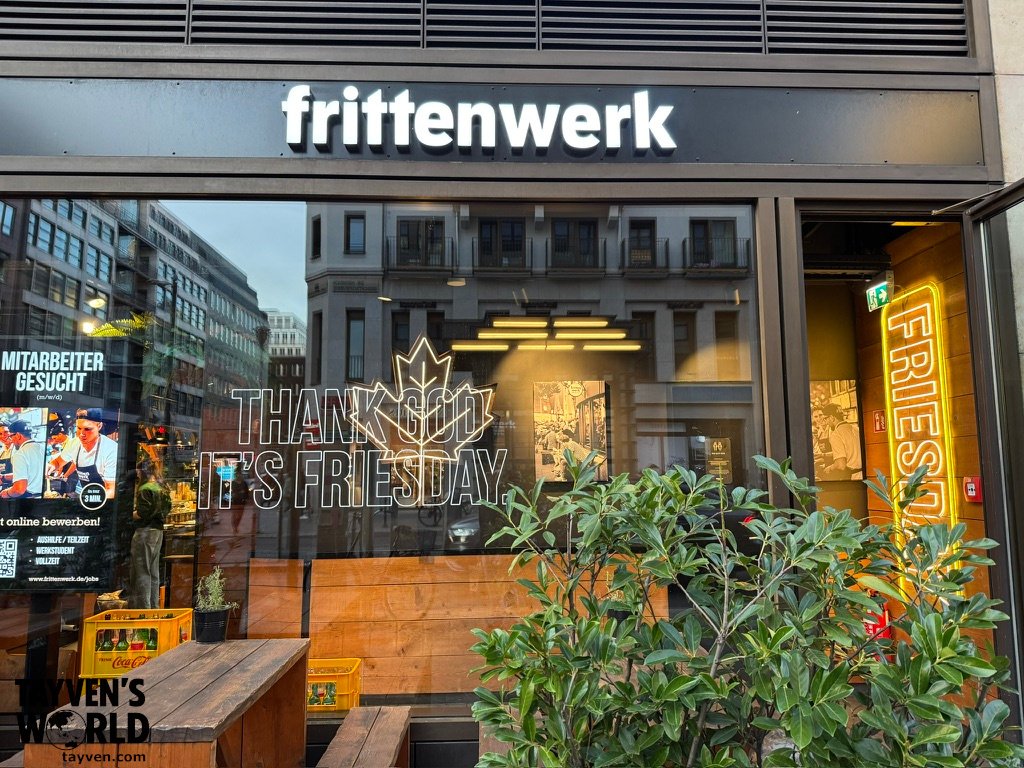
We decided it was probably a good time to grab dinner. The plan was simple: takeaway from Frittenwerk and then back to the hotel. The funny thing was that by this point in the trip I’d become dangerously comfortable travelling around Europe. Hotel staff spoke English. Train staff spoke English. Restaurant staff spoke English. Everybody seemed to speak English. So I confidently walked into Frittenwerk and immediately started asking my question in English.
The staff member paused for a moment and I could almost see them mentally switching languages. Only then did I remember an important detail.
I was still in Germany.
The really funny part was that Frittenwerk has a giant maple leaf on the front window, Canadian branding everywhere, and signs inside saying things like “Thank God It’s Friesday.” Apparently my brain interpreted this as permission to temporarily forget what country I was in.
After apologising and explaining that I was visiting from Australia, I beat a tactical retreat to the self-service ordering screen and completed my order there.
It was mildly embarrassing at the time. It became much funnier afterwards.
Back at the Hilton
With dinner sorted, we returned to the Hilton and spent the evening exploring some of the facilities we hadn’t yet seen, including the pool and gym.
Looking back on the day, what struck me most was how many different versions of Berlin we had experienced. We started among cathedral domes and museum buildings, stood beside one of history’s most famous walls, explored Cold War history, wandered through East German architecture, and somehow finished the afternoon playing Paperboy in a gaming museum.
On paper, none of those things should fit together.
In Berlin, they somehow do.
The city constantly layers history, culture, technology, and everyday life on top of one another. Everywhere we went there seemed to be another story waiting just around the corner.
We had walked a ridiculous distance, seen more than we could properly process, and returned to the hotel completely exhausted.
And yet it still felt as though Berlin had only shown us another layer of itself.
Frequently Asked Questions
Is Berlin Cathedral worth visiting?
Yes, The interior is spectacular, featuring ornate architecture, artwork, sculptures, and an enormous pipe organ. The climb to the viewing platform is also worth the effort, offering fantastic views across Museum Island and central Berlin.
How difficult is the Berlin Cathedral dome climb?
It’s a fairly long climb, 270 steps. By the time you reach the top you’ve definitely done your leg day. Comfortable walking shoes are recommended, but the views from the observation platform make the effort worthwhile.
Is the East Side Gallery worth visiting?
Absolutely. The East Side Gallery is much more than a surviving section of the Berlin Wall. The murals transform a symbol of division into a giant open-air gallery filled with personal, political, and cultural stories. It was one of the most memorable experiences of our time in Berlin.
How long should I spend at the East Side Gallery?
Allow at least one to two hours if you want to properly walk the length of the Wall, admire the artwork, and read about some of the stories behind the murals. History enthusiasts could easily spend even longer.
What is the Computer Games Museum like?
The Computer Games Museum is one of Berlin’s most unique attractions. It combines gaming history, computer history, and hands-on exhibits where visitors can actually play classic systems and arcade machines.
Is the Computer Games Museum worth visiting for adults?
Yes, especially if you grew up during the Atari, Commodore 64, Nintendo, PlayStation, or arcade eras. The museum is packed with nostalgia while also documenting the evolution of gaming technology.
What museum is home to Nefertiti’s bust?
The famous bust of Nefertiti is located in Berlin’s Neues Museum on Museum Island. We didn’t go inside during this visit, but it’s high on my list for a future trip.
Is Museum Island worth visiting even if you don’t enter the museums?
Definitely. The architecture alone makes Museum Island worthwhile. Berlin Cathedral, the museum buildings, sculptures, and views across the area make it one of the most impressive parts of the city.
Can you see traces of World War II damage in Berlin?
Yes. Some buildings around Museum Island still display signs of wartime damage. In several cases, portions of that damage were intentionally preserved during restoration work as a reminder of the city’s history.
Is Berlin walkable?
Very much so. We spent most of the day exploring on foot and found Berlin easy to navigate. Walking between attractions often became part of the experience, allowing us to discover parts of the city we otherwise would have missed.
Would you visit these attractions again?
Without hesitation. If I was visiting Berlin for the first time again, I would absolutely return to Berlin Cathedral, the East Side Gallery, Museum Island, and the Computer Games Museum. They each offered something completely different and together helped reveal the many layers of the city.
More Travel. Australia, Paris, London & Europe Travel Articles
Germany
- Berlin Germany: From Munich by Train to Our First Day in Berlin
- Munich Germany: Beer Halls, Old Town Streets, and a Birthday Across Borders
- Berlin: Checkpoint Charlie, Brandenburg Gate, and the Tiergarten
- Berlin to Amsterdam: The Day Everything Went Wrong (and Somehow Still Worked Out)
Australia
Blue Mountains Series:
- Blue Mountains 4‑Day Guide: Echo Point, Scenic World, Leura & Wentworth Falls
- Blue Mountains: A Winter Trip Through Memory, Mountains, and Family
Melbourne series:
Switzerland Series:
- Bern Switzerland: A Small City Built for Big Moments
- Paris to Bern: A First‑Class Train Ride and a Complete Eurail Guide
- Lucerne Switzerland: A Day Trip That Felt Like a Postcard Come to Life
Paris Series:
- London to Paris on the Eurostar: A First‑Timer’s Story & Complete Guide
- A Rainy Start, a Seine River Cruise, and Paris Finally Opening Up
- Versailles, Paris Streets & The Unexpected Magic of a Laundromat
- From the Louvre to the Eiffel Tower: A Storm‑Soaked Day in Paris
- The Best 4 Day Paris Itinerary (Built From Real Experience, Not Brochure Fantasy)
London Series:
- Our Real 5‑Day London Itinerary: What We Planned vs What Actually Happened
- St Paul’s Cathedral London: History, Blitz Survival, Tickets, Tube Guide & Our First-Day Experience
- Westminster Abbey: A First‑Timer’s Guide (Tickets, Tips & What to Expect)
- British Museum First‑Time Guide: A Morning in Bloomsbury
- London Eye: A First‑Time Visitor’s Experience Above the Thames
- Battersea Power Station: From Industrial Giant to London’s Newest Urban Playground
- A Perfect Day in South Kensington: Museums, Parks & Retro Gaming Nostalgia
- River Cruise Along the Thames: From Buckingham Palace Mornings to Bloomsbury Nights
- Our Final Day in London: Royal Dawn, Parliament Secrets, West End Magic, and the Feeling of Not Wanting to Leave
Europe Series: