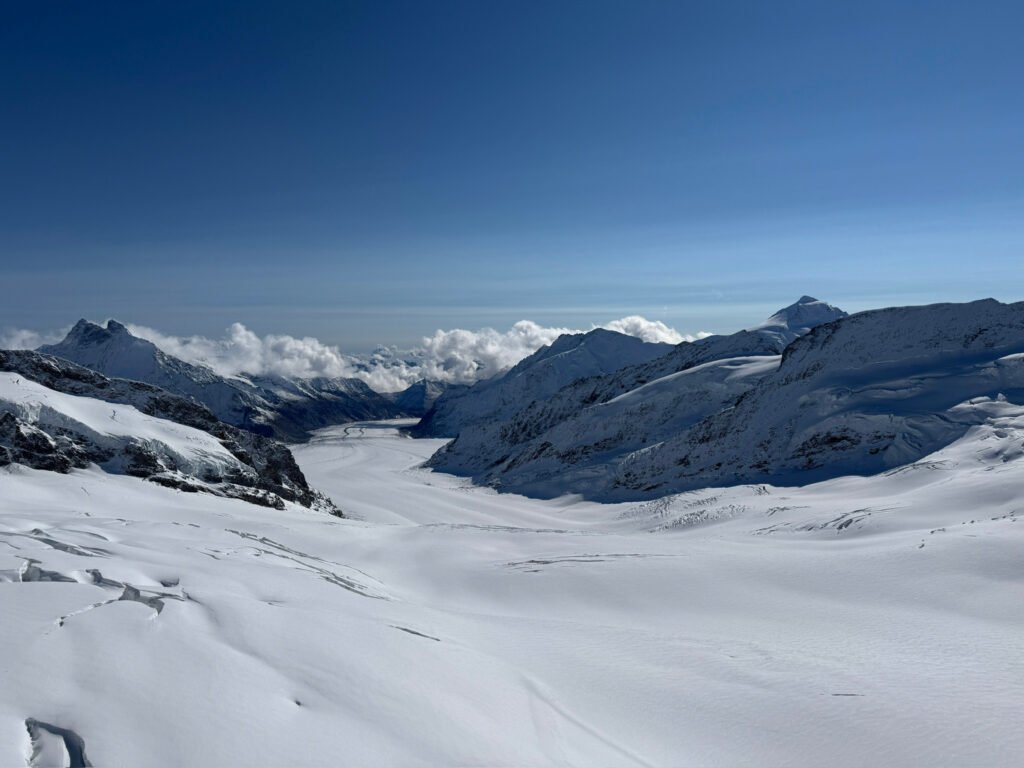
I woke up early on my 40th birthday with the strange realisation that I’d be spending the day in two different countries. It felt like an unexpected gift, a milestone wrapped inside a travel day. We started the morning in Bern with one last buffet breakfast at the Goldener Schlüssel (The Golden Key). Afterwards, we ducked into our favourite Coop for snacks, knowing the journey ahead would be long.
By then, the walk to Bern station felt familiar. Boarding the train felt effortless. Swiss Rail has a way of making travel feel calm and almost luxurious, with first-class seats, quiet carriages, and postcard-worthy scenery rolling past the window. Our connection in Zurich was smooth, although Zurich Hauptbahnhof itself is enormous and it took us a while to find our next train.
We wandered around looking for the toilets, only to realise that in Europe you don’t look for “Men” and “Women” signs, you look for WC. A small detail, but one that made us laugh. From Zurich, the train continued toward Munich, briefly passing through Austria before crossing into Germany. It was only a short stretch of the journey, but there was something oddly exciting about watching another country slip past the window on the way to my birthday destination.
Arriving in Munich
When we finally arrived in Munich, the tone shifted. The walk from the station to our hotel was only about a kilometre, but it felt much longer. Roadworks, potholes, uneven footpaths. Dragging our bags through that part of the city was harder than expected.
The hotel itself was lovely and, when planning the trip, the location seemed perfect. It was in the city centre and only about a kilometre from the Old Town, where we knew we’d spend most of our time. On paper, that didn’t sound like much of a walk.
And technically, it was central. But it wasn’t in the Old Town, and that distinction turned out to matter much more than we realised.
To reach the Old Town, we had to walk through a part of Munich that felt rough around the edges. There were people clearly doing it tough, and for a moment I found myself wondering whether the glowing recommendations I’d heard about the city had been a little off the mark.
At one point, I actually apologised to my family for bringing them through that area because it wasn’t at all what we’d expected. It wasn’t that we felt unsafe. It was more a sense that this part of the city had been left behind while the rest moved on.
Multiple times, someone approached us with the classic scam opener: “Do you speak English?” I’d respond loudly with “Nein!” and then immediately continue chatting in English to my family.
Looking back, we probably should have just taken an Uber on the return. But at the time, we didn’t know the contrast that was waiting for us.
A Tale of Two Cities
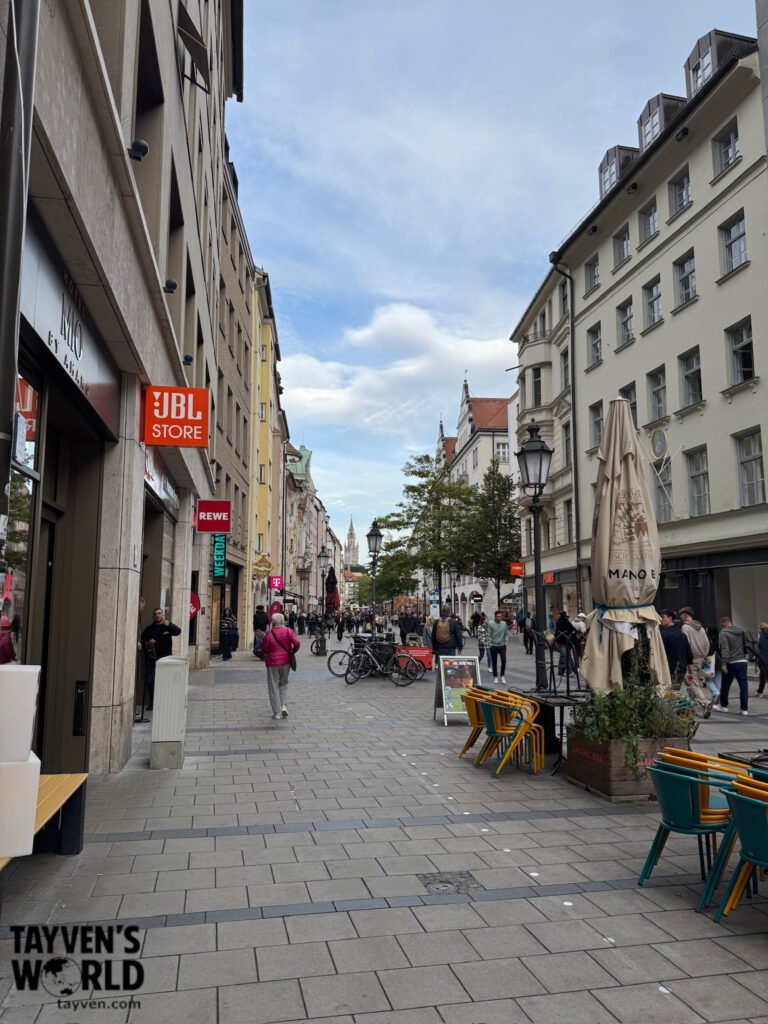
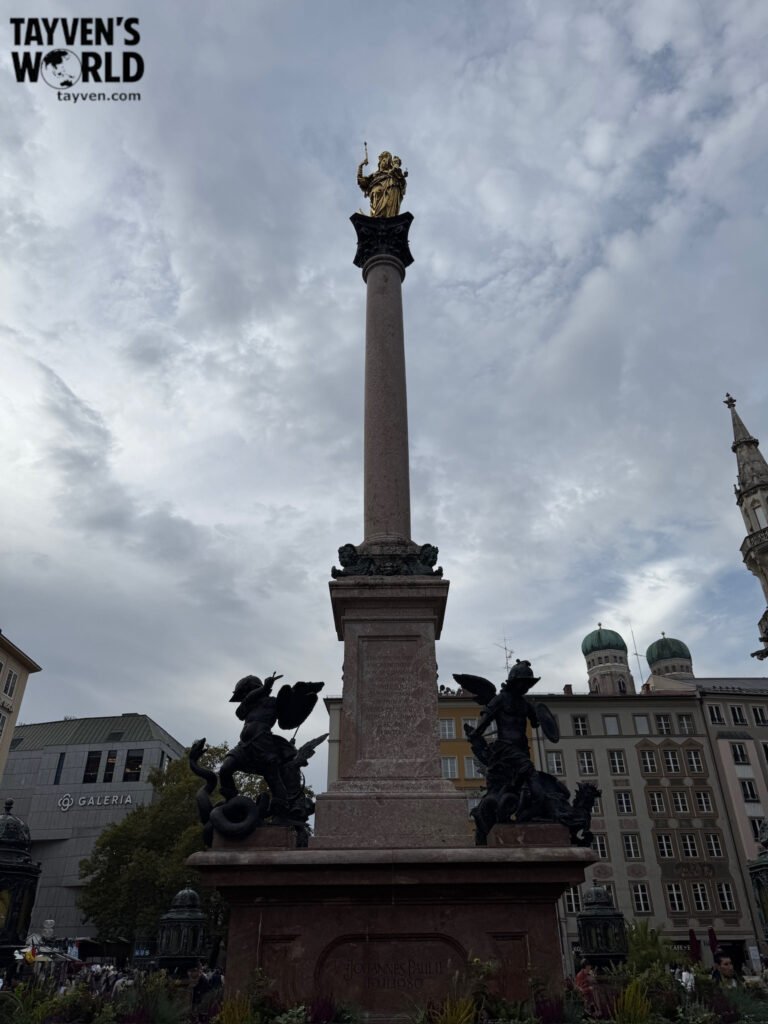
Because the moment you step into Munich’s Old Town, it feels like you’ve crossed an invisible border. Suddenly everything is clean, polished, and beautiful. The buildings are immaculate, the streets are lively, and the atmosphere feels completely different, almost like stepping onto a movie set.
We found a bakery selling some of the best cakes we’d had on the entire trip and ended up returning more than once during our stay. From there, we wandered into the main square for gelato.
The gelato was incredible. Rich, creamy, and easily among the best we tasted in Europe. In fact, it became one of those strangely persistent family memories. Even now, when we’re at home and someone grabs an Aldi gelato from the freezer, there’s a good chance somebody will ask, “Do you want a Munich gelato?” We all know it isn’t the same, but for a moment it takes us back to that afternoon in Munich, standing in the square with a cone in hand and nowhere in particular we needed to be.
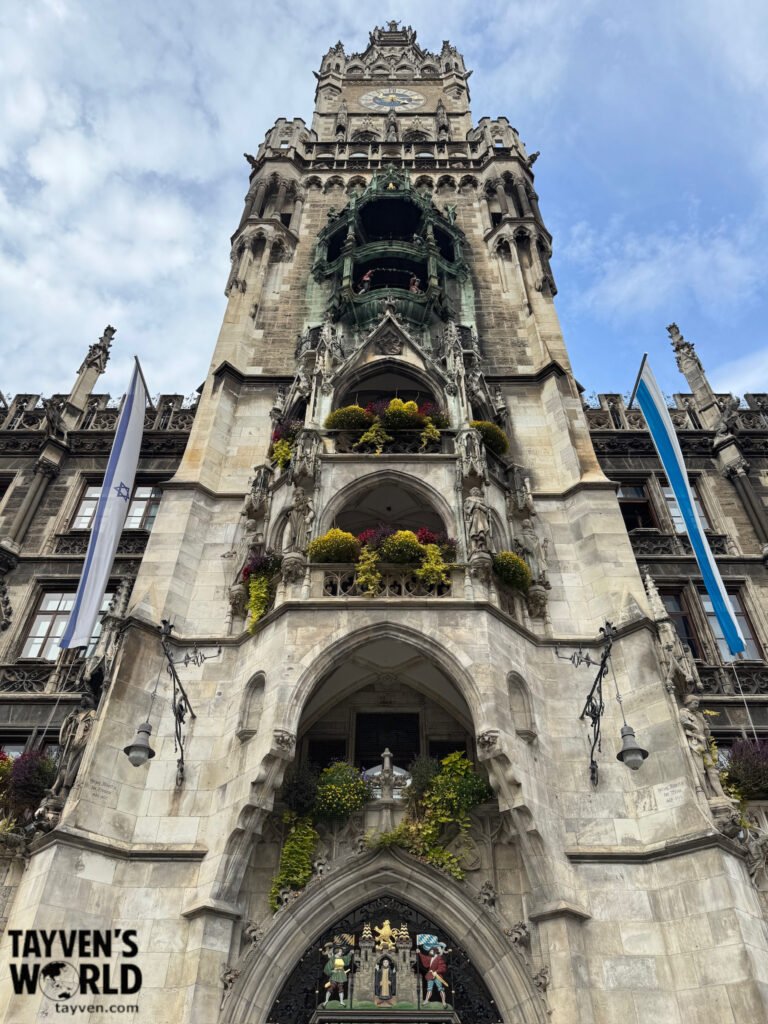
Rathaus-Glockenspiel
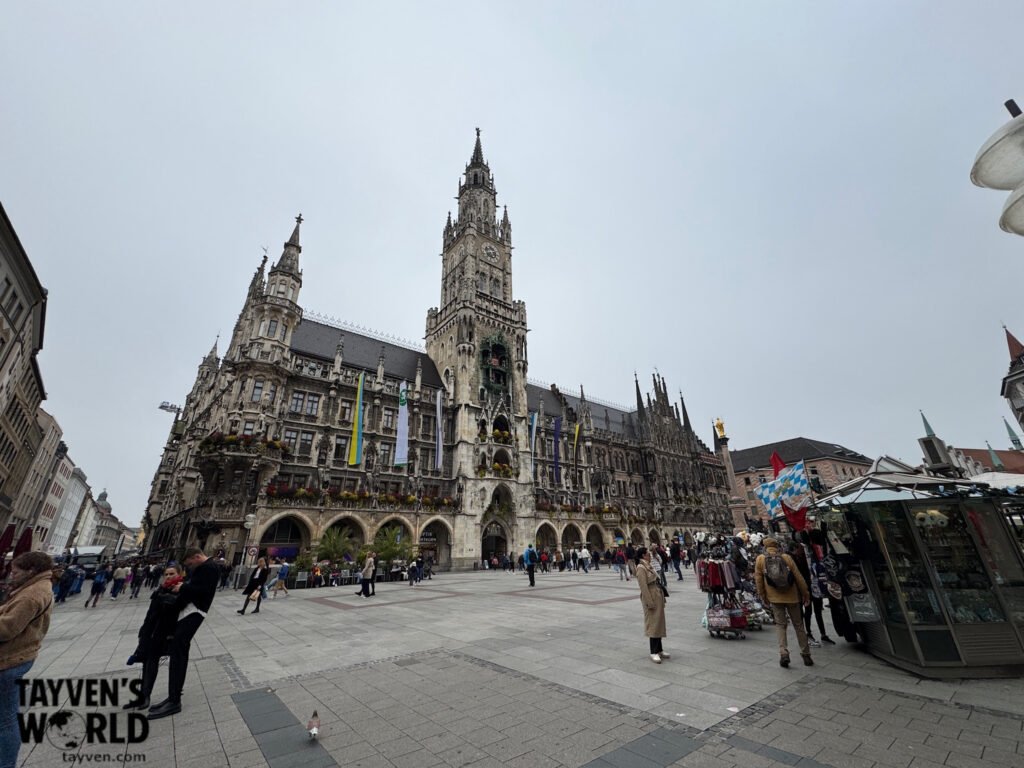
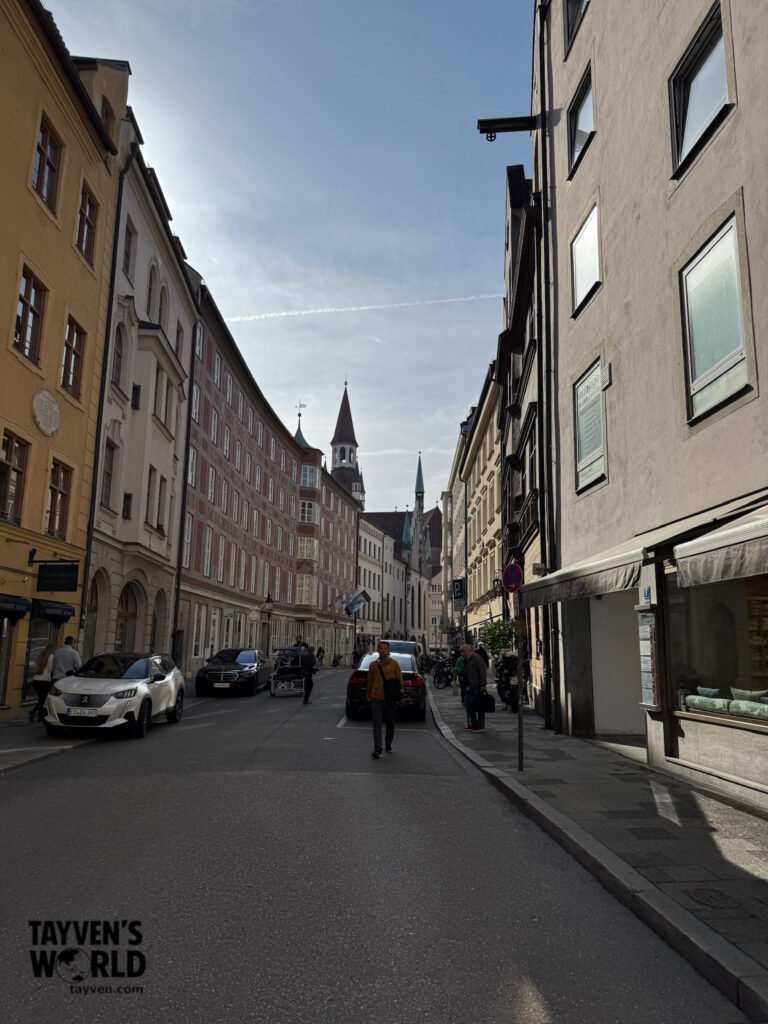
We stood in Marienplatz with hundreds of other visitors waiting for the famous Rathaus-Glockenspiel. Built into the New Town Hall, the mechanical clock features 43 bells and 32 life-sized figures that bring scenes from Munich’s history to life. The performance runs for around 15 minutes and takes place daily at 11am and 12pm, with an additional 5pm show from March to October.
As the bells rang out above the square, the figures began their performance, reenacting a royal wedding celebration and a traditional dance that became a symbol of hope after a plague swept through the city centuries ago. Watching the crowd collectively stop, look up, and enjoy a tradition that has entertained visitors for generations felt strangely special.
As someone who works in technology, I found myself fascinated by the engineering behind it all. We live in a world of smartphones, cloud computing, and artificial intelligence, yet here was a machine built more than a century ago still performing a complex mechanical show for thousands of people every day. Watching dozens of moving figures, bells, gears, and mechanical components work together for fifteen uninterrupted minutes felt like witnessing a piece of living engineering history and a mechanical marvel.
The Hofbräuhaus
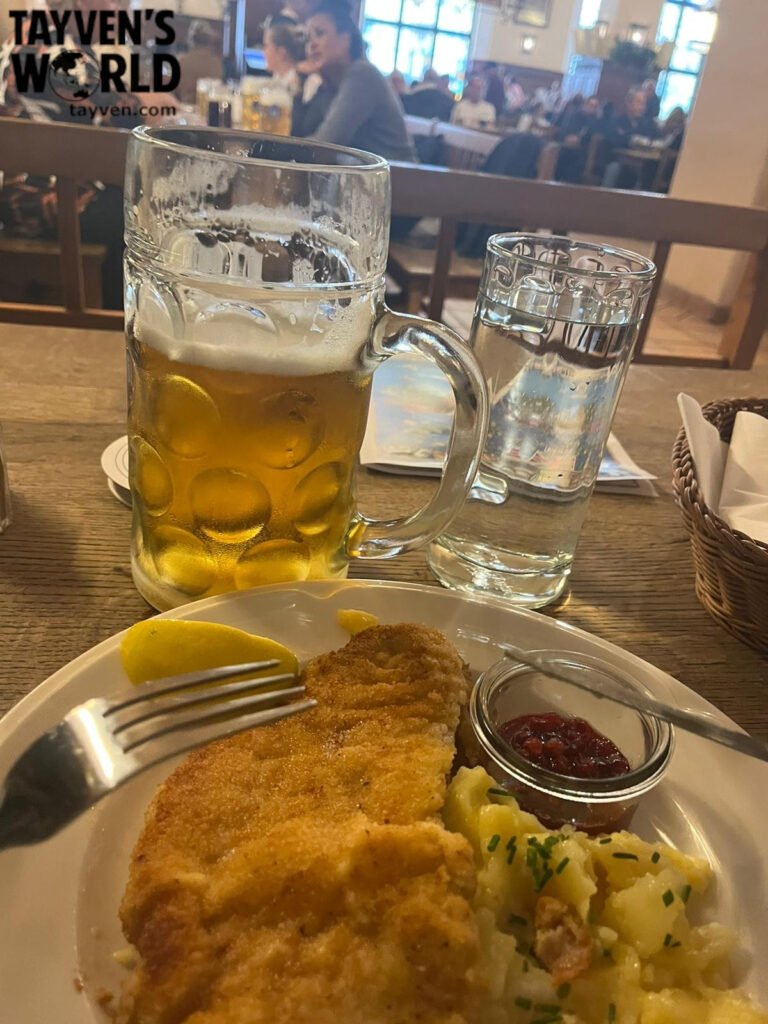
The Hofbräuhaus dates back to 1589, when Bavarian rulers established their own brewery. Over the centuries, it grew from a royal beer hall into one of Munich’s most famous landmarks. The building was heavily damaged during World War II before being rebuilt, which makes it even more remarkable that people are still gathering here for a stein, a meal, and a good time more than four centuries later.
I ordered a giant stein of Hofbräu beer because you can’t turn 40 in Munich and not do that. The pork schnitzel was perfect, the atmosphere was buzzing, and it felt like the right way to celebrate a milestone birthday. In fact, this ended up being one of my favourite spots in Munich. If I ever find myself back here, there’s a very good chance I’ll return purely for another schnitzel.
But one small note for travellers: they charge for water. We asked for tap water, assuming it was just water, and later discovered it had been added to the bill. Just something to be aware of.
Before we left, my wife bought me a Hofbräuhaus T-shirt, a coaster, and a keyring. The shirt is far too big for me, so these days it’s mostly reserved for wearing around the house. The keyring, however, has earned a permanent place in my ever-growing collection of completely valueless keyrings. It has a little beer mug inside that spins around, which apparently is all it takes to keep me entertained.
Viktualienmarkt
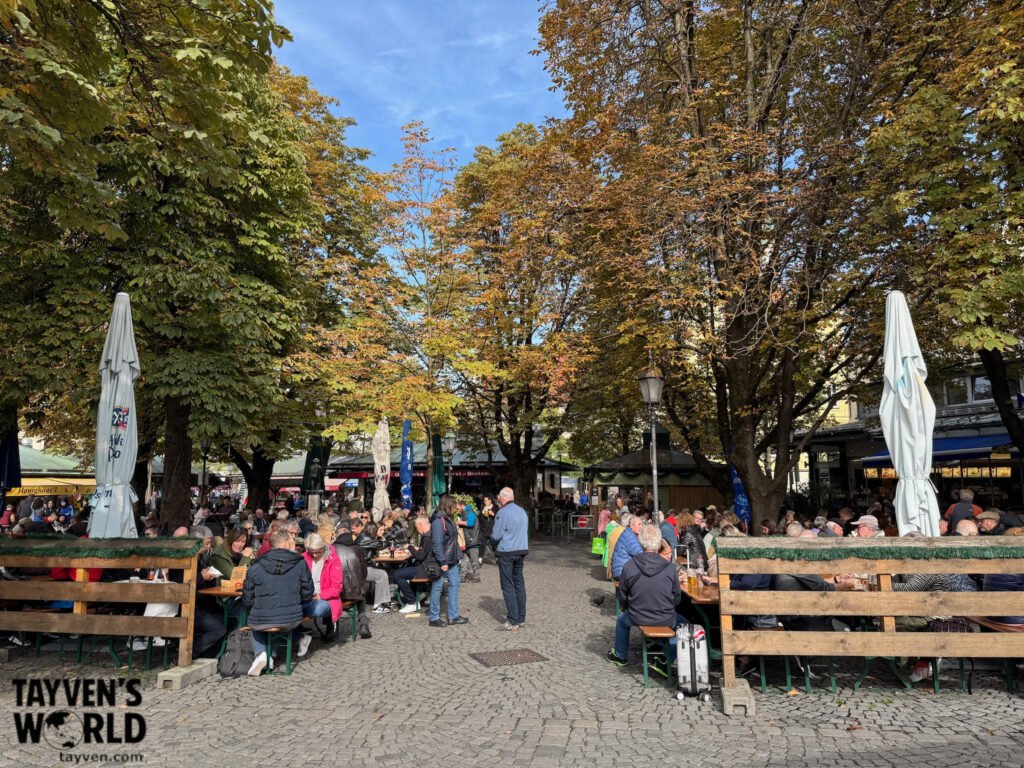
Not far from Marienplatz, we wandered through Viktualienmarkt, Munich’s famous open-air market. Stalls overflowed with fresh produce, flowers, cheeses, meats, and all kinds of things we probably would have bought if we weren’t travelling with suitcases. It felt less like a tourist attraction and more like a living part of the city, where locals and visitors mixed together beneath the umbrellas and market awnings.
We didn’t have a shopping list or a plan. We simply wandered, looked around, and enjoyed the atmosphere, which seemed to sum up Munich perfectly.
English Garden
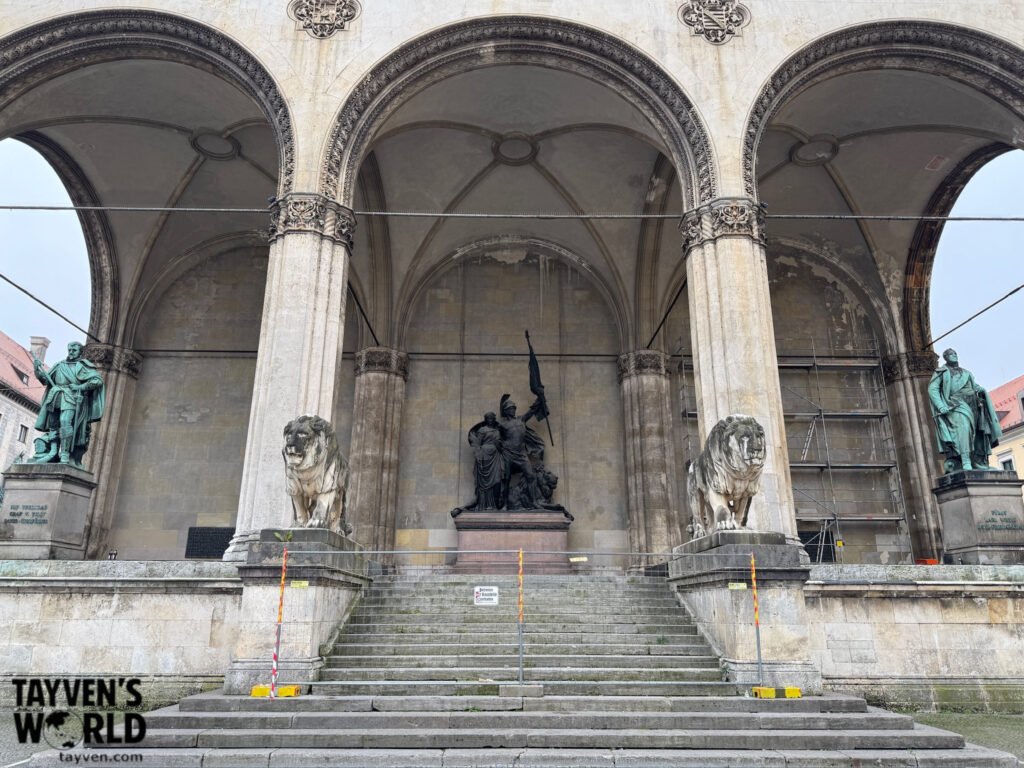
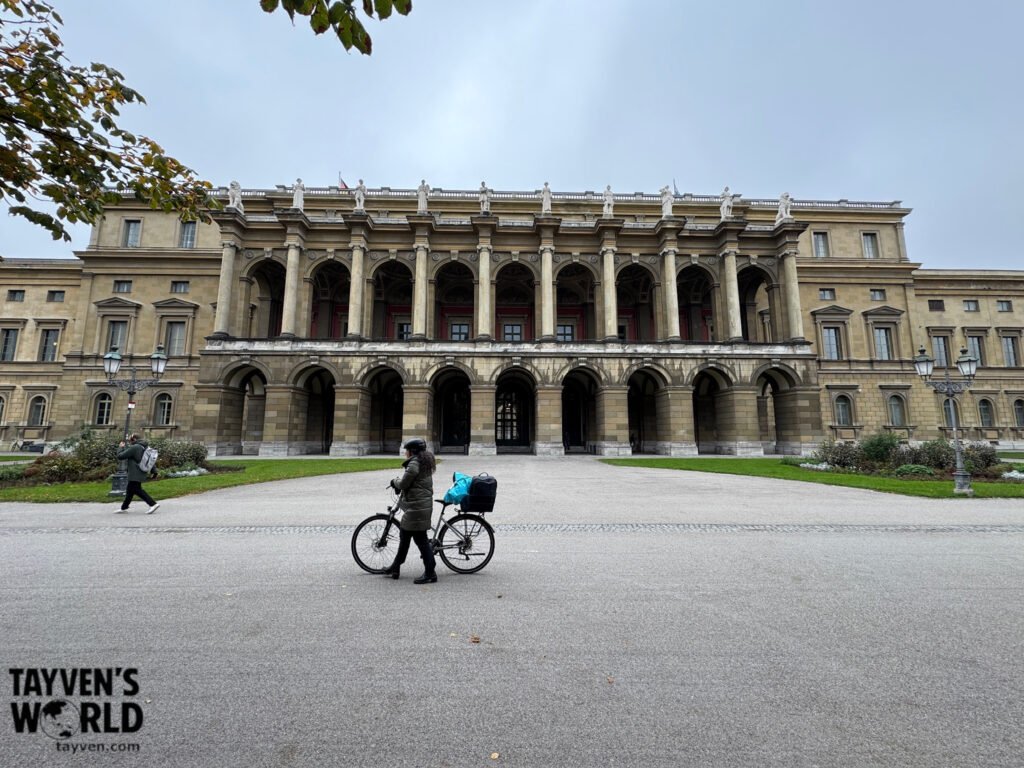
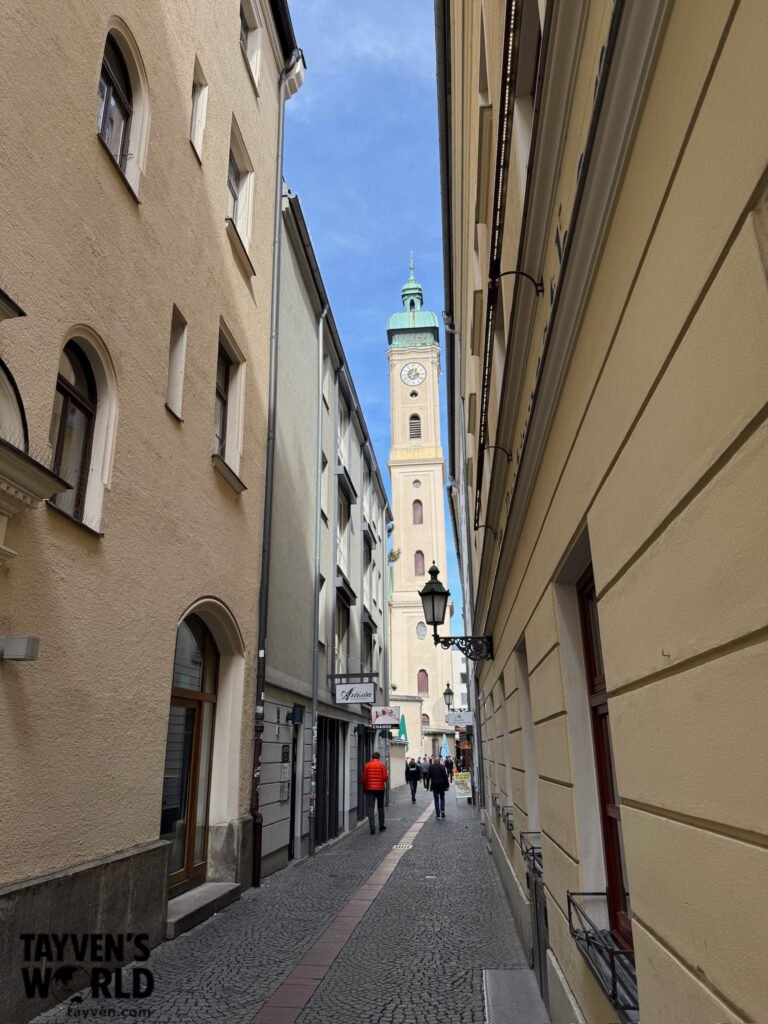
After eating, we wandered through the Old Town, exploring shops, side streets, and historic buildings. We found a quiet World War I memorial, a reminder of how much history sits beneath Munich’s surface.
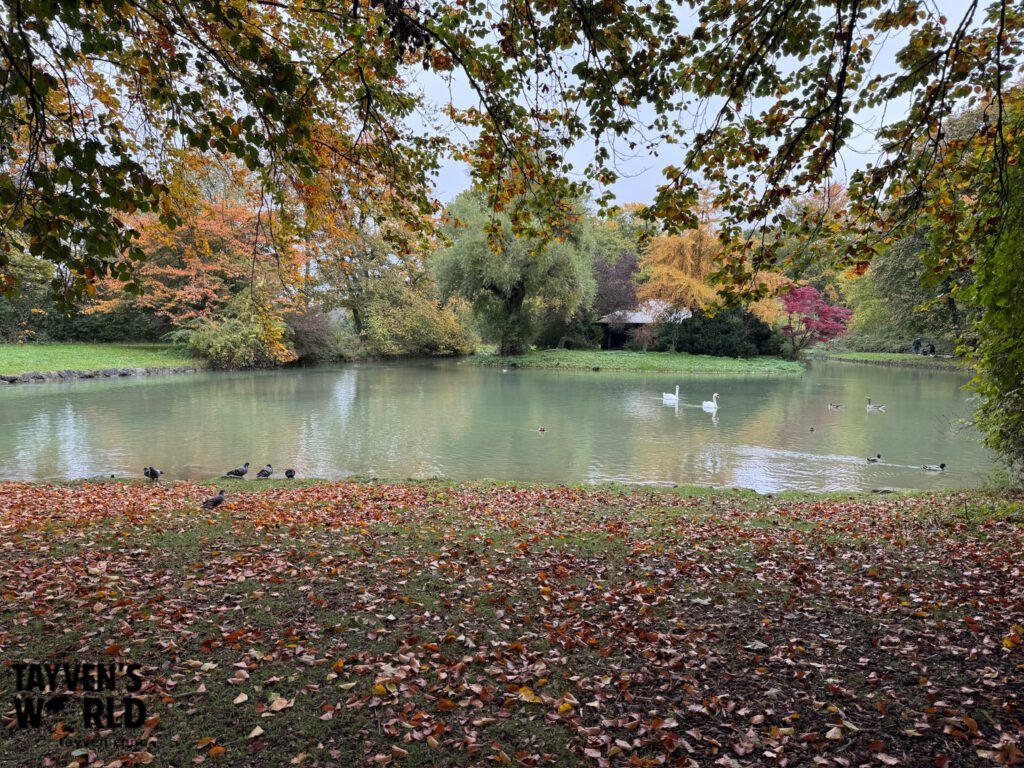
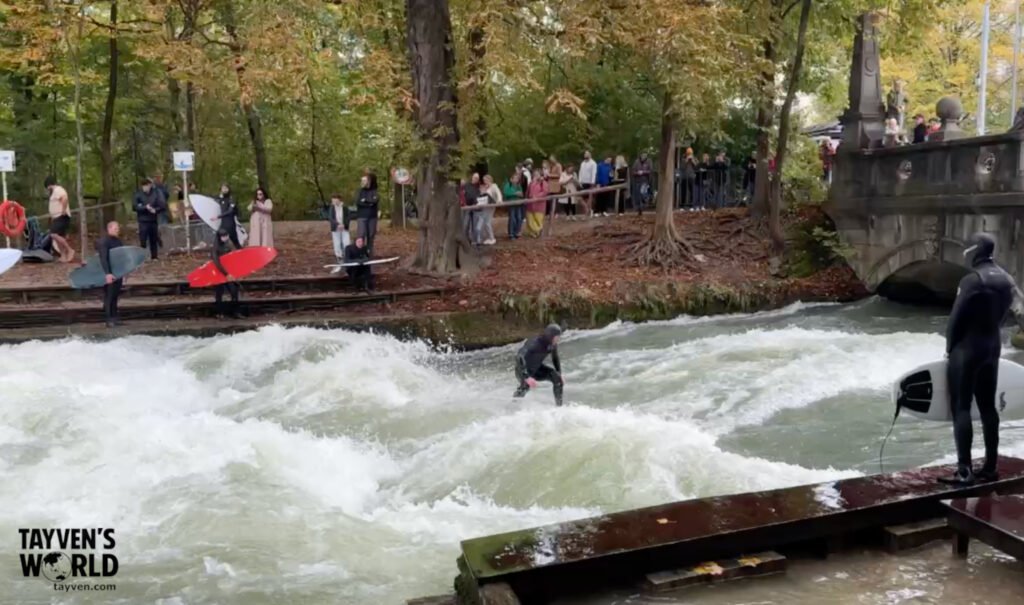
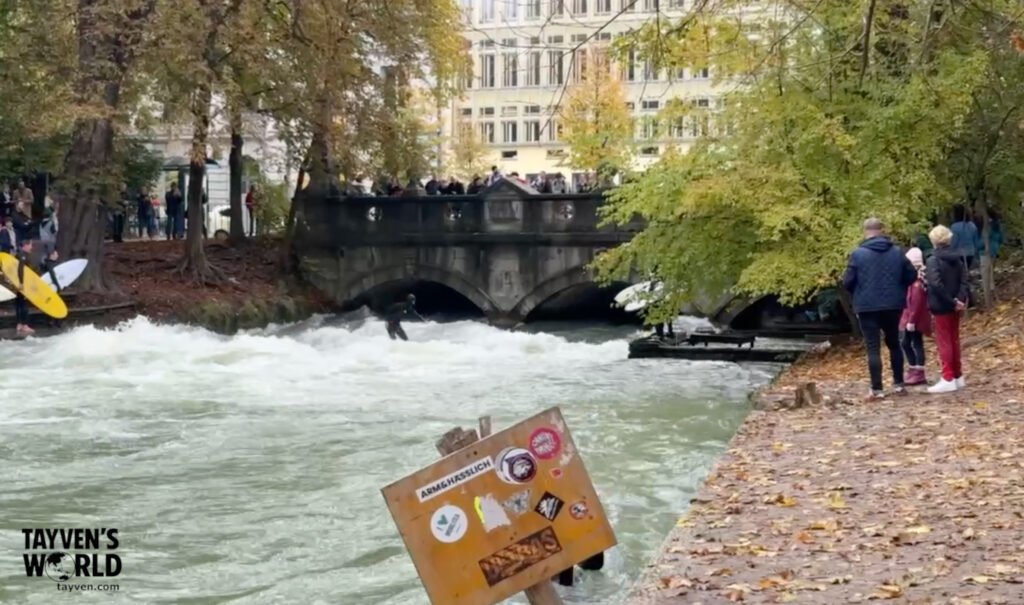
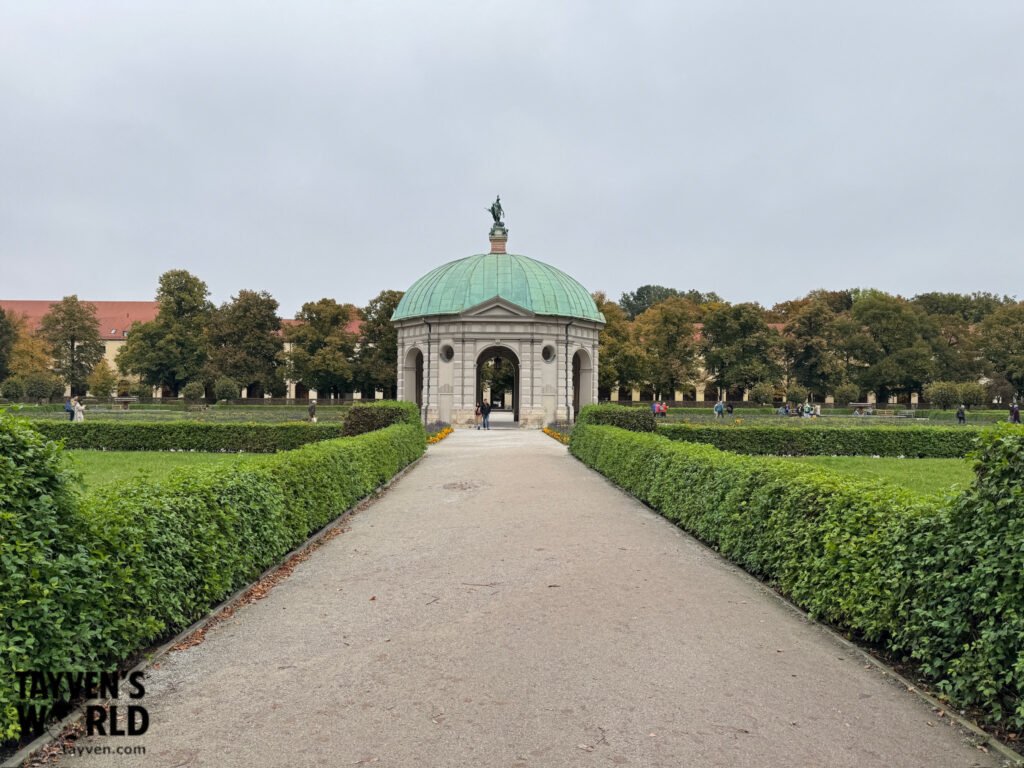
Eventually we made our way to the English Garden, Munich’s enormous city park. It’s one of the biggest urban parks in the world, and it’s stunning, wide green lawns, winding paths, streams, and lakes. But the highlight was the river surfers. In Newcastle, we’re used to watching surfers ride ocean waves. In Munich, they ride a permanent standing wave in the river. We stood there for a long time, watching them take turns carving across the water. It was strange and familiar at the same time.
From here, we wandered through the park for ages. It’s a beautiful place to slow down, and somewhere between the walking, relaxing, and chatting, the afternoon disappeared on us. Eventually, we turned back toward the Old Town, explored a little more of Munich, grabbed an early dinner at the Hofbräuhaus, and then headed back to the hotel to do a few jobs and get ourselves ready for the next train to Berlin.
A Laundromat Conversation
Toward the end of our time in Munich, we ended up at another laundromat, one of those mundane travel moments that somehow becomes memorable. We struck up a conversation with a couple from Massachusetts, both college professors travelling through Germany. We talked about their trip, our trip, my work in cybersecurity, and the different ways people experience a country depending on where they go and who they meet. It was one of those easy, genuine conversations that reminds you how small the world can feel.
Reflections on Munich
Our day in Munich was fun, memorable, and full of great food, beautiful sights, and unexpected moments. But it was also a city of contrasts. The polished Old Town, the Rathaus-Glockenspiel, and the English Garden felt worlds apart from the area we walked through on our way from the station.
It didn’t ruin the experience, but it did shape it. Cities are complicated places, and Munich was no exception. At the time, there was a lot of roadwork and redevelopment happening around the station, so perhaps the next time we visit it will feel completely different.
Still, Munich gave me a birthday I’ll never forget. A day that started in Switzerland, passed through Austria, and ended with a stein of beer in one of the most famous beer halls in the world.
And that’s a pretty incredible way to turn 40.
What to Know Before Visiting Munich
Is Munich worth visiting?
Absolutely. Munich combines historic architecture, great food, huge parks, famous beer halls, and a relaxed atmosphere that makes it easy to explore on foot. It ended up being one of the highlights of our trip through Germany.
How many days do you need in Munich?
You can see many of the major sights in a day, but I think two to three days would be ideal. We managed to explore the Old Town, the English Garden, markets, and the Hofbräuhaus in a single day, but there was still plenty left to see.
Where should I stay in Munich?
If I was visiting Munich again, I’d stay in or very close to the Old Town. While our hotel was technically in the city centre, being just outside the Old Town meant more walking than we expected. Staying closer puts you right in the heart of Munich’s major attractions, including Marienplatz, the Hofbräuhaus, Viktualienmarkt, and within easy walking distance of the English Garden. It saves time and lets you make the most of your visit.
Is the Hofbräuhaus worth visiting?
Definitely. Yes, it’s touristy, but for good reason. The atmosphere is fantastic, the beer is excellent, and the schnitzel was one of my favourite meals in Munich. I’d happily go back for another.
What is the Rathaus-Glockenspiel and is it worth watching?
The Glockenspiel is a huge mechanical clock in Marienplatz that features 43 bells and 32 life-sized figures. The show runs for around 15 minutes and takes place daily at 11am and 12pm, with an additional 5pm performance from March to October. Even as someone who works in technology, I found the engineering behind it fascinating.
What should I do in the English Garden?
Walk, relax, and watch the surfers. Seeing people surf a standing river wave right in the middle of a city was one of the most unexpected things we saw in Munich. The park is enormous, so don’t try to see it all in one visit. It’s the perfect place to slow down, explore, relax, and chat with a takeaway coffee. If you want to cover more ground, renting a bike is a great option.
Do restaurants in Munich charge for water?
Some do. We asked for tap water and discovered it had been added to the bill. It’s not a major issue, but it’s worth checking beforehand if that’s important to you.
Is Munich walkable?
Very much so. Once you’re in the Old Town, most of the major sights are within walking distance of each other. During our visit, we explored the city entirely on foot and never needed to use public transport. Just make sure you bring comfortable shoes because you’ll end up walking far more than you planned.
Do I need to speak German in Munich?
Not really. Most people we encountered spoke excellent English. Learning a few basics like Hallo, Danke, and Nein is still appreciated. At the Hofbräuhaus, English menus were available, and when we arrived they simply asked which language we preferred.
What Were My Favourite Places to Eat in Munich?
Isabella Glutenfreie Pâtisserie
One of our favourite discoveries in Munich. The cakes and pastries were fantastic, and we ended up visiting more than once during our stay. Even if you don’t need gluten-free options, it’s worth stopping by for coffee and something sweet.
Venchi Schokolade & Gelato, Marienplatz
This is where the now-famous family phrase “Munich gelato” was born. The gelato was rich, creamy, and easily among the best we had in Europe. We still compare gelato to the one we had here.
Hofbräuhaus München
Touristy? Absolutely. Worth it? Also absolutely. Between the giant steins, traditional Bavarian food, and lively atmosphere, it became one of my favourite places in Munich. The pork schnitzel was outstanding, and if I ever find myself back in the city, there’s a very good chance I’ll return purely for another schnitzel.
What’s my favourite memory from Munich?
Turning 40 with a giant stein of beer in the Hofbräuhaus, wandering the Old Town with my family, and finishing the day knowing I’d crossed three countries before dinner. That’s a birthday that’s hard to beat.
More Travel. Australia, Paris, London & Europe Travel Articles
Australia
Blue Mountains Series:
- Blue Mountains 4‑Day Guide: Echo Point, Scenic World, Leura & Wentworth Falls
- Blue Mountains: A Winter Trip Through Memory, Mountains, and Family
Melbourne series:
Switzerland Series:
- Bern Switzerland: A Small City Built for Big Moments
- Paris to Bern: A First‑Class Train Ride and a Complete Eurail Guide
- Lucerne Switzerland: A Day Trip That Felt Like a Postcard Come to Life
Paris Series:
- London to Paris on the Eurostar: A First‑Timer’s Story & Complete Guide
- A Rainy Start, a Seine River Cruise, and Paris Finally Opening Up
- Versailles, Paris Streets & The Unexpected Magic of a Laundromat
- From the Louvre to the Eiffel Tower: A Storm‑Soaked Day in Paris
- The Best 4 Day Paris Itinerary (Built From Real Experience, Not Brochure Fantasy)
London Series:
- Our Real 5‑Day London Itinerary: What We Planned vs What Actually Happened
- St Paul’s Cathedral London: History, Blitz Survival, Tickets, Tube Guide & Our First-Day Experience
- Westminster Abbey: A First‑Timer’s Guide (Tickets, Tips & What to Expect)
- British Museum First‑Time Guide: A Morning in Bloomsbury
- London Eye: A First‑Time Visitor’s Experience Above the Thames
- Battersea Power Station: From Industrial Giant to London’s Newest Urban Playground
- A Perfect Day in South Kensington: Museums, Parks & Retro Gaming Nostalgia
- River Cruise Along the Thames: From Buckingham Palace Mornings to Bloomsbury Nights
- Our Final Day in London: Royal Dawn, Parliament Secrets, West End Magic, and the Feeling of Not Wanting to Leave
Europe Series: