Travelling from London to Paris on the Eurostar is one of those experiences people talk about with a kind of quiet reverence. After doing it ourselves, I finally understand why. This guide blends our real first‑timer story with everything you need to know: booking, check‑in, border control, the journey, and what to expect when you arrive at Gare du Nord.
If you’re planning your own Eurostar adventure, consider this your walkthrough.
Starting the Day in Bloomsbury: A Quiet Sunday Walk to St Pancras
We began our morning in Bloomsbury, staying at a hotel we’d grown fond of over the previous days. Our Eurostar wasn’t until 10am, but we decided to walk the 1km to St Pancras because the best way to meet a city is always on foot.
By now we knew the streets to Russell Square Station like the back of our hand, but everything beyond that was new. It was early on a Sunday, the streets were calm, and only a handful of other early risers were out. London felt like it was yawning awake.
We were buzzing. Everyone we’d spoken to had said, “Oh, you’re taking the Eurostar to Paris? You’ll love it.” Today was finally our turn.
Arriving at St Pancras: Architecture, Atmosphere & First Impressions
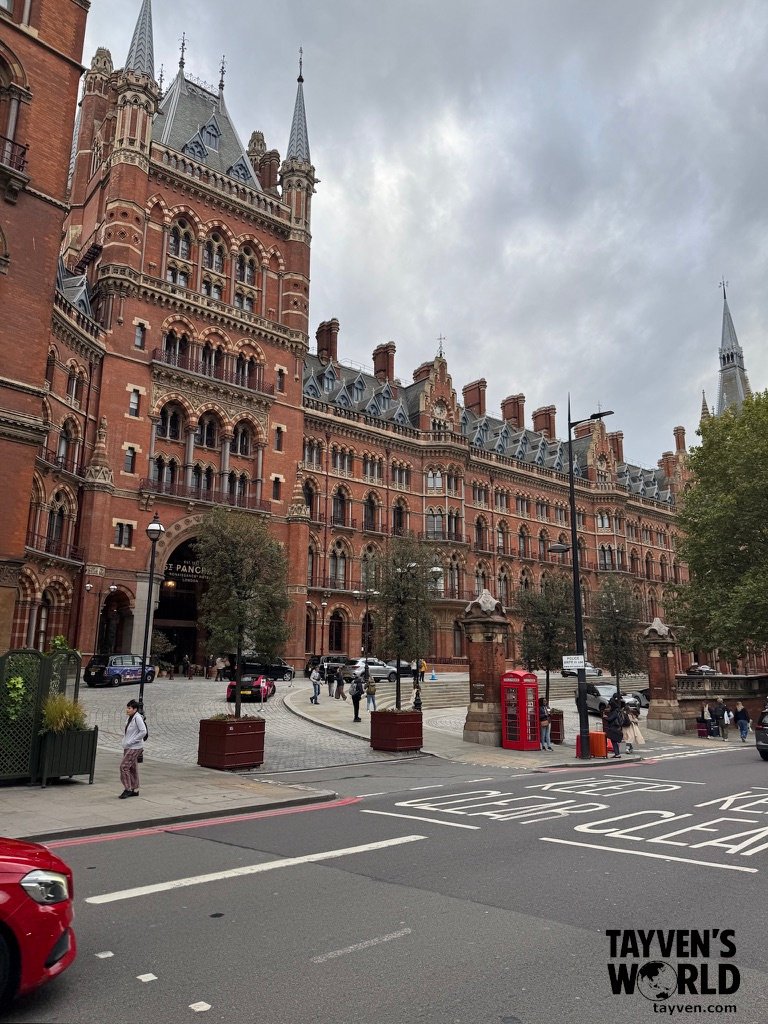
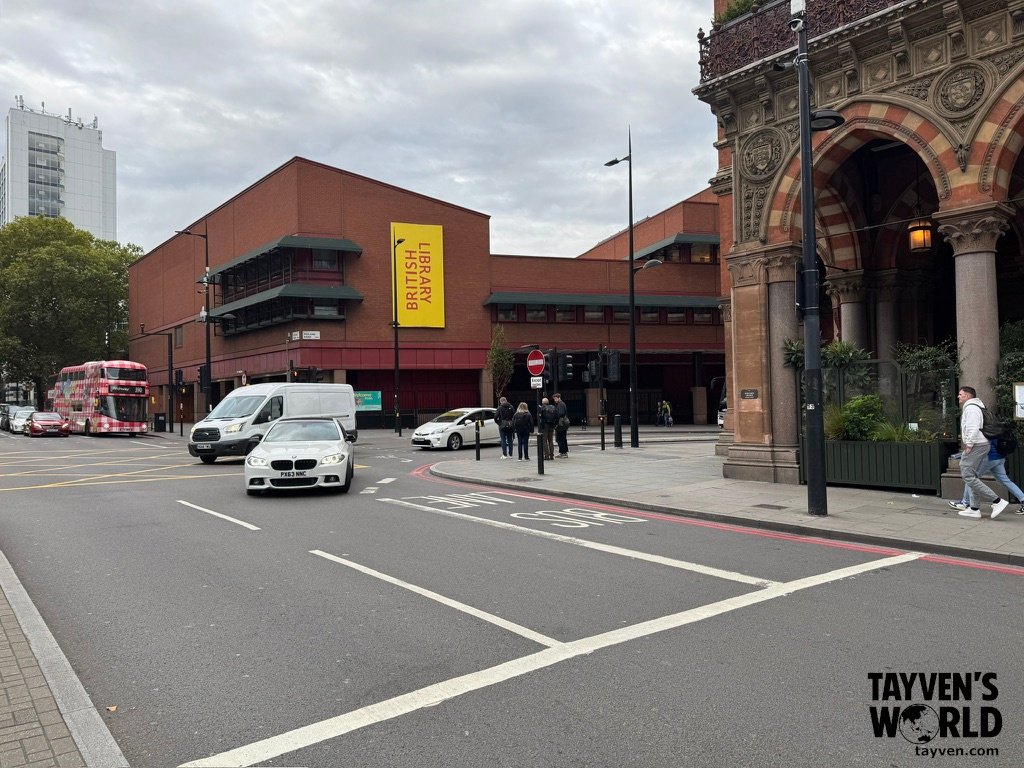
As we walked up the final stretch of Judd Street, the city opened up: the modern British Library on one side, and the grand St Pancras Renaissance Hotel on the other complete with a Lamborghini casually parked out front like it lived there.
We turned left, walked along the side of the station, and stepped inside.
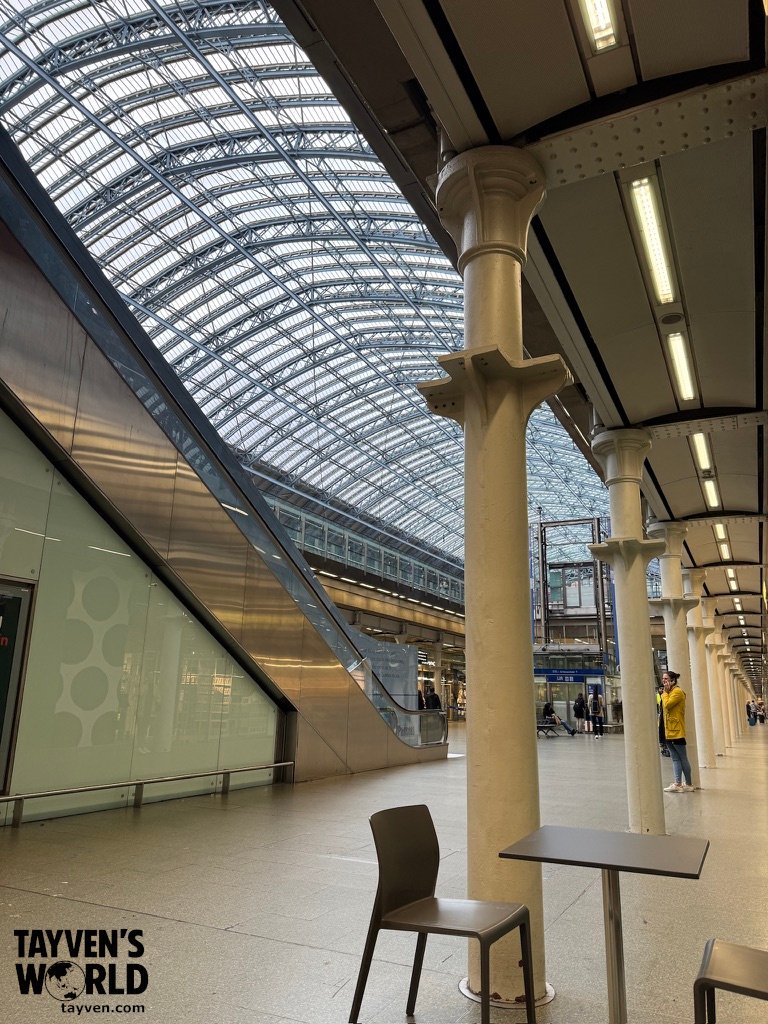
And then that roof.
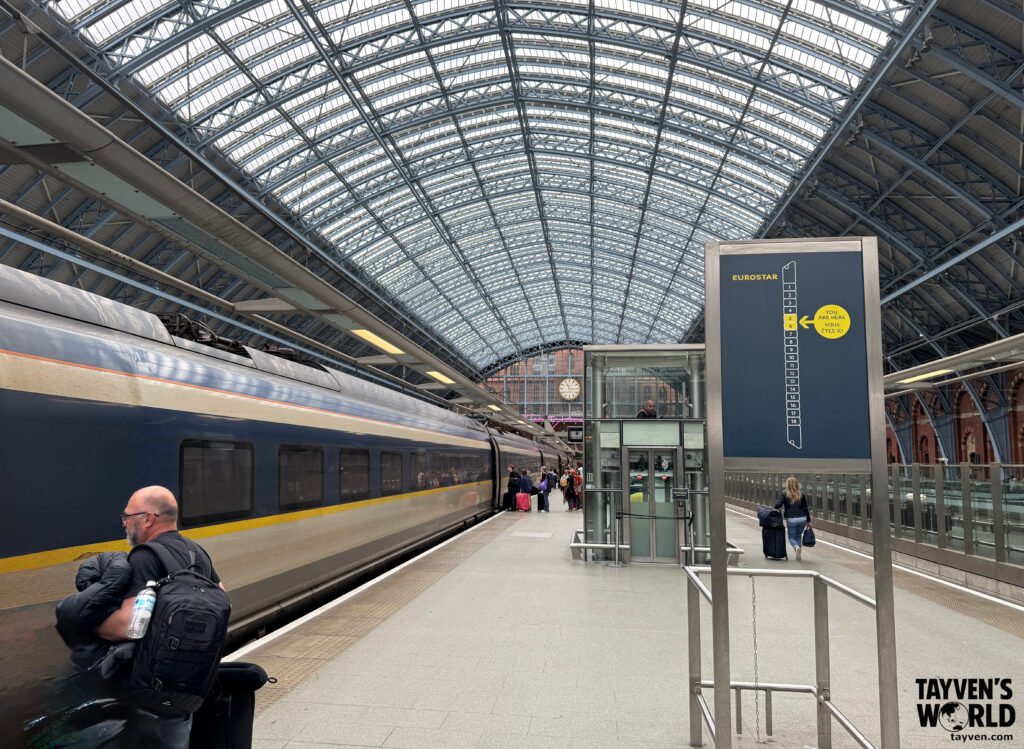
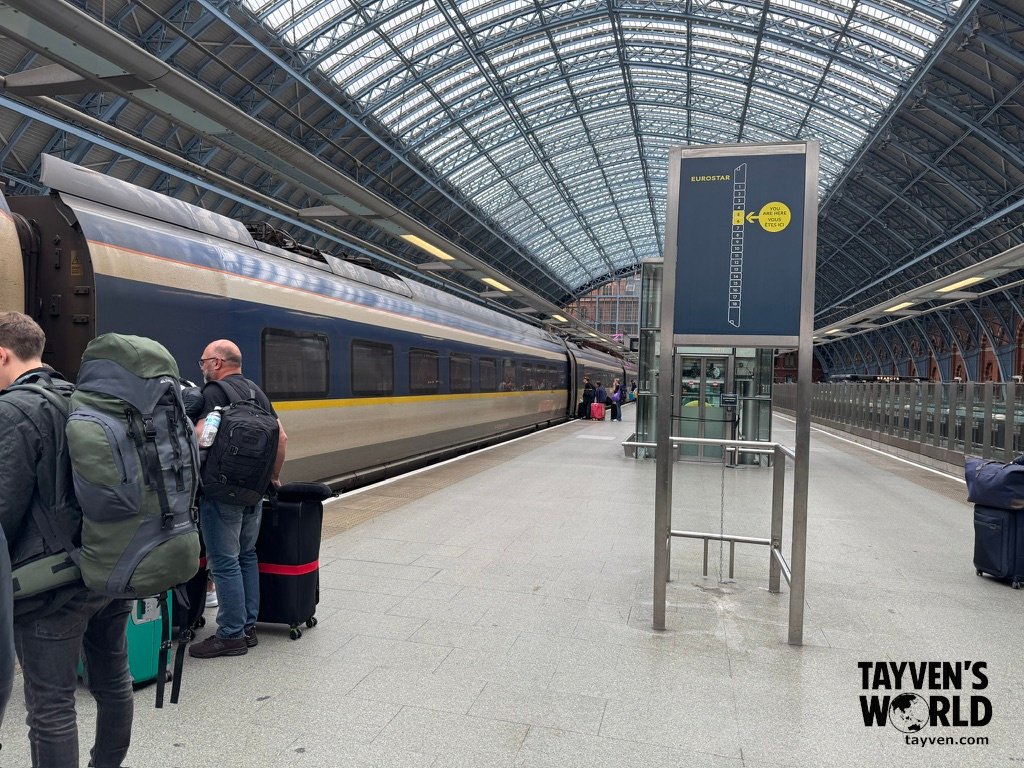
St Pancras has one of the most spectacular train shed roofs in the world: a vast, single‑span Gothic arch of iron and glass, designed by William Henry Barlow and completed in 1868. It feels like a cathedral built for trains. A perfect welcome for anyone arriving from Europe, and a perfect farewell for anyone leaving London.
The station is spotless, modern, and beautifully maintained. It feels like a place that wants you to have a good trip.
Things to Do at St Pancras Before Your Train
We were early, so we found a café and grabbed a coffee.
(If you have leftover pound coins: I couldn’t spend mine here, card only. But I could use them later on the Eurostar.)
St Pancras is full of things to do while you wait:
- Shops and cafés including Pret, Le Pain Quotidien, and Sourced Market
- The Champagne Bar overlooking the Eurostar platforms
- Public art like The Meeting Place statue and the John Betjeman sculpture
- The St Pancras Renaissance Hotel for photos or a drink
- Coal Drops Yard just a short walk away if you have extra time
It’s one of the most beautiful stations in the world, and it knows it.
Eurostar Check‑In: What Actually Happens
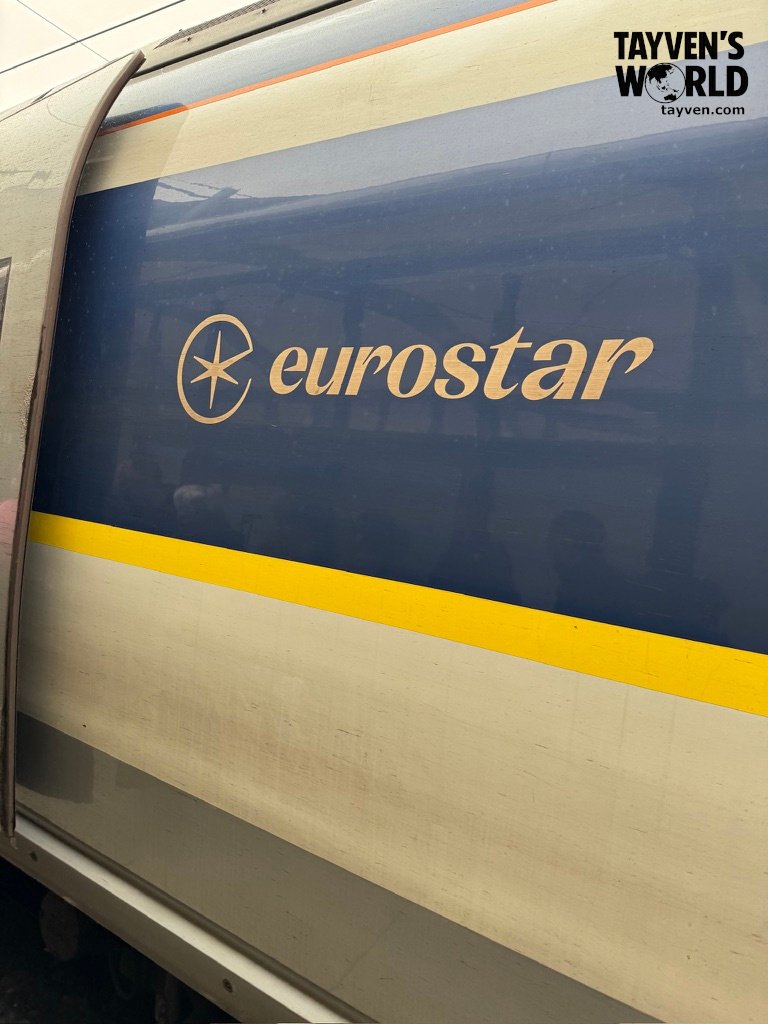
When our check‑in time rolled around, we headed to the Eurostar departures area. The process feels like an airport, but faster and far more civilised.
1. Ticket Scan: You scan your QR code at the gates.
2. Security Screening: Bags go through an X‑ray machine, you walk through a metal detector. No strict liquid limits like airports.
3. Double Passport Control: This is where things got interesting.
I handed my passport to UK Immigration, got stamped out, and instinctively went to walk through only to find another checkpoint. For a moment I was confused, then it clicked: EU entry control.
It’s unusual if you’re used to airports, but it makes perfect sense. You clear both borders in London, which means when you arrive in Paris you just walk off the train. No queues. No stress. No passport control bottleneck. We even got a cute little train stamp in our passports.
This double‑checkpoint setup is normal for the Eurostar, you leave the UK and enter the EU before you board.
4. The Departure Lounge: The waiting area was absolutely packed and surprisingly small for such a large station but you’re not in there long. We found seats near Pret, grabbed some water, and waited for boarding.
Boarding the Eurostar: Smooth, Quick, Efficient
When our train was called, everyone did the classic Eurostar shuffle: dragging luggage up the ramp to the platform.
We had Standard (2nd class) tickets, but honestly? You wouldn’t know.
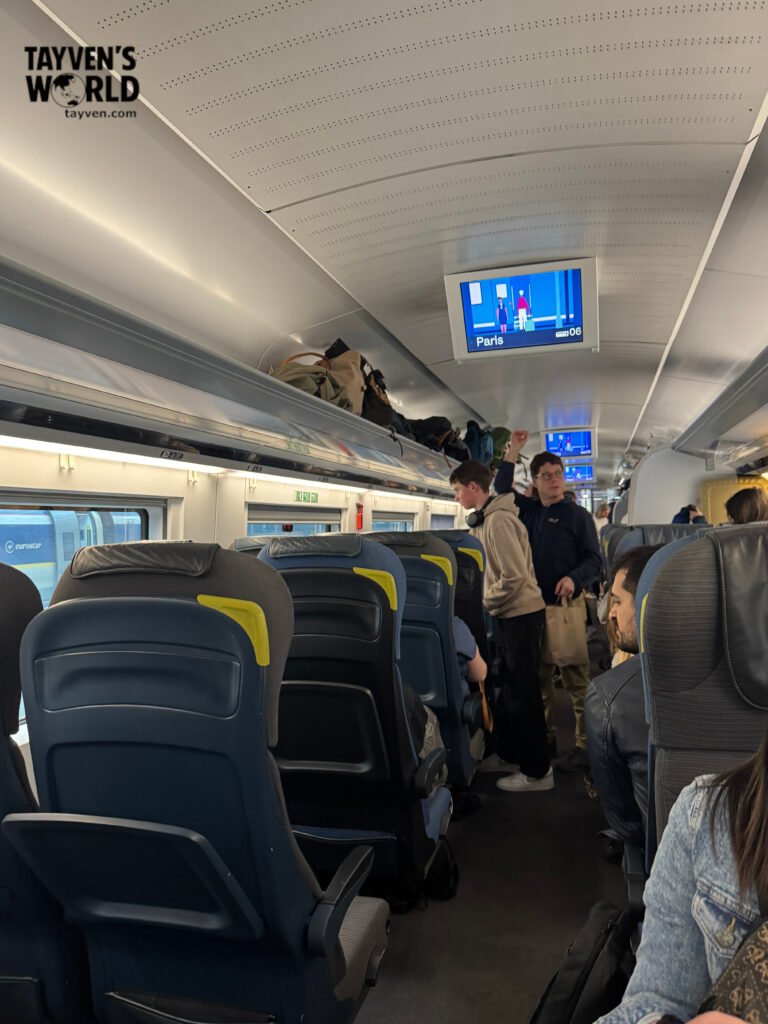
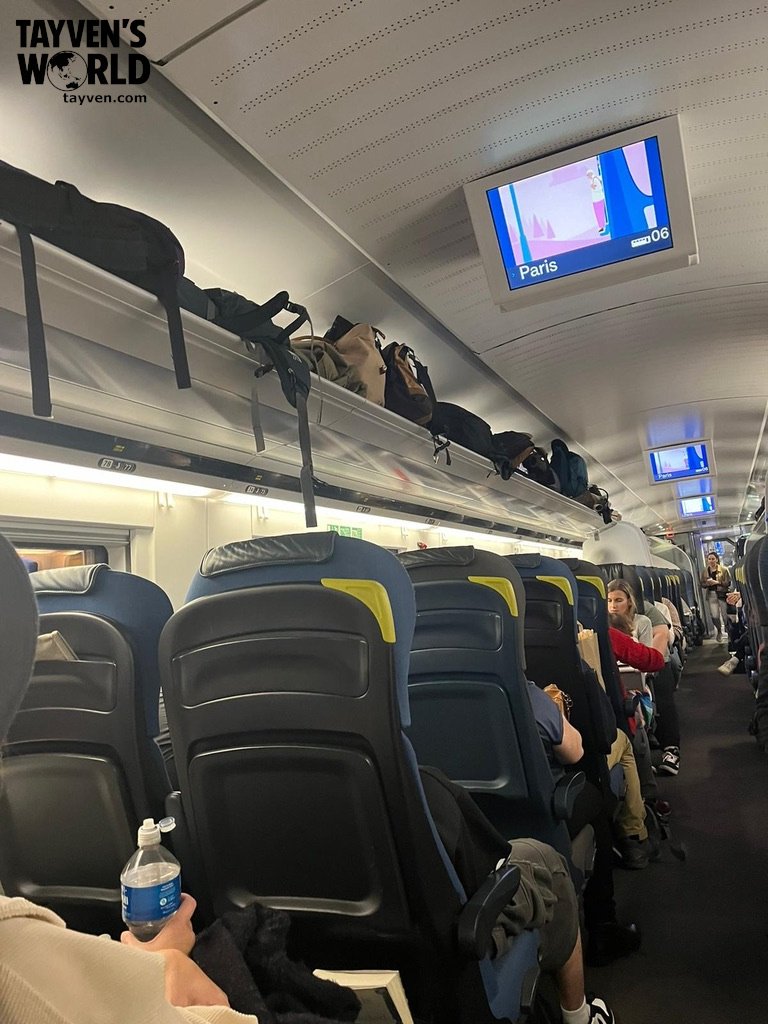
Clean, comfortable seats, plenty of space, and we were right near the food carriage.
We stored our suitcases at the end of the carriage, conveniently right next to our seats so we could keep an eye on them.
A young Swiss guy sat next to us, and we ended up chatting the whole way. He was from Geneva, studying in London, and gave us tips for Paris and Switzerland. He also gently corrected my pronunciation of Gare de Lyon, which I will now never get wrong again.
He looked genuinely horrified when he realised how far Australia is from Europe…. Fair enough….
The Eurostar Journey: Fast, Quiet, Surprisingly Relaxing
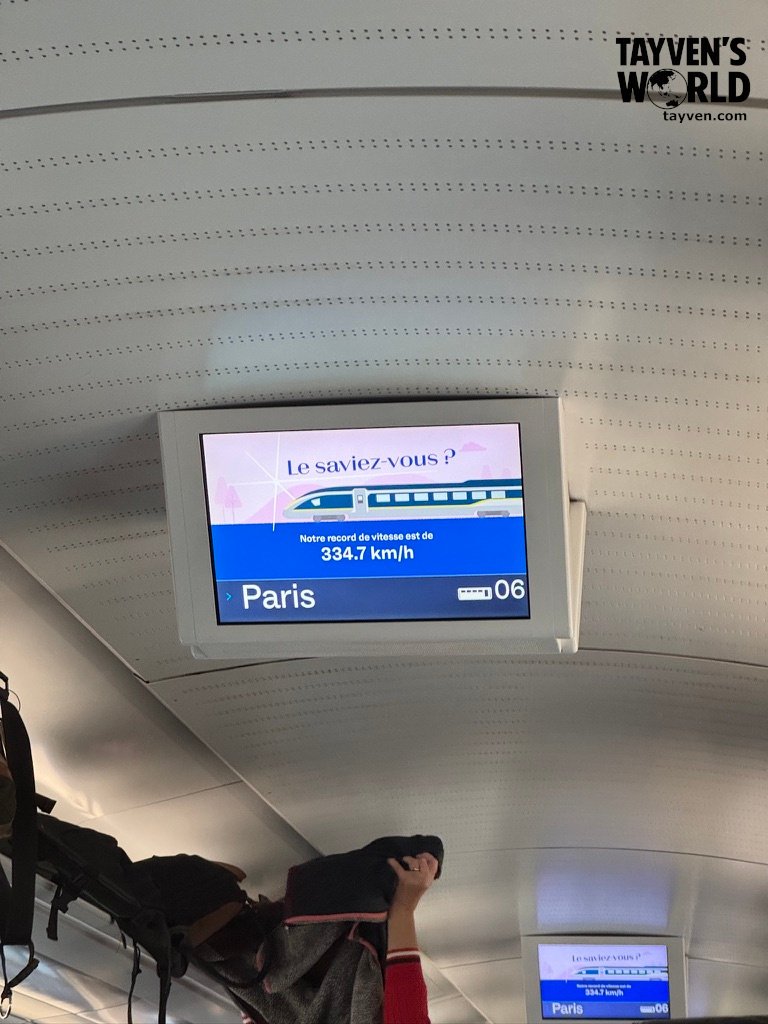
The journey itself is smooth and peaceful. You barely notice the tunnel.
Before we knew it, we were in France, watching the countryside blur past.
Eurostar perks worth knowing:
- No weight limits on luggage (just what you can carry)
- Food carriage available
- Power outlets at seats
- Clean bathrooms
- Quiet, comfortable ride
It’s honestly one of the easiest international journeys you can take.
Arriving at Gare du Nord And Straight Into Torrential Rain
We said goodbye to our new friend, he was heading to Gare de Lyon (where we would visit it a few day), for his train to Geneva and stepped off into Paris.
And it was pouring. Absolutely torrential.
Walking to the hotel was out of the question.
This is where I got my first taste of the language barrier. I said ‘hello’ out of habit instead of ‘bonjour’ and got politely ignored. Fair enough, I guess.
We found the taxi rank easily, showed the driver our hotel address on my phone, and off we went.
Gare du Nord: What to Expect
Because you clear both borders in London, arrival in Paris is simple:
- No passport control
- No queues
- Just walk off the train
Gare du Nord itself is one of Europe’s busiest stations, serving:
- Metro lines 4 and 5
- RER B and D
- Regional trains
- Long‑distance services
- Buses and taxis
Nearby, you’ll find:
- Canal Saint‑Martin
- Montmartre (a few stops away)
- Marché Saint‑Quentin
- Plenty of cafés and bakeries
It’s busy, chaotic, but well connected.
The Hotel Disaster: A Very Parisian Plot Twist
Because it was Sunday, the area around our hotel was quiet… too quiet.
Not exactly the charming Parisian neighbourhood we’d imagined.
Inside, the staff were lovely, but the room?
- I could touch the ceiling with my palm
- The towels were missing
- The lift felt like it was installed in 1905
- The view looked like a low‑security prison
- No tea or coffee
- And the restaurant around the corner served the worst meal we’d had in years
I could see a McDonald’s across the road and honestly, a Quarter Pounder would’ve been a blessing.
We were frazzled, tired, and disappointed. So we made the call: we’re changing hotels. Luckily, we were only booked night‑to‑night.
We cancelled the rest, got a refund, and booked the Novotel near Notre‑Dame on Expedia, my get‑out‑of‑jail‑free card.
A big part of travelling is learning to speak up for yourself, even when you’re in a foreign country. It’s easy to fall into the mindset of “just put up with it” because you don’t want to cause trouble or you feel out of your comfort zone. But it’s okay to say when something isn’t right. It’s okay to admit when a hotel doesn’t feel comfortable or doesn’t match what you paid for. Before I even left for Europe, I had the Expedia and Booking.com apps set up on my phone for exactly this reason, so if something didn’t feel right, I had options. Being able to quickly check availability, compare prices, and switch hotels gave me the confidence to make decisions without stress. You’re not being difficult when you advocate for yourself; you’re looking after your experience. Travel is meant to be enjoyed, not endured, and choosing comfort over discomfort is part of travelling well.
The Next Morning: Redemption at the Novotel
We woke early, grabbed a taxi (again, no English, but they were great at reading maps), and arrived at the Novotel.
And it was like stepping into a different universe.
Lovely area.
Friendly staff.
And the holy grail a buffet breakfast.
We dropped our bags and immediately dove into breakfast like survivors of a long journey.
It was the perfect reset after a chaotic start.
After that, I started using Uber, and it instantly made everything easier. The trip is prepaid, the instructions are already sent to the driver, and there’s no awkward explaining or negotiating. You just get in, go, and get on with your day. It became our best friend for the rest of the trip.
No language barrier, no haggling, no confusion just book, ride, done.
Practical Eurostar Guide: Everything You Need to Know
Eurostar Destinations from London
- London
- Paris
- Brussels
- Lille
- Rotterdam
- Amsterdam
How to Book
- Eurostar website or app
- Choose Standard, Standard Premier, or Business Premier
- Digital QR ticket provided
Typical Timetable
- First trains: around 07:00–07:30
- Last trains: around 19:00–21:00
- Paris route: most frequent
- Amsterdam/Brussels: fewer departures
Check‑In Timing
- Arrive at the recommended time on your ticket
- Gates close 30 minutes before departure
What You Need
- Passport
- Ticket QR code
- Bags you can carry yourself
Border Control
- UK exit check
- EU entry check
- No passport control on arrival
Arrival at Gare du Nord
- Walk straight off the train
- Follow signs to Metro/RER/taxis
- Expect crowds, but it’s well signposted
Final Thoughts: Why the Eurostar Is Worth It
Despite the rain, the hotel mishap, and the culture shock, the Eurostar itself was a highlight of our trip. It’s fast, comfortable, and surprisingly stress‑free. St Pancras is a joy to depart from, and arriving in Paris without a passport queue feels like cheating. If you’re travelling between London and Paris, this is the way to do it.
It’s one of those rare travel experiences that feels effortless from start to finish.
More London & Europe Travel Articles
London Series:
- Our Real 5‑Day London Itinerary: What We Planned vs What Actually Happened
- St Paul’s Cathedral London: History, Blitz Survival, Tickets, Tube Guide & Our First-Day Experience
- Westminster Abbey: A First‑Timer’s Guide (Tickets, Tips & What to Expect)
- British Museum First‑Time Guide: A Morning in Bloomsbury
- London Eye: A First‑Time Visitor’s Experience Above the Thames
- Battersea Power Station: From Industrial Giant to London’s Newest Urban Playground
- A Perfect Day in South Kensington: Museums, Parks & Retro Gaming Nostalgia
- River Cruise Along the Thames: From Buckingham Palace Mornings to Bloomsbury Nights
- Our Final Day in London: Royal Dawn, Parliament Secrets, West End Magic, and the Feeling of Not Wanting to Leave
Paris Series:
- London to Paris on the Eurostar: A First‑Timer’s Story & Complete Guide
- Paris Day 2: A Rainy Start, a Seine River Cruise, and Paris Finally Opening Up
Europe Series: