After finishing our scones with jam and cream following our tour of the British Museum, we wandered over to Tottenham Court Road Underground Station and jumped on the Tube. I’d been using the TfL app all week, and it quickly became one of my favourite tools of the trip, it didn’t just tell us which station to head to, it guided us through the station, right down to the correct platform, and then told us exactly where to get off.
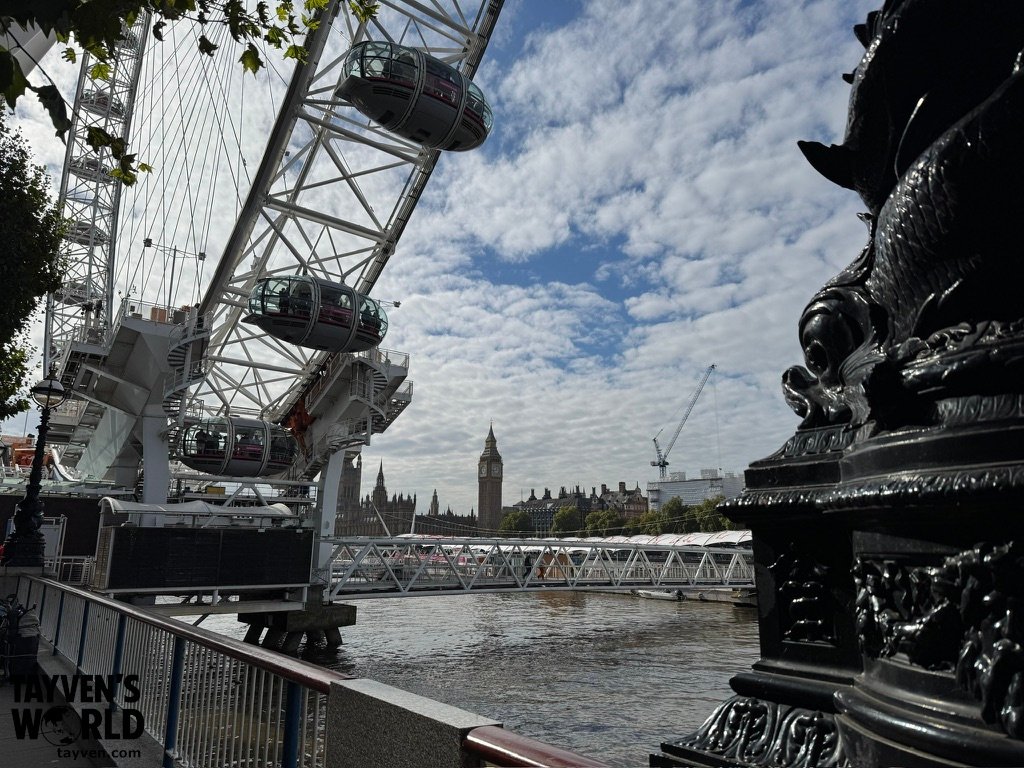
We rode the Tube to Waterloo Station, which is enormous, one of those stations that feels like a small city inside a bigger one. From there, we walked toward the London Eye. As you get closer, you start to see it peeking above the rooftops, this huge white arc rising over the Thames. It’s only a glimpse at first, but it’s enough to make you speed up a little. We stopped in the park along the river to take our first selfies with the wheel towering behind us.
The weather that day was cool but not cold, early October in London at its best. We wore jackets, but it wasn’t anywhere near beanie weather, and it didn’t rain. After our first day, when we walked to St Paul’s looking like we’d swum the Thames, this dry, crisp air felt like a gift.
The atmosphere around the South Bank was electric. Maybe it was just us on our first trip to London, but everything felt exciting, the walk, the crowds, the sense of being surrounded by landmarks we’d only ever seen on screens. There were so many people, all doing their own version of what we were doing: sightseeing, taking photos, grabbing snacks, or simply sitting by the river watching the world go by. It was busy, noisy, alive but the Thames added this unexpected calmness, a kind of soft backdrop that balanced the city energy.
In the park beside the Eye, entertainers were performing acrobatic tricks on stilts, drawing small crowds and adding to the sense that something was always happening. It felt like stepping into a living postcard the kind of London you imagine before you ever arrive.
But the moment that really hit me, the one I’d waited years for, was when we reached the base of the Eye and caught our very first glimpse of the Elizabeth Tower (Big Ben). Seeing it in person for the first time was surreal. You grow up seeing it in movies and documentaries, and suddenly there it is, right across the river, exactly where it’s always been, but now you’re the one standing in front of it.
We’d arrived early for our time slot, so we walked across Westminster Bridge to get a closer look at Big Ben and the Palace of Westminster. It’s an incredibly busy area, and before the trip I’d watched countless videos about the infamous scammer ball‑game tricks on the bridge. I was half‑expecting to see them in action, but there were police everywhere that day, so no scammers, and no chance for me to lose £20 in a rigged game.
After taking a stack of photos, we headed back across the bridge for our ride on the London Eye.
What the London Eye Is
The London Eye is a 135‑metre (443 ft) cantilevered observation wheel on the South Bank of the Thames. It’s one of the most recognisable silhouettes in the city and one of the UK’s most visited paid attractions, drawing millions of riders each year.
It sits beside County Hall, directly opposite Westminster and Big Ben, and is easily reached from Waterloo Station or by crossing Westminster Bridge from the north side of the river.
A Brief History of the London Eye
The Eye began as an idea submitted in 1993 by architects David Marks and Julia Barfield to a competition seeking a new millennium landmark. No winner was chosen, but the pair pushed ahead anyway. Funding eventually came from British Airways, and public support surged after a journalist uncovered the planning application and launched the “Back the Wheel” campaign.
Construction
- Built by Marks Barfield Architects with engineering by Arup
- Construction began in 1998
- The wheel was assembled horizontally over the Thames on floating platforms
- It was slowly pulled upright in a massive engineering operation watched by thousands
- Ceremonially opened on 31 December 1999
- Opened to the public in March 2000
Originally Temporary
The Eye was originally approved as a five‑year installation, but its popularity made it a permanent part of London’s skyline.
Engineering That Looks Effortless
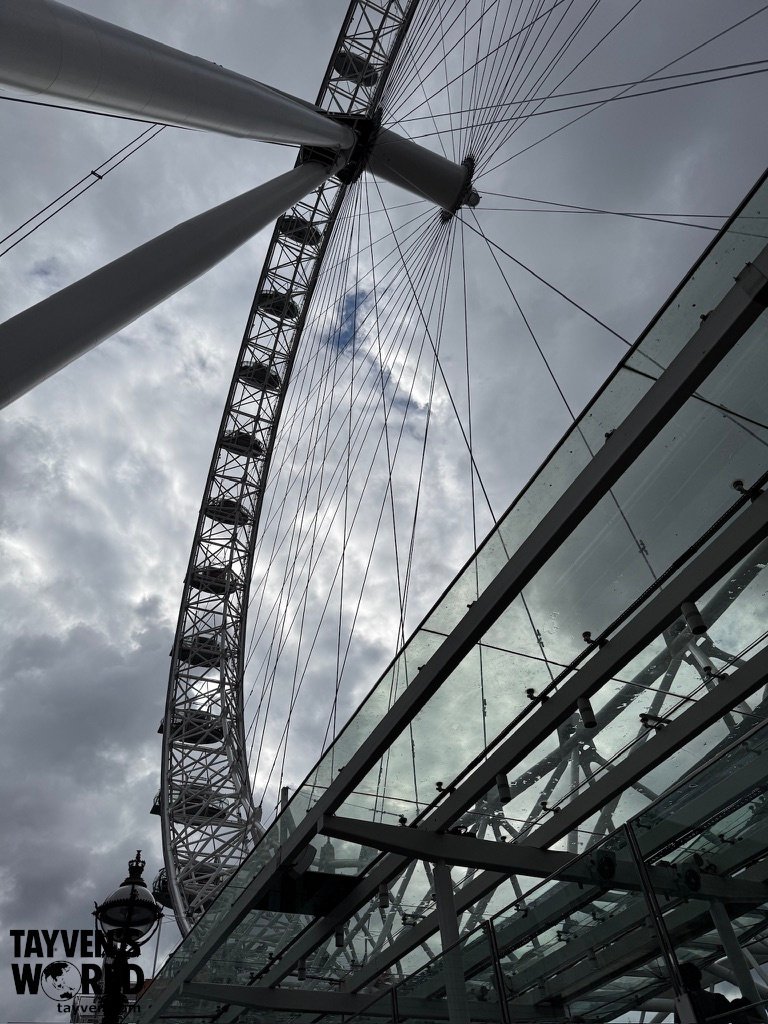
The London Eye is a cantilevered wheel supported only on one side, leaning out over the river at a 65° angle. Six massive backstay cables anchor it to a second foundation.
Key facts:
- Height: 135 m (443 ft)
- Wheel diameter: 120 m (394 ft)
- Over 86 awards for engineering, architecture, and tourism
- LED lighting added in 2006
The design was intended to feel light, precise, and integrated with the riverfront, a modern counterpoint to the Gothic architecture across the Thames.
Booking the London Eye
The official operator is Merlin Entertainments, and the official website is londoneye.com.
Ticket Tips
- Book in advance. Timed entry slots sell out
- Off‑peak times (like early afternoon) may have discounted prices
- Fast‑Track tickets help avoid queues during busy seasons
- Capsules are step‑free and wheelchair accessible
We booked our tickets ahead of time and managed to get a discounted 2 pm slot. Having a timed entry meant we were whisked straight through.
The Ride Experience
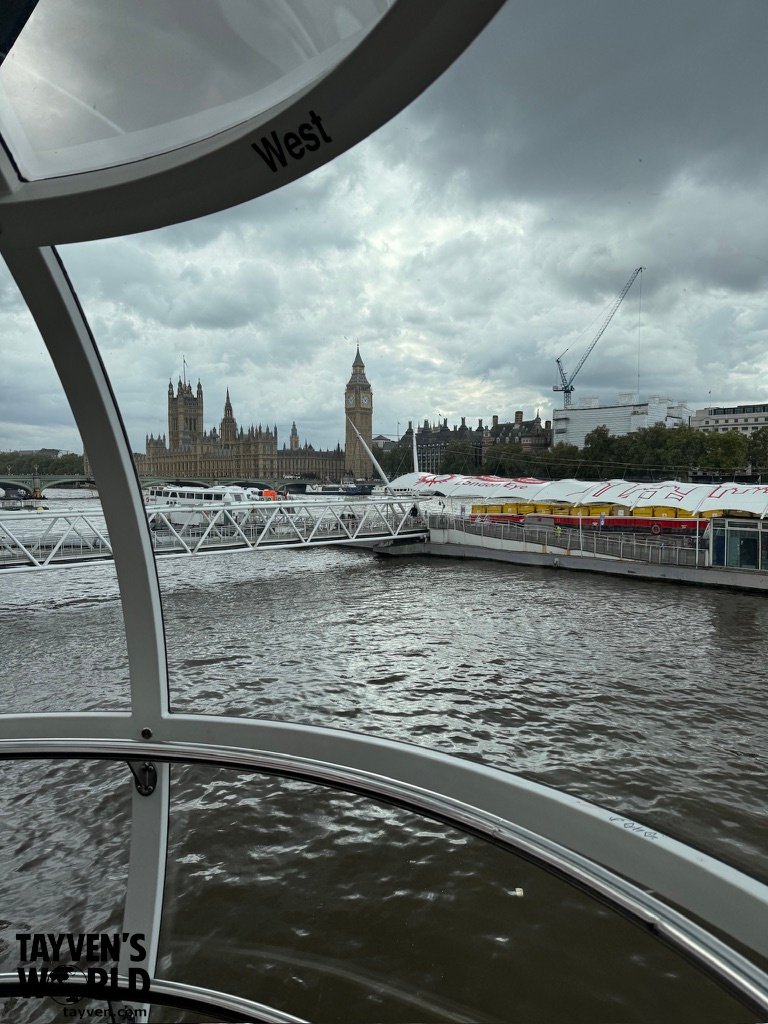
A full rotation takes around 30 minutes, slow, smooth, and steady. Inside the capsule, it’s surprisingly quiet. You can walk around, take photos from every angle, and watch London unfold beneath you.
Our capsule had two other families, and we ended up chatting with a couple of older Americans who were on their first trip outside the US. They were absolutely loving it, and it added this warm, shared‑experience vibe to the ride.
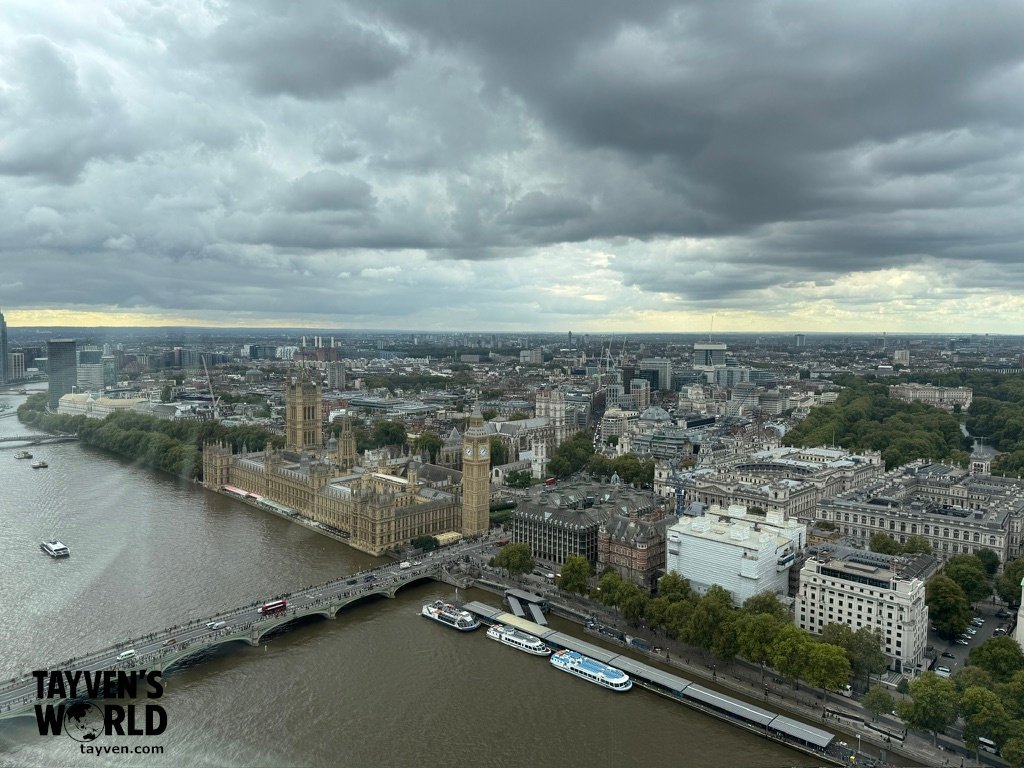
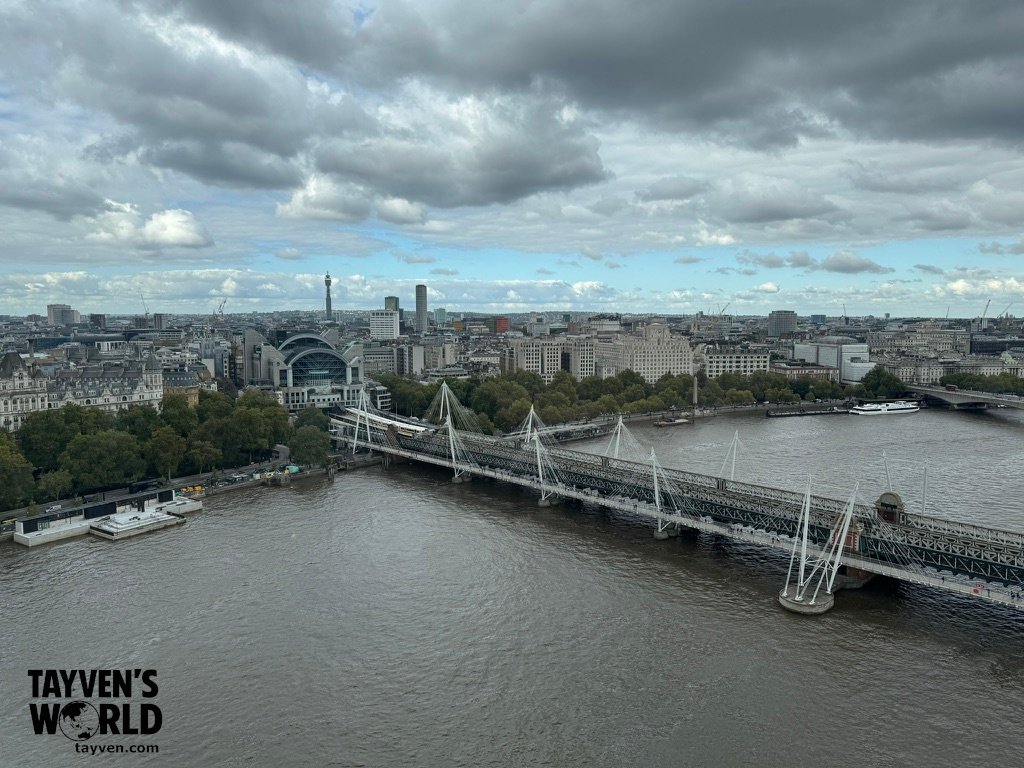
What You Can See From the Top
From the highest point, you get sweeping views across London:
- Big Ben / Elizabeth Tower
- Houses of Parliament
- Westminster Abbey
- St Paul’s Cathedral
- The Shard
- Bridges along the Thames
- The curve of the river as it winds through the city
It’s one of the best ways to understand London’s layout, the mix of old and new, the density, the parks, the landmarks, the river acting as the spine of the city.
Is the London Eye Worth It?
People online love to debate whether the London Eye is “worth it,” but I’ve always felt that locals sometimes underestimate how powerful an attraction can be for someone seeing the city for the first time.
For us, it was absolutely worth it.
It’s fun, it’s iconic, it’s in a perfect location, and kids especially love the experience of riding one of the world’s biggest observation wheels. Yes, it’s a little expensive, especially when converting from AUD to GBP but booking ahead or choosing discounted time slots helps.
When I go back to London, I’ll probably ride it again.
After the Ride
Once we stepped off the Eye, we took our very first walk along the Thames, chatting about how incredible the day had been so far, the British Museum, the scones, the Tube ride, and now the London Eye.
As we made our way toward Battersea Power Station, the atmosphere kept surprising us. Down in the Tube tunnels, musicians were performing live proper, talented buskers who apparently have to audition to play there. Their music echoed through the tunnels, reverberating off the tiles and creating this cinematic soundtrack as we made our way to our next adventure. It was one of those small but unforgettable moments that made London feel alive in every direction.
FAQ
How long does the London Eye take?
A full rotation takes around 30 minutes. Boarding is continuous and smooth, so you’re never rushed.
Do I need to book London Eye tickets in advance?
Yes, especially in busy seasons. Timed entry slots often sell out, and booking ahead is usually cheaper. You can book tickets here.
Is the London Eye worth it?
For first‑time visitors, absolutely. The views of Big Ben, Westminster, the Thames, and the London skyline are unforgettable, and the experience is smooth and relaxing.
What can you see from the top of the London Eye?
You’ll get panoramic views of Big Ben, the Houses of Parliament, Westminster Abbey, St Paul’s Cathedral, The Shard, and the curve of the Thames.
What’s the best time of day to ride the London Eye?
Late afternoon offers great light without the morning crowds. Sunset rides are beautiful but often more expensive.
Is the London Eye accessible?
Yes. Capsules are step‑free, wheelchair accessible, and staff can assist with boarding.
How do I get to the London Eye?
The closest station is Waterloo. You can also walk across Westminster Bridge from Big Ben and the Houses of Parliament.
Does the London Eye run in bad weather?
It operates in most weather conditions, including light rain. Only extreme winds or storms cause temporary closures.
More London & Europe Travel Articles
London Series:
- Our Real 5‑Day London Itinerary: What We Planned vs What Actually Happened
- St Paul’s Cathedral London: History, Blitz Survival, Tickets, Tube Guide & Our First-Day Experience
- Westminster Abbey: A First‑Timer’s Guide (Tickets, Tips & What to Expect)
- British Museum First‑Time Guide: A Morning in Bloomsbury
- Battersea Power Station: From Industrial Giant to London’s Newest Urban Playground
- A Perfect Day in South Kensington: Museums, Parks & Retro Gaming Nostalgia
- River Cruise Along the Thames: From Buckingham Palace Mornings to Bloomsbury Nights
- Our Final Day in London: Royal Dawn, Parliament Secrets, West End Magic, and the Feeling of Not Wanting to Leave
Paris Series:
- London to Paris on the Eurostar: A First‑Timer’s Story & Complete Guide
- Paris Day 2: A Rainy Start, a Seine River Cruise, and Paris Finally Opening Up
Europe Series: